
Free on-site gate assessment - hinges, posts, and your LiftMaster or Nice gate operator checked before anything is quoted
The assessment is free and the quote is the invoice.
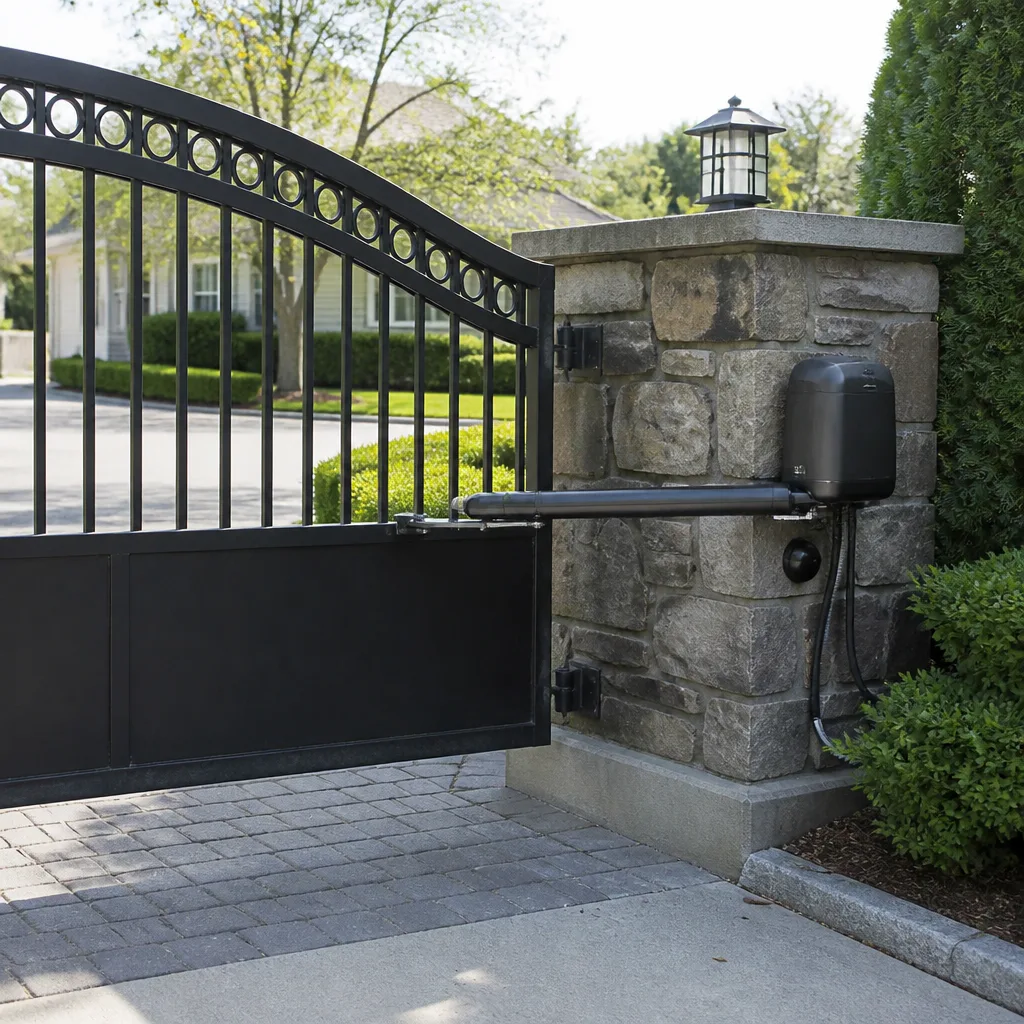
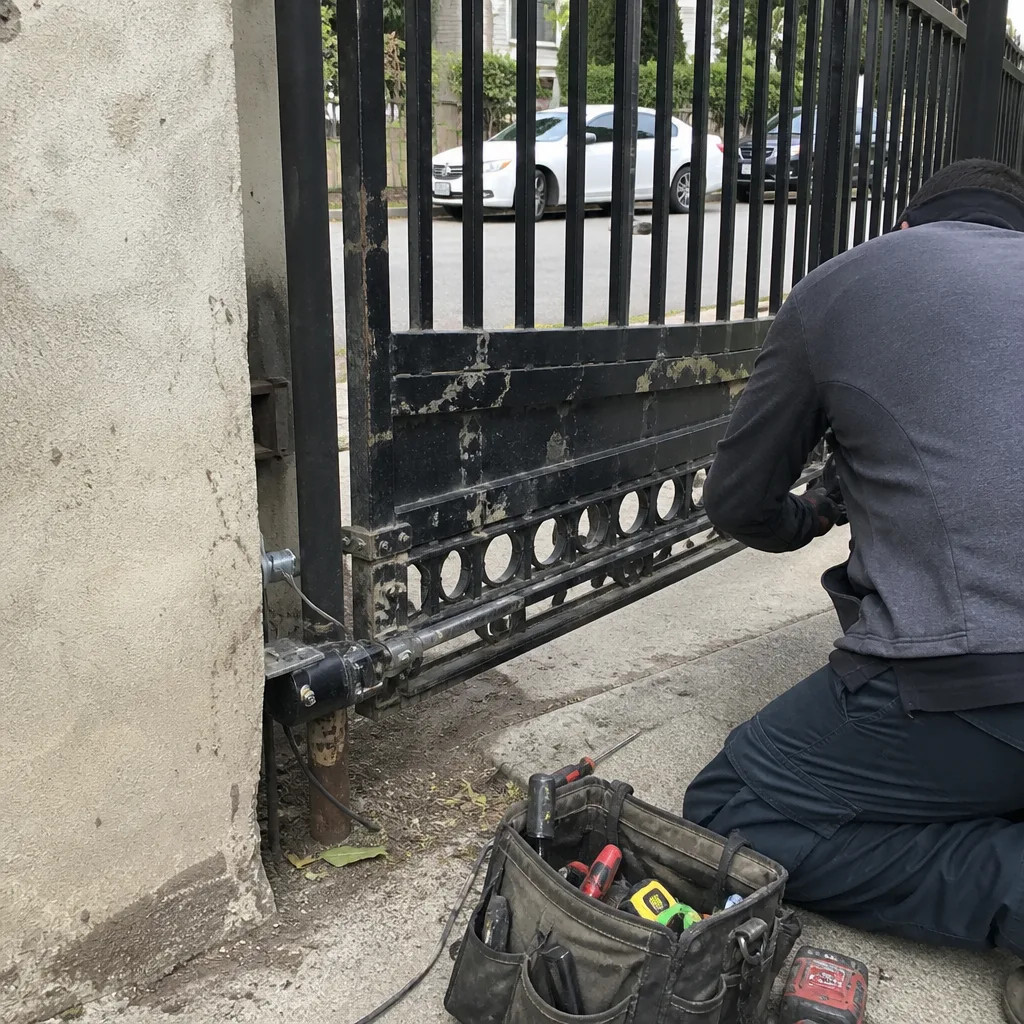 Before
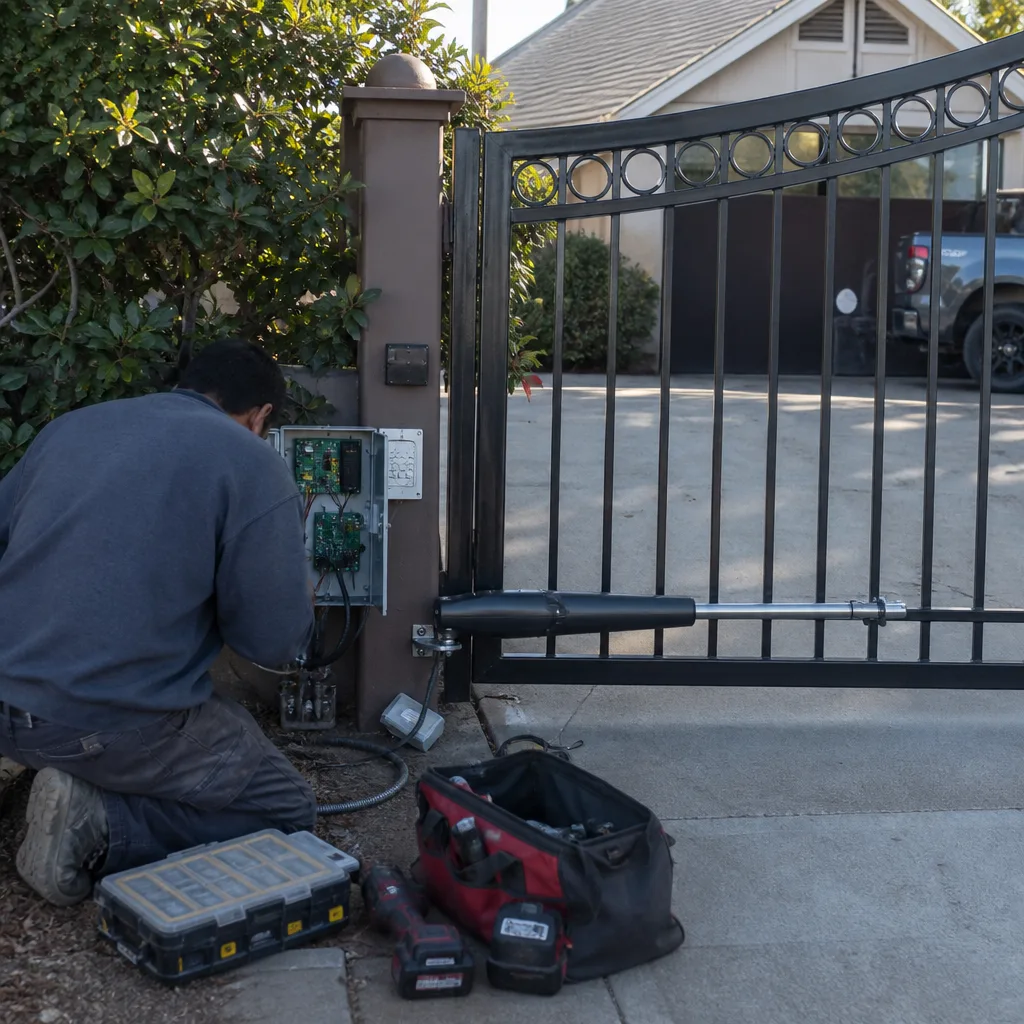 After
After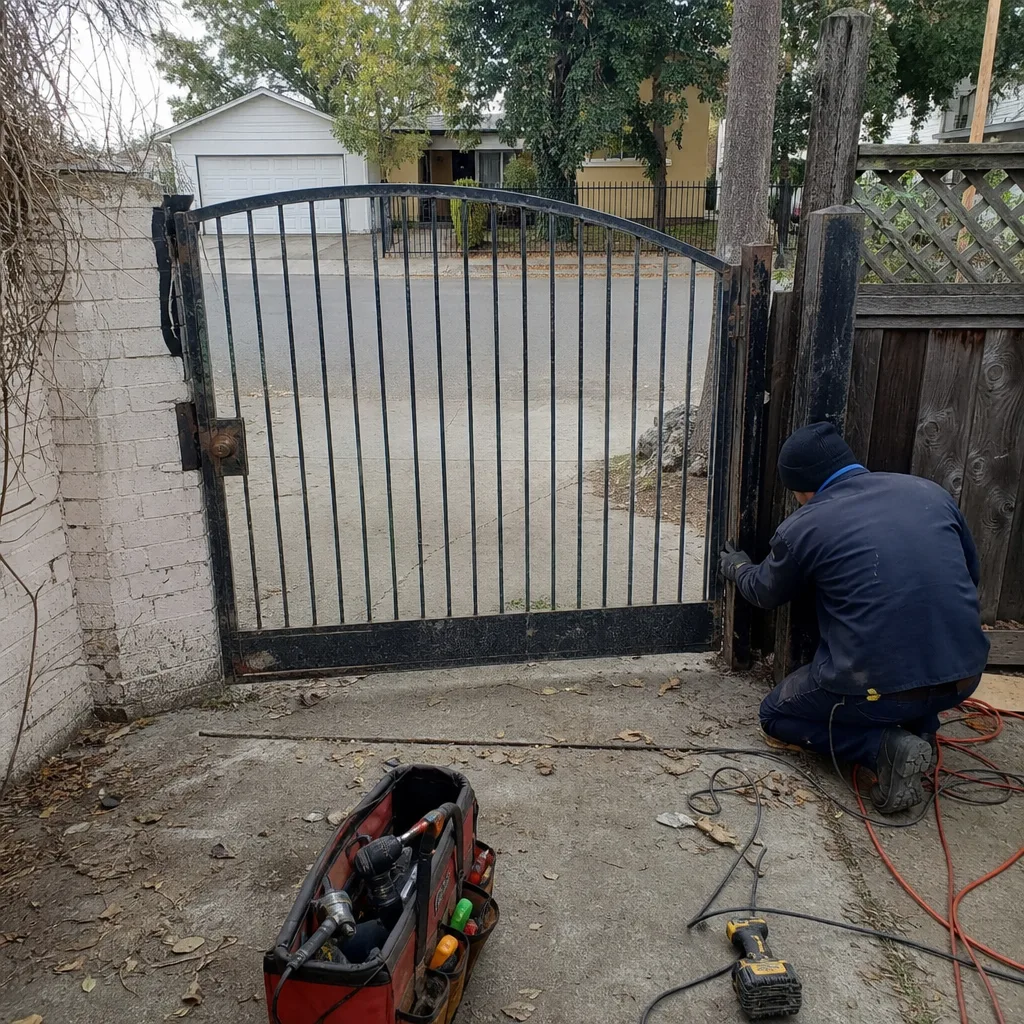 Before
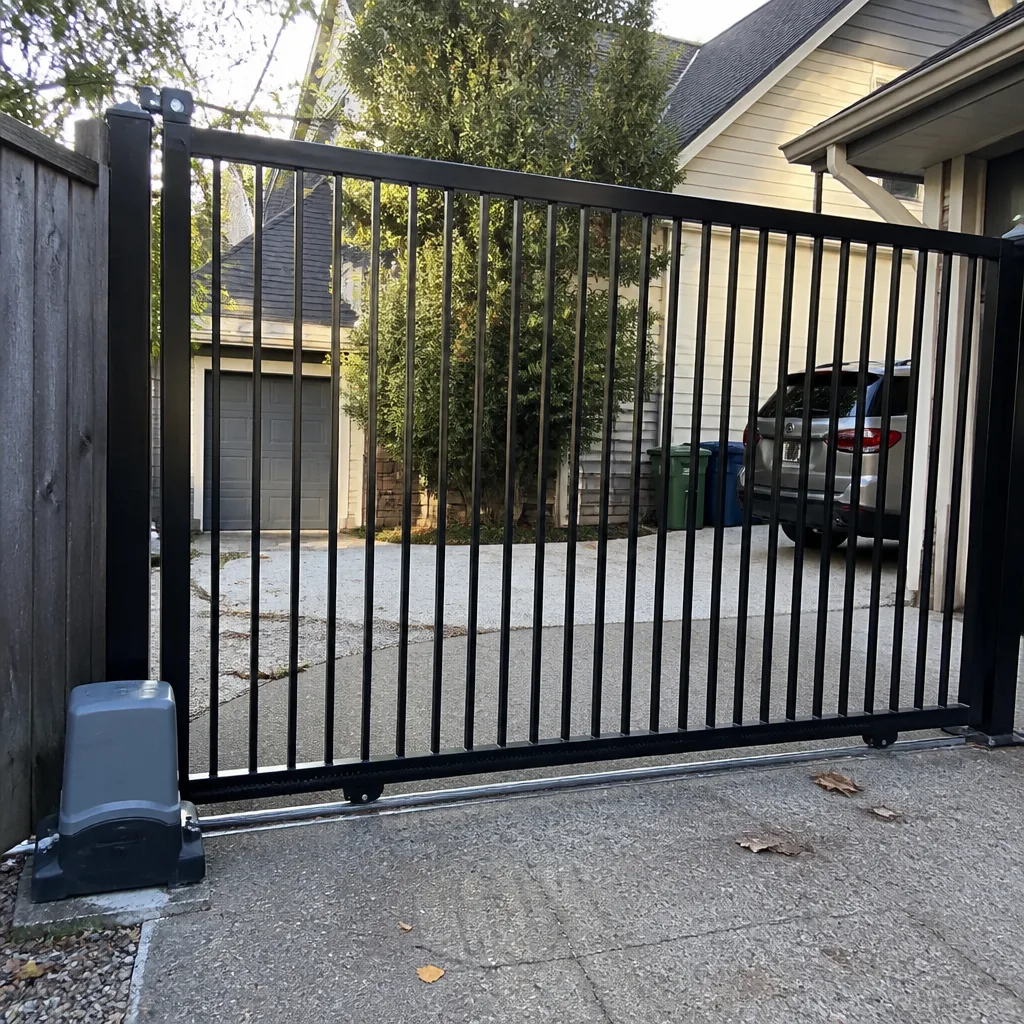 After
After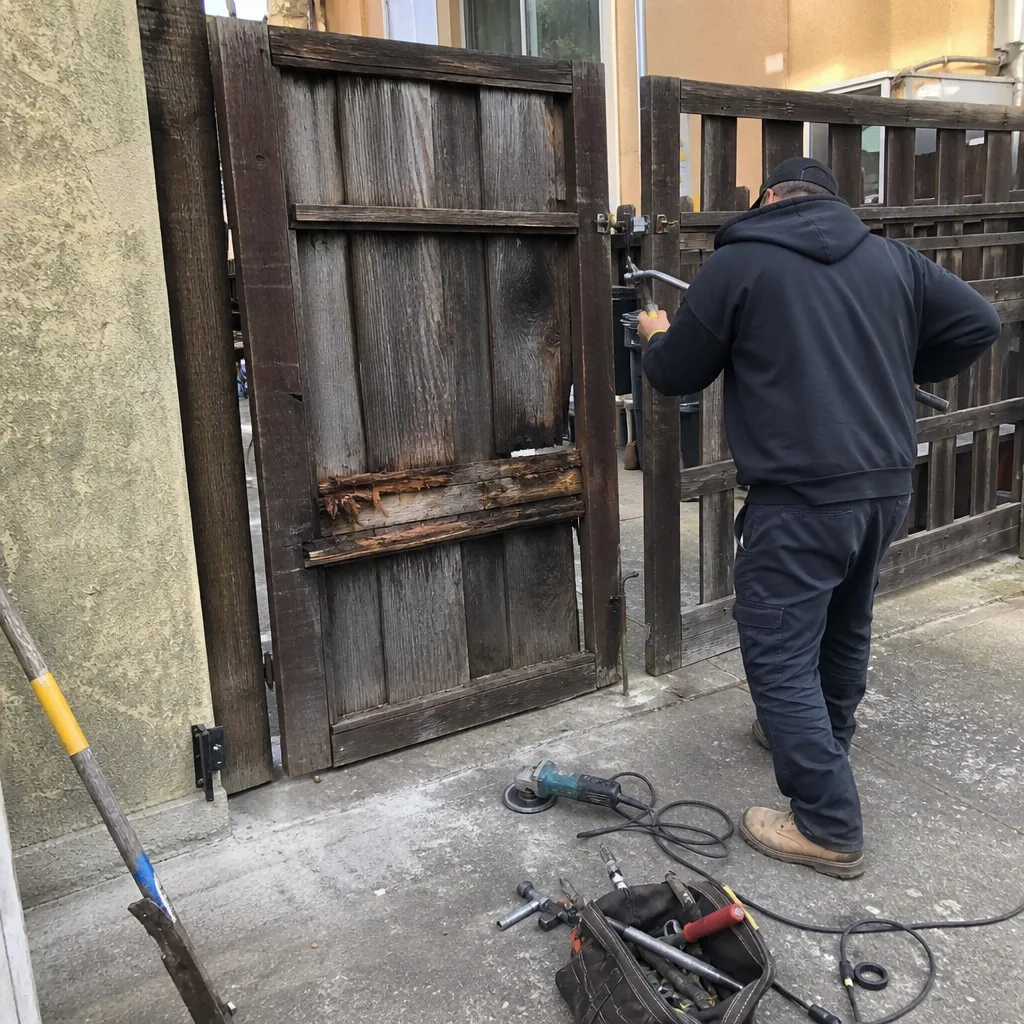 Before
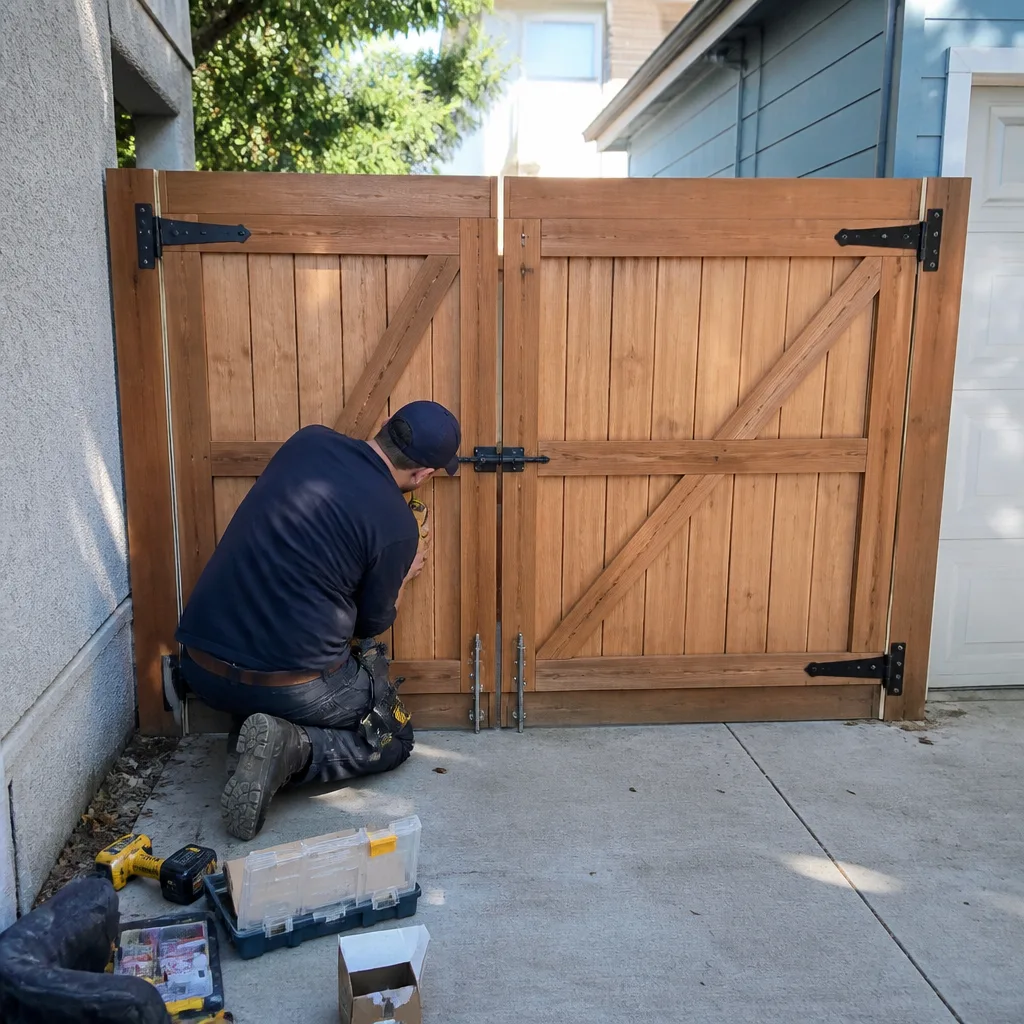 After
AfterDoorKing Access Control Installation: The Oakland Owner’s Guide
DoorKing access control installation in Oakland typically runs $1,800-$4,200 for a complete keypad, card reader, or telephone entry system, depending on whether we’re running new low-voltage cable or tying into existing conduit. Most residential driveway gate jobs in the Oakland Hills, Rockridge, and Fruitvale areas are completed in one day; commercial multi-tenant entry systems usually need two days for programming and tenant database setup. We stock DoorKing 1833, 1834, 1835, and 1812 series boards and readers on the truck, so most replacements don’t wait for parts.
Most owners figure out something’s wrong when the gate stops responding to codes, the call button goes dead, or tenants start complaining the reader “works sometimes.” In the East Bay, we also see a lot of corrosion damage from the marine layer that rolls through the Oakland waterfront and up the 880 corridor - metal keypad housings that look fine on the outside can have green-copper pin corrosion on the backplane that kills communication to the gate operator.
Which DoorKing Models This Applies To
DoorKing has been building telephone entry and access control since 1948, and the product generations don’t all play nice together. The four series we install most often in Oakland are:
- 1830 series (1833, 1834, 1835): Surface-mount telephone entry with built-in relay. The 1835 adds a larger directory. All three use the same backplane but different faceplates and directory capacities. If you’re replacing an 1833 with an 1835, the existing 18-gauge, 4-conductor cable to the gate operator usually works without re-pulling.
- 1812 series: The classic telephone entry system still found on thousands of Oakland duplexes and small apartment buildings. The 1812-081 uses an analog phone line; the 1812-090 is the cellular LTE version for properties without landlines. These are not interchangeable - the 090 has a completely different power supply and antenna requirement.
- 1500 series (proximity readers): Standalone card readers, often paired with a separate controller. The 1508 is the most common we see in Oakland commercial lots. Requires 12-24 VAC or VDC; we’ve found plenty installed with doorbell transformers that put out 16 VAC and cause intermittent read failures when voltage sags.
- 1900 series (wireless): Used for remote gates where trenching isn’t practical. The 1901 transmitter pairs with a 1902 receiver. Range is rated to 500 feet line-of-sight, but in the hilly terrain around Piedmont and Montclair, we’ve had to add a 1903 repeater to get reliable signal through tree canopy and elevation changes.
Identifying your model: the part number is on a white label inside the housing, usually on the left side of the main board. If the label’s worn off, measure the faceplate - 1830-series units are 12″ × 9″, while 1812 units are 10″ × 7″. For readers, check the back for a sticker with a date code; anything before 2015 may be the older 26-bit Wiegand format rather than the newer 37-bit, which matters if you’re adding cards to an existing system.
OEM vs. aftermarket: DoorKing still supports boards and readers with factory parts, and we default to OEM for anything involving programming memory or RF communication. For housings, power supplies, and relay modules, we’ve had good results with UL-listed aftermarket equivalents that cost 30-40% less. We always tell you which we’re proposing before we order.
Signs Your DoorKing Access Control Installation Is Failing
- Keypad beeps but gate doesn’t move. The access control is receiving your code, but the relay that tells the gate operator to open isn’t closing. Often a failed relay contact on the board, sometimes just a loose low-voltage connection at the terminal strip. We check with a multimeter before we quote a board replacement.
- Intermittent code acceptance - works at 9 AM, not at 6 PM. Temperature-related board failure. The marine layer drops Oakland evening temperatures 15-20 degrees from afternoon highs, and aging capacitors on pre-2018 boards often fail cold. We’ve replaced three of these on Alameda Avenue properties in the last eighteen months.
- Call button rings the wrong unit or not at all. Programming corruption in the tenant directory, or a failing EEPROM chip that loses its memory when power fluctuates. PG&E’s occasional voltage spikes in the East Bay don’t help; we always recommend a surge protector on the 1812 series, which has no internal protection.
- Proximity card reads only when you wave it slowly, or not at all. Reader coil degradation or voltage drop. The 1508 reader draws 120 mA at 12 VDC; if your power supply is undersized or the cable run is over 100 feet with 22-gauge wire, the reader browns out during the read cycle.
- System works after a power cycle, then fails again in 24-48 hours. Classic capacitor plague on 1812 boards manufactured 2012-2016. The electrolytic capacitors near the power input dry out in heated enclosures. We see this constantly on south-facing gates in Oakland’s Dimond and Laurel districts where afternoon sun pushes housing internal temps past 140°F.
 Before
 After
AfterReplacement Cost & What’s Included
| Service | Typical Range in Oakland | What’s Included |
|---|---|---|
| DoorKing keypad/reader swap (existing wiring good) | $680-$1,150 | New unit, programming of up to 25 codes/cards, testing, photo documentation |
| 1812 or 1830 full system replacement | $1,800-$2,800 | Unit, power supply, new cable if needed, tenant directory programming, training |
| Cellular upgrade (1812-081 to 1812-090) | $2,400-$3,600 | LTE unit, antenna, 5-year cellular plan, programming, old unit removal |
| Multi-tenant system (50+ units) | $3,200-$4,200 | Directory programming, individual code assignment, manager training, documentation packet |
| New low-voltage cable run (per 100 ft) | $280-$450 | Direct-burial or conduit, proper separation from 120V, termination and testing |
What moves the price: whether we can reuse existing conduit (saves $200-$400), whether the gate operator needs a separate relay module to interface with the new access control (+$180-$320), and how many codes or cards need programming. For apartment buildings, we charge a flat rate for directory programming rather than per-unit - under Haven Standard Clause 1, you get the full written price before we start, including the exact number of tenant entries covered.
The 365-Day Done Right Promise covers all access control work. If a programmed code stops working, a reader fails, or the gate operator stops talking to the system within a year, we fix it at no charge. No expiration within that window, no argument.
DIY or Call Us?
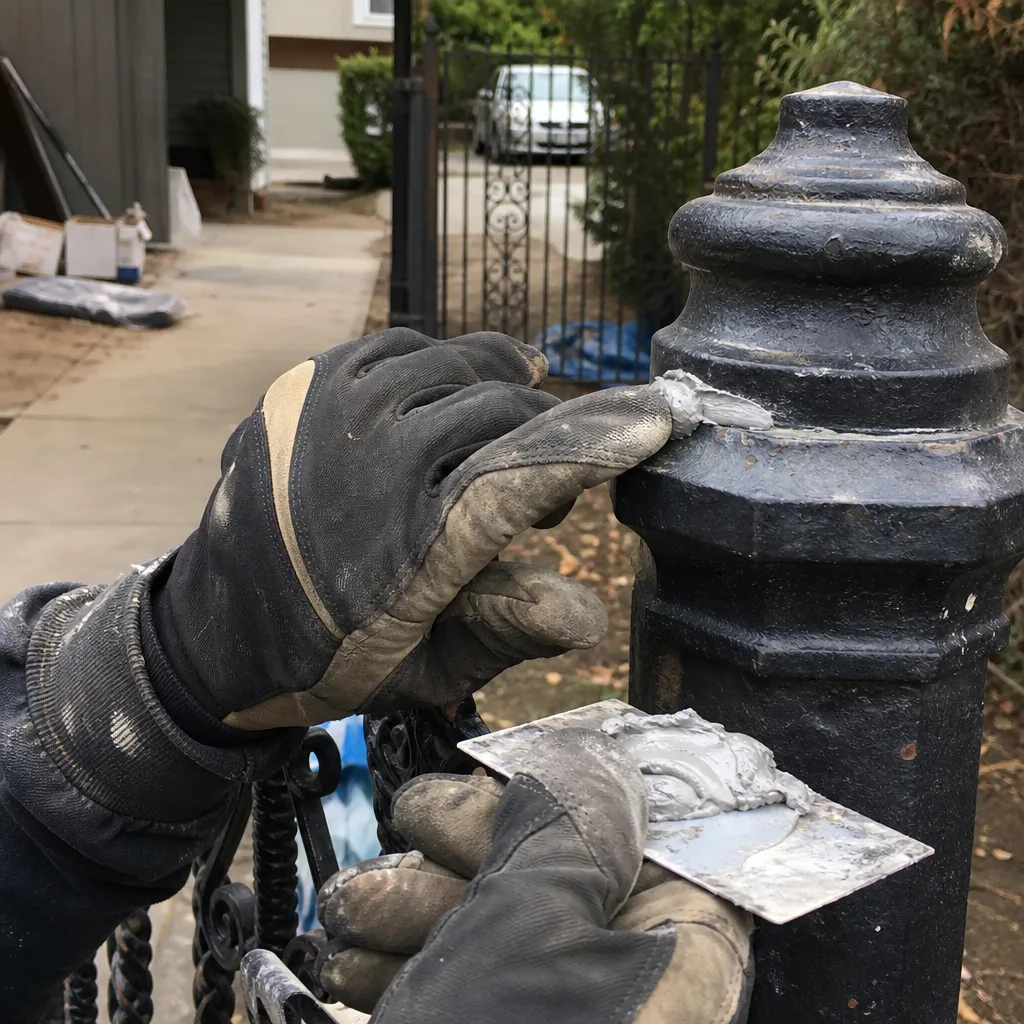
There’s a safe middle ground here. A homeowner can check three things without risk: whether the breaker feeding the access control is tripped, whether the low-voltage connections at the gate operator are seated firmly, and whether the keypad housing has visible water intrusion (condensation inside the lens, corroded terminals). Document what you find with photos - it helps us either way.
What we don’t recommend: opening the main board enclosure to test live circuits, attempting to reprogram EEPROM chips, or running new low-voltage cable alongside 120V lines without proper separation - that’s a code violation and a fire risk. The 1812 series operates at 16-24 VAC but the incoming line voltage is right there in the same housing. We’ve been called to jobs in Oakland’s Maxwell Park where a homeowner’s screwdriver slipped between terminals and took out the board, the transformer, and the gate operator’s receiver in one spark.
We’re not affiliated with DoorKing - we’re an independent service provider - and we don’t push replacement when a relay cleaning and terminal tightening will solve it. Tell me what it’s doing wrong, and I’ll tell you exactly what it needs. Call (628) 270-2709 and we’ll walk through the symptoms before we dispatch.
FAQs
Most DoorKing telephone entry systems last 12-18 years in Oakland’s climate, but we’ve replaced 1812 units as young as 8 years when they’re in unshaded housings on south-facing gates. The marine layer moisture accelerates terminal corrosion, and East Bay temperature swings stress solder joints. Proximity readers typically last 10-14 years if voltage is stable. Call (628) 270-2709 and we can check your install date by serial number - estimates are free.
Often, yes. Relay contact failures, loose terminal connections, and power supply sag are all repairable at $180-$340. Board-level capacitor replacement runs $280-$450, but we only recommend it on units under 10 years old with no other wear. After that, replacement parts availability gets unpredictable and a second failure usually follows the first within a year. We give you both options in writing before you decide.
A direct replacement with existing wiring intact takes 2-3 hours, including programming and testing. If we need to pull new cable or upgrade from analog to cellular, plan on 4-6 hours, sometimes split across two days if concrete or paving needs to be opened for conduit. We don’t charge hourly - the flat price covers however long it takes to do it right.
We stock 1833, 1834, 1835, and 1812 series main boards, 1508 proximity readers, relay modules, and power supplies on the truck. For 1900-series wireless or 1812-090 cellular units, we typically need 24-48 hours to pull from regional distribution - we don’t markup the part, and we’ll tell you the exact model number and source so you can verify pricing yourself. Under Clause 4 of the Haven Standard, you get photos of every part installed and its serial number before we close the job.
Written by Adrian Vance, Owner, Vance Gate Repair Oakland at Vance Gate Repair Oakland, serving Oakland and nearby areas.