
Last updated September 22, 2026
Free on-site gate assessment - hinges, posts, and your LiftMaster or Nice gate operator checked before anything is quoted
The assessment is free and the quote is the invoice.

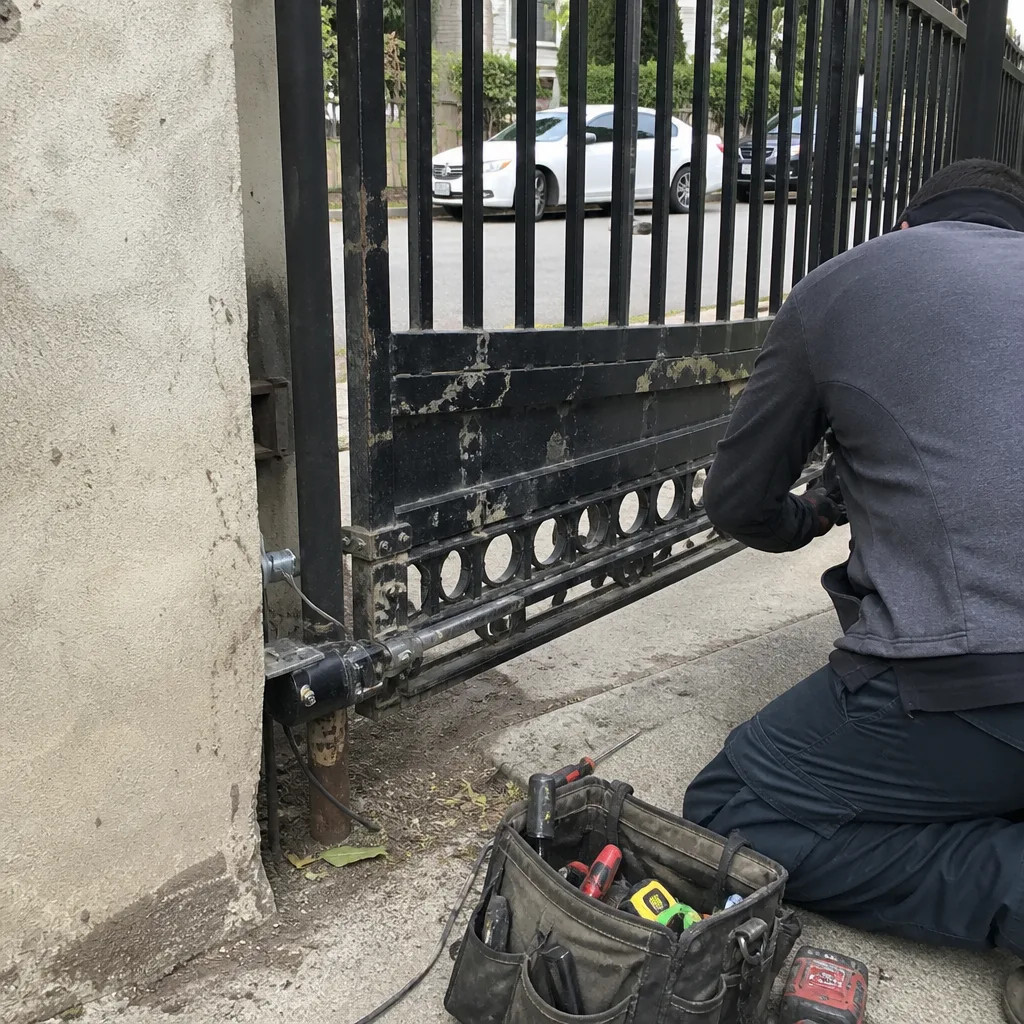 Before
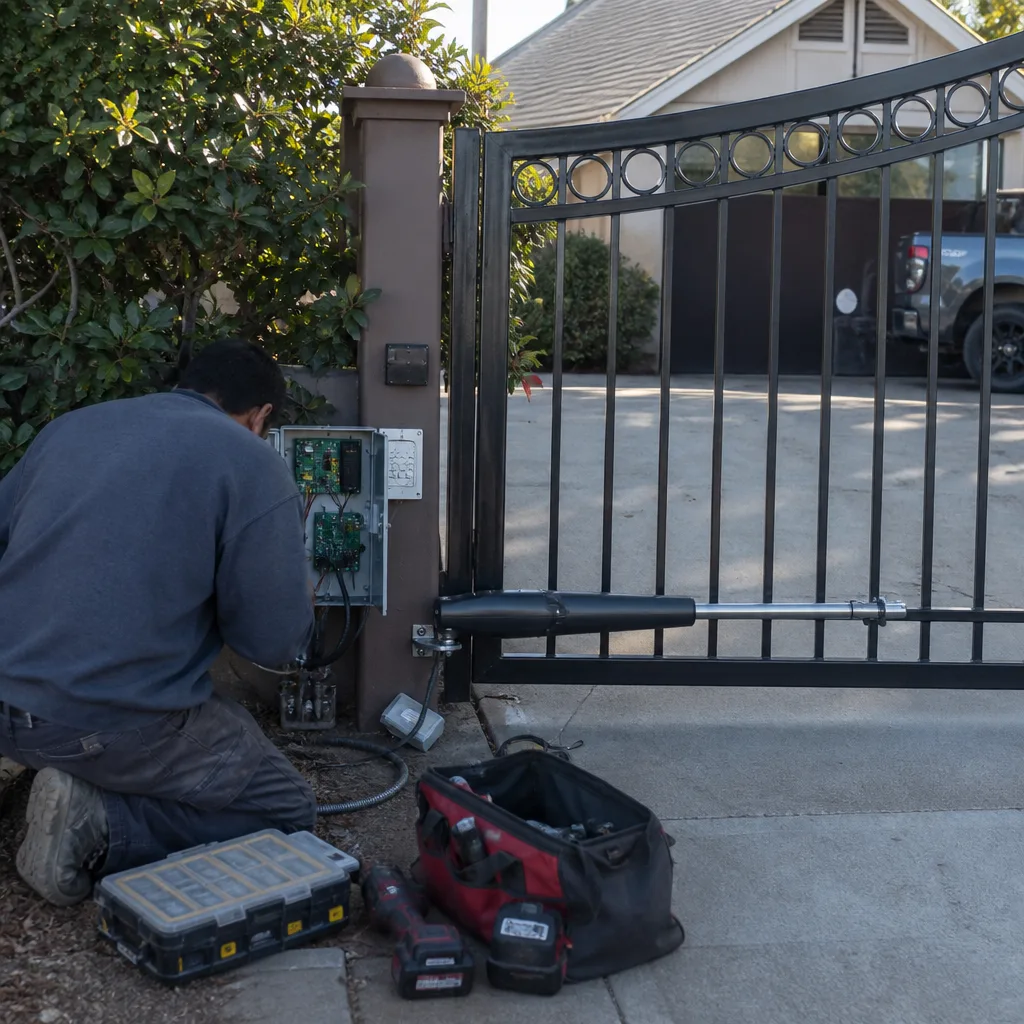 After
After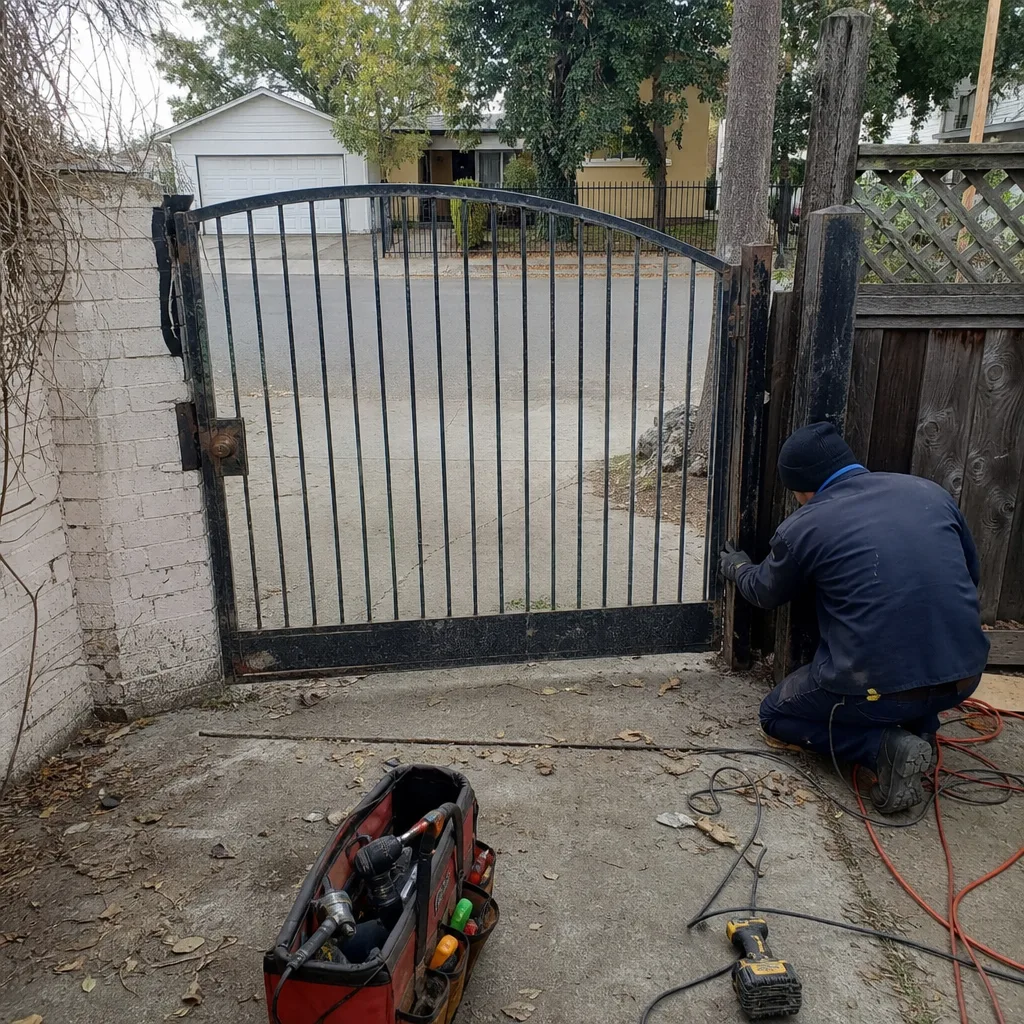 Before
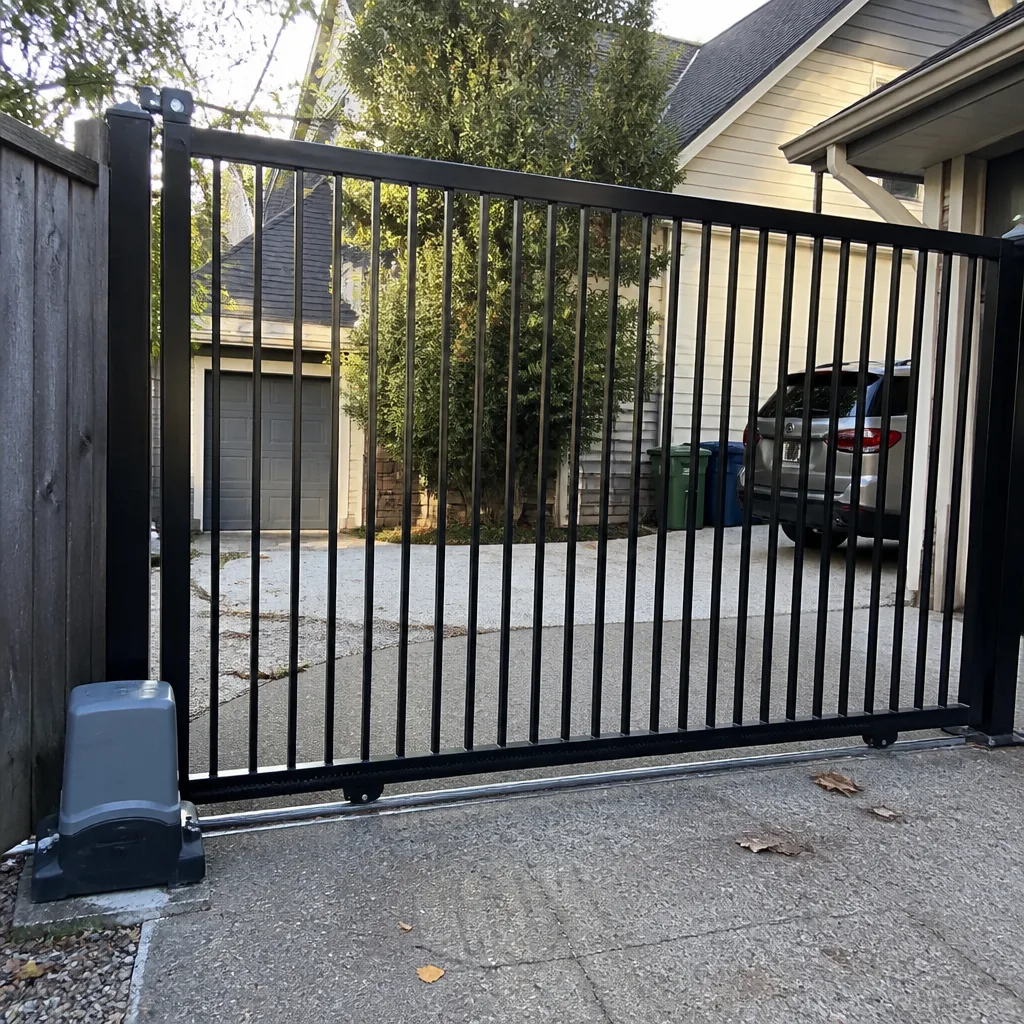 After
After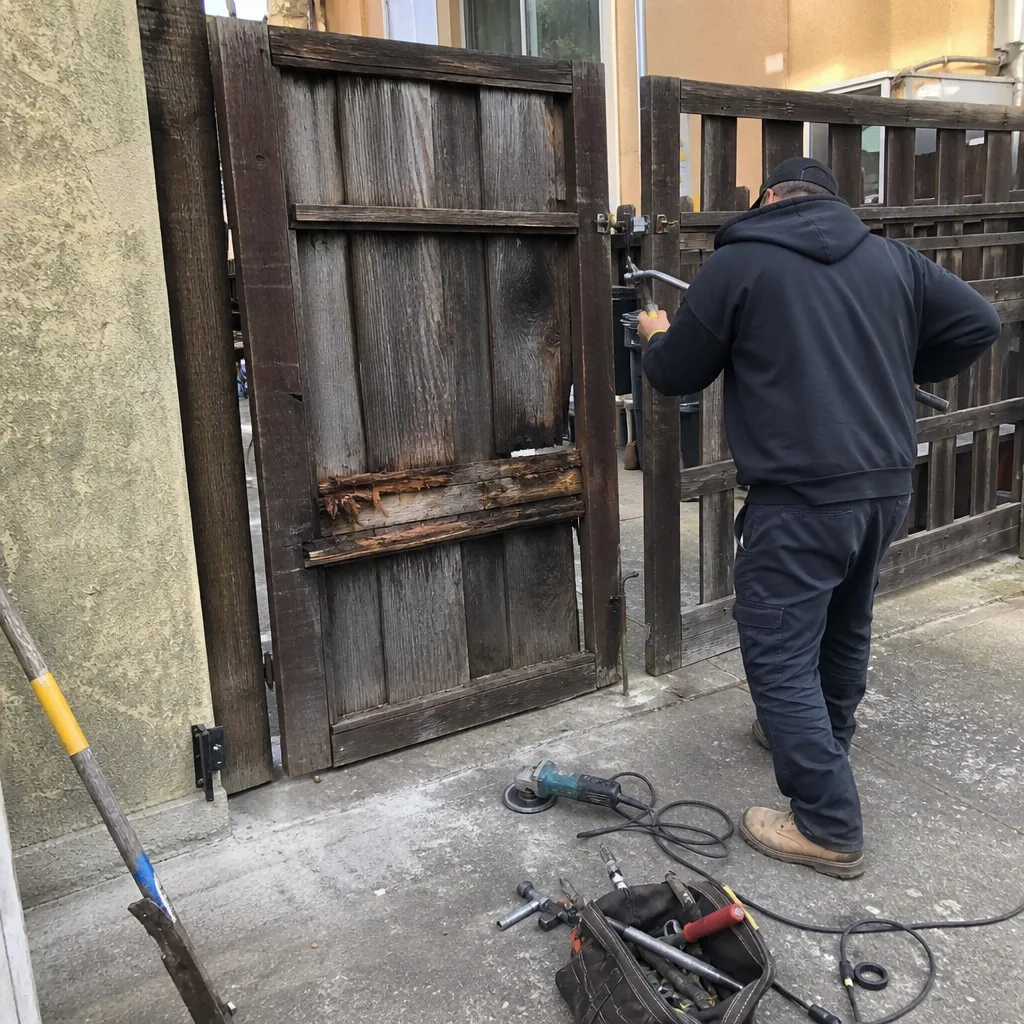 Before
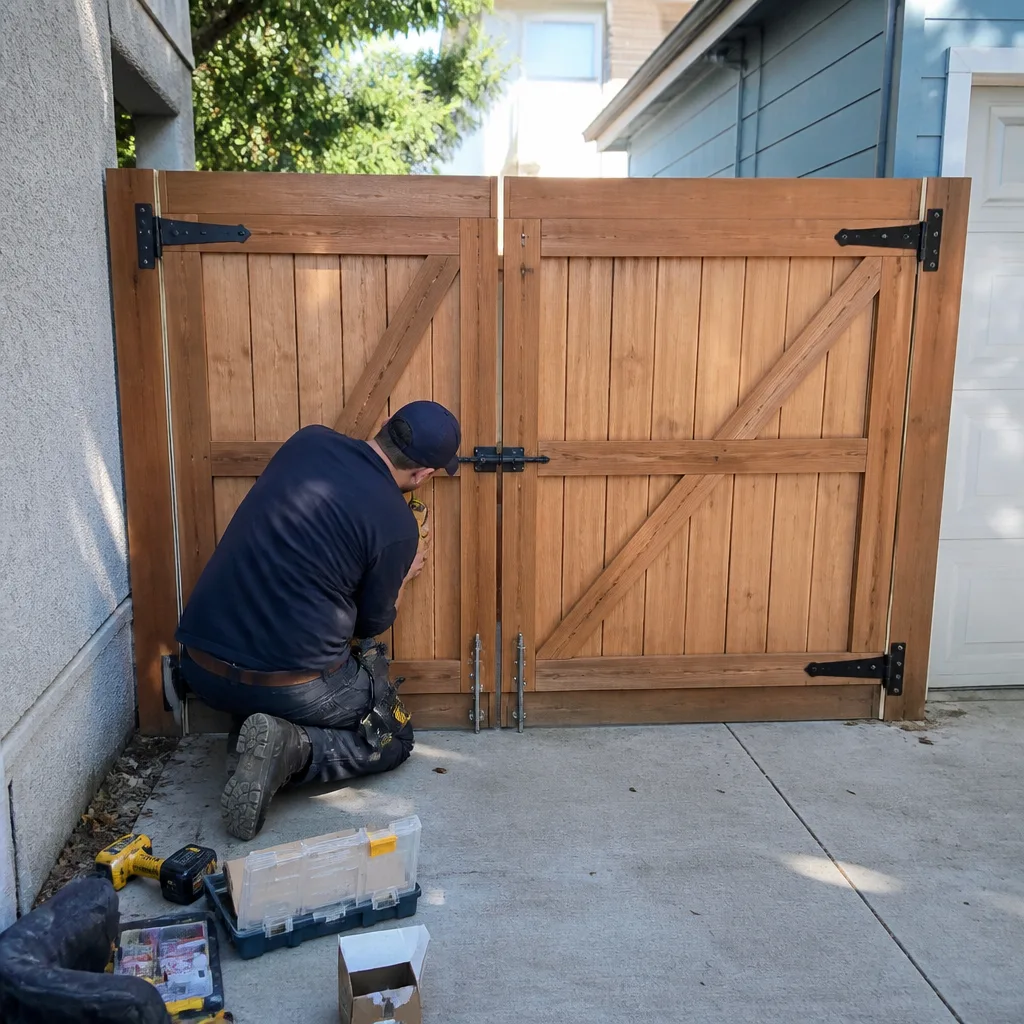 After
AfterSeasonal Gate Repair Care for Oakland: Year-Round Homeowner’s Guide
Oakland averages 23 inches of rain - almost all of it between November and March - which means every automated gate in the flatlands goes through a soil-saturation cycle that moves gate posts measurably. Most operators fail in April, not because of the rain, but because of what the rain did to the post geometry while everyone was indoors. In this guide, we’ll walk you through exactly what to check, when to check it, and how to document it so any future technician can read your notes without asking you for background. Whether you’re in the hills above Piedmont or the flats near the estuary, Oakland’s particular mix of clay soil, marine layer, and dry heat creates a predictable wear pattern that you can stay ahead of with a seasonal rhythm.
Quick Answer
Seasonal gate repair care in Oakland means checking your gate system four times per year: before the rains (October), after the rains (April), during peak marine-layer season (July), and at the height of dry heat (September). The critical tasks are measuring post plumb before and after soil saturation, recalibrating operator limit switches when post movement changes gate geometry, inspecting rubber safety edges and sealants for heat cracking, and documenting everything in a simple log that travels with the property. A homeowner who spends ten minutes per season on this routine typically avoids the emergency service calls that spike in April and October.
Table of Contents
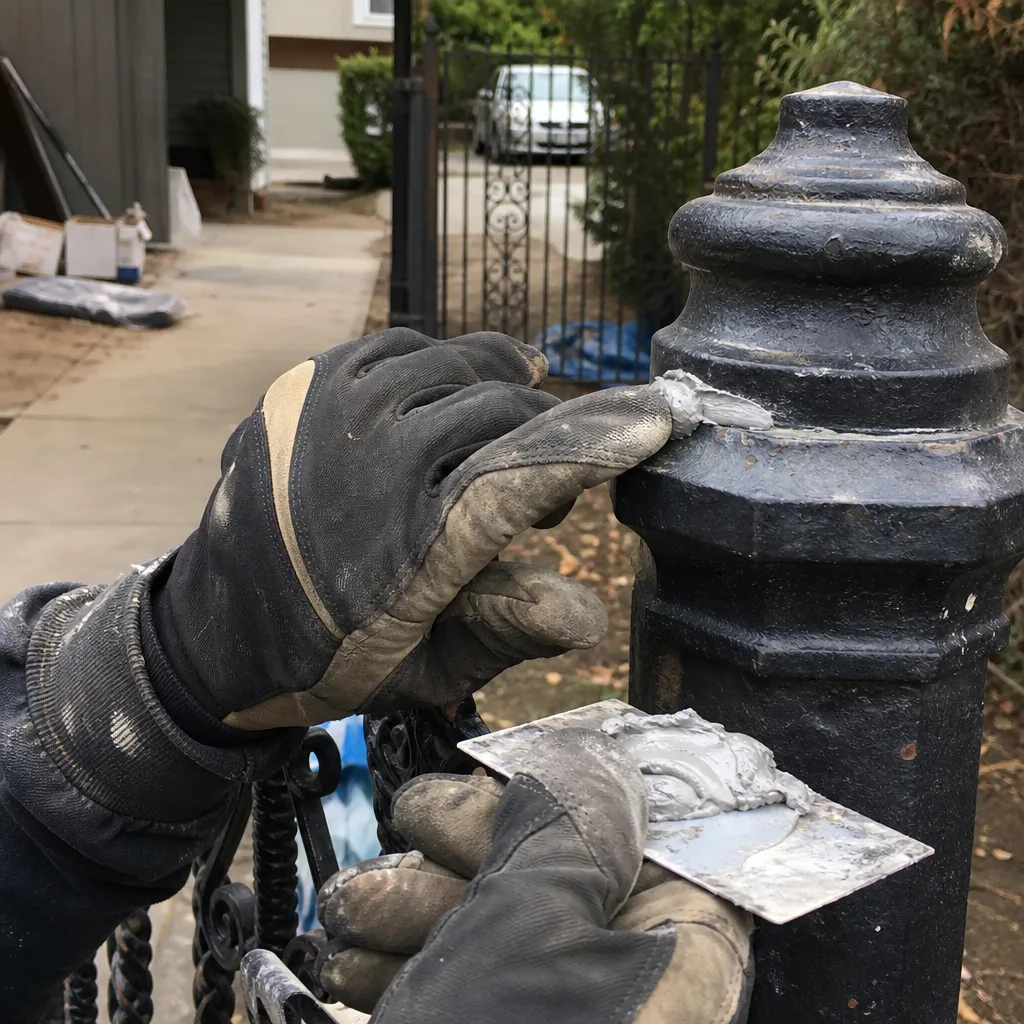
- Why Oakland’s Climate Damages Gates Differently
- Pre-Rainy Season Checklist: October
- Post-Rainy Season Checklist: April
- Summer Marine Layer Protocol: July
- Dry-Season Rubber and Seal Audit: September
- Building Your Four-Season Gate Log
- Common Mistakes to Avoid
- When to Call a Professional
- Frequently Asked Questions
- The Bottom Line
 Before
 After
AfterWhy Oakland’s Climate Damages Gates Differently
Gate problems in Oakland don’t arrive randomly. They follow the water.
The city’s geography creates three distinct microclimates that punish gate hardware in different ways. In the flatlands - from West Oakland through Fruitvale to the San Leandro border - clay-heavy soil swells when saturated and shrinks when dry. A gate post that was plumb in September can lean 1.5 inches by March. That lean changes the hinge geometry, which changes the swing arc, which forces the operator to work harder and eventually fault out.
In the hills - Montclair, Piedmont Pines, Oakmore - the issue is drainage velocity. Water runs off slopes fast, but it also undermines post footings where downspouts discharge. We’ve found posts in the hills tilted from erosion that the homeowner never noticed because the gate still moved, just with more motor noise and a jerky start.
Then there’s the marine layer. From late May through August, moist air rolls through the Golden Gate and sits on West Oakland, Emeryville-adjacent properties, and anything near the estuary. That moisture doesn’t look like rain, but it’s enough to corrode limit-switch housings on gate motors and openers in Oakland, oxidize photo-eye reflectors, and delaminate control-board conformal coating if the enclosure seal has hardened.
The dry season brings its own problems. From September through October, sustained heat in the 80s and 90s cracks rubber safety edges, hardens loop-detector sealant, and expands aluminum gate frames enough to bind at the latch. A gate that worked fine in June can refuse to close in October because the frame grew 3/16 of an inch and now hits the stop post.
Understanding this calendar lets you anticipate instead of react. The sections below map each season to specific inspection points, measurement techniques, and documentation habits.
Pre-Rainy Season Checklist: October
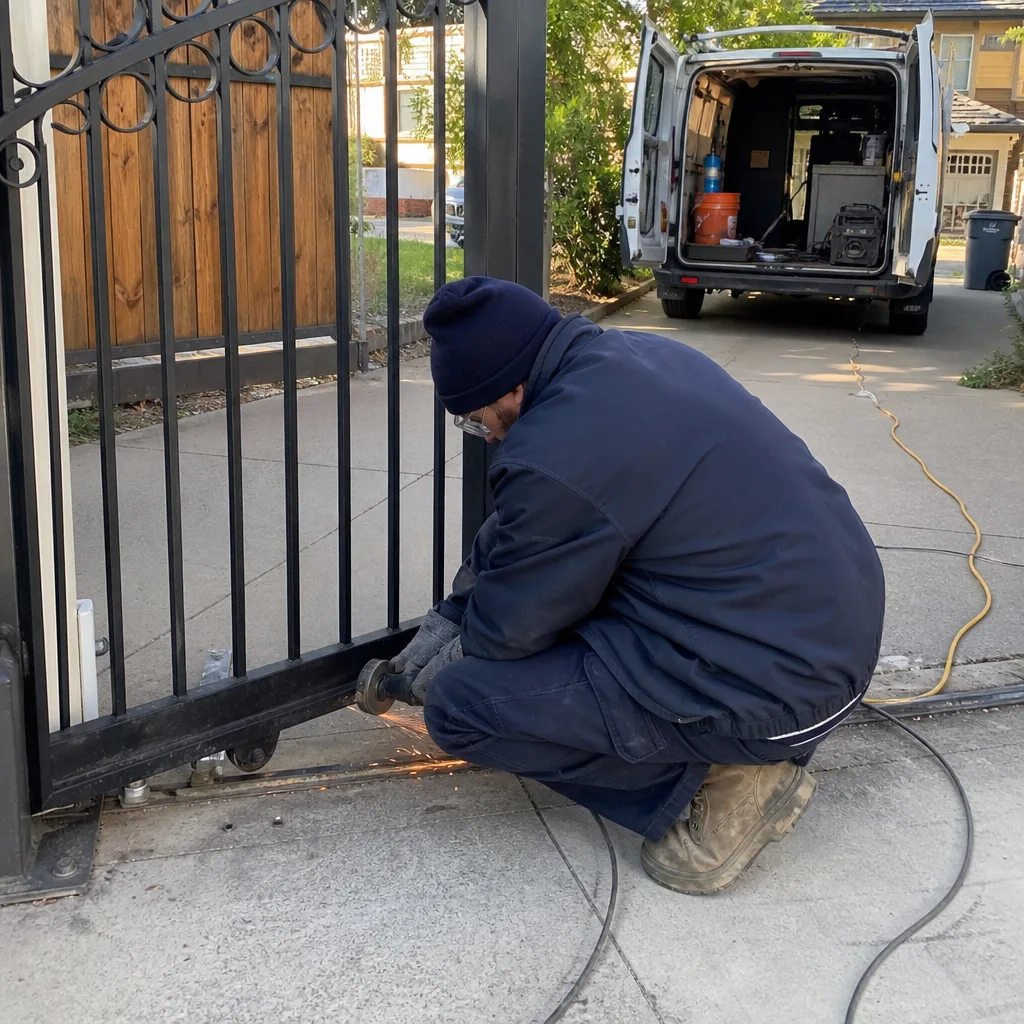
October is the most important maintenance window in Oakland. The soil is still dry from summer, the posts are in their summer position, and you have a clean baseline before the rains begin. Here’s what we check on every gate repair in Oakland call during this window, and what you can verify yourself.
1. Post Plumb Measurement
Use a 4-foot level on the hinge post and the latch post. Record the gap between level and post at top and bottom, in sixteenths of an inch. Note which direction the post leans (toward street, toward house, toward downhill slope). This is your baseline. If the post is already out of plumb by more than 3/8 inch, the rainy season will make it worse, and the operator will fault by January.
2. Drain Channel Clearing
Every gate post needs water to move away from it. Check that concrete footings have positive slope away from the post base. Clear leaves and debris from any French drain or surface channel within 3 feet of the post. In Oakland’s flatlands, we’ve seen posts sink 2 inches in a single season because a clogged downspout discharged directly into the post footing.
3. Battery Backup Load Test
California fire code requires battery backup on automated gates. Test it: disconnect AC power and cycle the gate three times on battery alone. If it won’t complete three cycles, the battery is below 50% capacity and will fail during the first power outage of the rainy season. Replace it now, not in a storm.
4. Weather-Seal Inspection
Check the operator enclosure gasket, the photo-eye cable entry points, and any conduit hubs. The gasket should be pliable and continuous. If it’s hard or cracked, replace it. Moisture inside a LiftMaster or FAAC control board is a common October-through-December failure mode in Oakland’s first heavy rains.
5. Hinge Gap Baseline
Measure the gap between gate leaf and hinge post at top and bottom hinges, with the gate closed. Record in sixteenths. This number tells you in April whether the post moved or the hinges wore.
Time required: 15 minutes. Documentation: one photo of each post with level in frame, one photo of drain condition, written measurements.
Post-Rainy Season Checklist: April
April is when Oakland’s gate emergency calls spike. The rains have stopped, the soil is at maximum saturation, and the posts have moved. Homeowners who didn’t do the October baseline are now surprised by a gate that grinds, stalls, or reverses unexpectedly. Here’s how to read what happened and what to do about it, or see The Complete Guide to Gate Repair in Oakland for a full overview.
Step 1: Re-Measure Post Plumb
Use the same level, same posts, same measurement points as October. Compare the numbers. In our experience, a post that moves more than 1/2 inch from its October baseline needs attention before the operator fails. The direction of movement matters: posts leaning toward the gate path are worse than posts leaning away, because they reduce clearance and increase binding.
Step 2: Re-Measure Hinge Gaps
Compare April hinge gaps to October. If the gap changed equally at top and bottom, the post moved. If the gap changed only at one hinge, the hinge pin or bushing wore. These are different problems with different fixes. Post movement may require resetting or re-pouring. Hinge wear is a faster, cheaper replacement.
Step 3: Operator Limit-Switch Re-Calibration
When a post moves, the gate’s fully-open and fully-closed positions change relative to the operator’s limit switches. The motor runs to its programmed stop point and hits mechanical resistance it didn’t hit in October. This trips the overload, counts as an obstruction, and can damage the gearbox.
On most operators - Linear, BFT, LiftMaster, FAAC - the limit switches are set with mechanical cams or electronic position memory. The procedure varies by brand, but the principle doesn’t: you need to re-teach the operator where the gate actually stops now that the geometry changed. If you’re comfortable with the manufacturer’s procedure, do it. If not, this is the right time to call for gate repair in Oakland - before the overload trips repeatedly and burns the motor.
Step 4: Latch and Strike Alignment
Post movement almost always misaligns the latch and strike plate. Check that the latch bolt enters the strike without scraping, and that the electric strike or magnetic lock has proper pull-in clearance. A misaligned electric strike will buzz, overheat, and fail in summer heat.
Red flag: If your gate worked fine in October, started acting odd in February, and now won’t close reliably in April, the post moved. Don’t replace the operator until you’ve verified the geometry.
Summer Marine Layer Protocol: July
July in Oakland doesn’t look like corrosion season. The hills are dry, the sky is clear above 800 feet, and the flatlands wake up to gray mornings that burn off by noon. That gray is the marine layer, and it carries enough salt and moisture to corrode unprotected metal over a summer.
West Oakland properties, anything within a half-mile of the estuary, and any home with a sight line to the bay get hit hardest. The corrosion isn’t dramatic - it’s cumulative. By September, a photo-eye reflector that read clean in June now returns intermittent signals. A limit-switch housing that sealed tight in May now has a white bloom on the screw heads.
Inspection Points
- Photo-eye lenses and reflectors: Clean with lens tissue, not a shirt. Check for etching or hazing. Replace if the reflector has dimmed more than 30% - most operators will fault intermittently before they fail completely.
- Conduit and junction-box interiors: Open any above-ground junction box and look for condensation or corrosion on terminal blocks. If you find moisture, the box seal has failed. Re-seal with fresh gasket or silicone, and consider a breather drain if the box is in direct marine-layer flow.
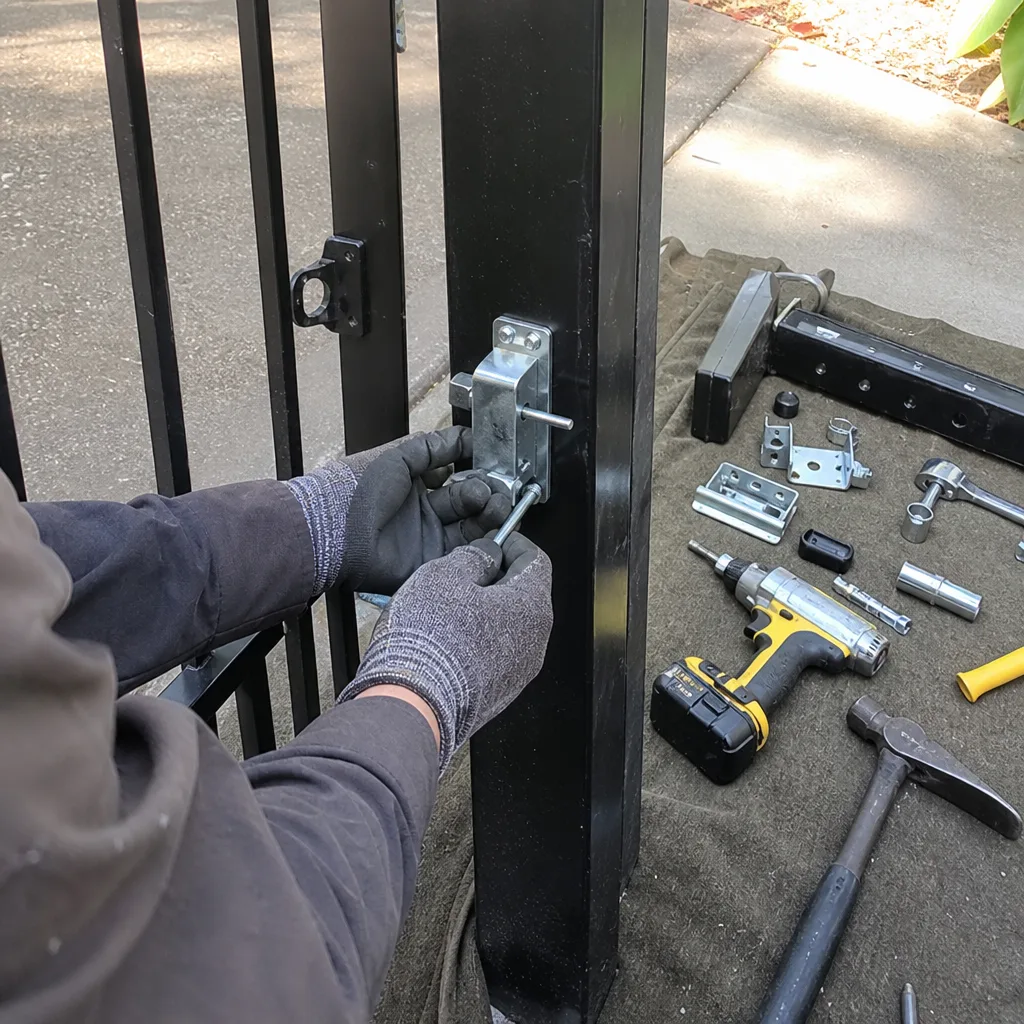
- Operator mounting hardware: Check the bolts that attach the operator to the post or pad. Galvanized hardware in marine air can rust through in 3-4 years. Stainless steel lasts longer but costs more. We document what we find and photograph it - under the Haven Standard, you get that photo.
- Chain or rack drive: Lubricate with a marine-grade grease that won’t wash off in winter or attract dust in summer. Standard lithium grease turns to paste when mixed with moisture and grit.
Re-Coating Intervals
Painted steel gates in marine-exposed Oakland locations need touch-up every 18-24 months, not every 5 years. Check at the bottom rail, where splash-back from hardscape concentrates salt, and at any weld or joint where the factory coating may be thin. A spot of rust on a $4,000 gate becomes a $400 welding repair in two years if you ignore it.
For new gate installation in Oakland, we specify powder coat over galvanized substrate for marine-exposed properties, with a 15-mil minimum thickness. It’s more expensive than paint-on-steel upfront. It’s cheaper than replacement.
Dry-Season Rubber and Seal Audit: September
September is Oakland’s hottest month, and heat is hard on rubber. The safety edges, loop-detector sealant, and conduit entry gaskets that flexed fine in spring now crack when bent. This is the season to find them before they fail in a way that disables your gate or creates a liability exposure.
Safety Edge Inspection
The rubber safety edge (the contact strip on the leading edge of a sliding gate, or the trailing edge of a swing gate) contains a pressure-sensitive switch. When something contacts the edge, the switch opens and the operator reverses. If the rubber cracks, moisture enters, the switch corrodes, and the gate either won’t reverse on contact (liability) or reverses randomly (nuisance).
Run your hand along the full length of the edge. Feel for cracks, hard spots, or areas where the adhesive has released from the gate frame. In Oakland’s September heat, we’ve seen safety edges on south-facing gates reach 140°F surface temperature. That accelerates aging by a factor of two compared to shaded installations.
Replacement cost for a standard 16-foot safety edge runs $180-$340 including labor, under our written-price practice. If the edge is cracked but still functional, budget for replacement in the next 6 months - don’t wait for the failure.
Loop Detector Sealant
The induction loop embedded in your driveway (the wire that detects a vehicle and tells the gate to open) exits through a saw cut filled with sealant. That sealant hardens in heat, cracks, and lets water in during the first winter rain. Water in the loop conduit corrodes the wire and changes the loop’s electrical signature, which causes false detects or no detects.
Check the sealant at the loop exit points. If it’s hard or cracked, dig out 2 inches and re-fill with flexible polyurethane sealant rated for traffic bearing. This is a $12 material cost and 20 minutes of work. Ignoring it can mean a $400 loop replacement and concrete cutting.
Conduit Entry Gaskets
Every point where conduit enters the operator enclosure, junction box, or post should have a compression gasket or sealing locknut. These harden in heat and lose their seal. Check by gently tugging the conduit - there should be no movement at the entry point. If the conduit wiggles, the seal is gone and moisture has a path in.
Building Your Four-Season Gate Log
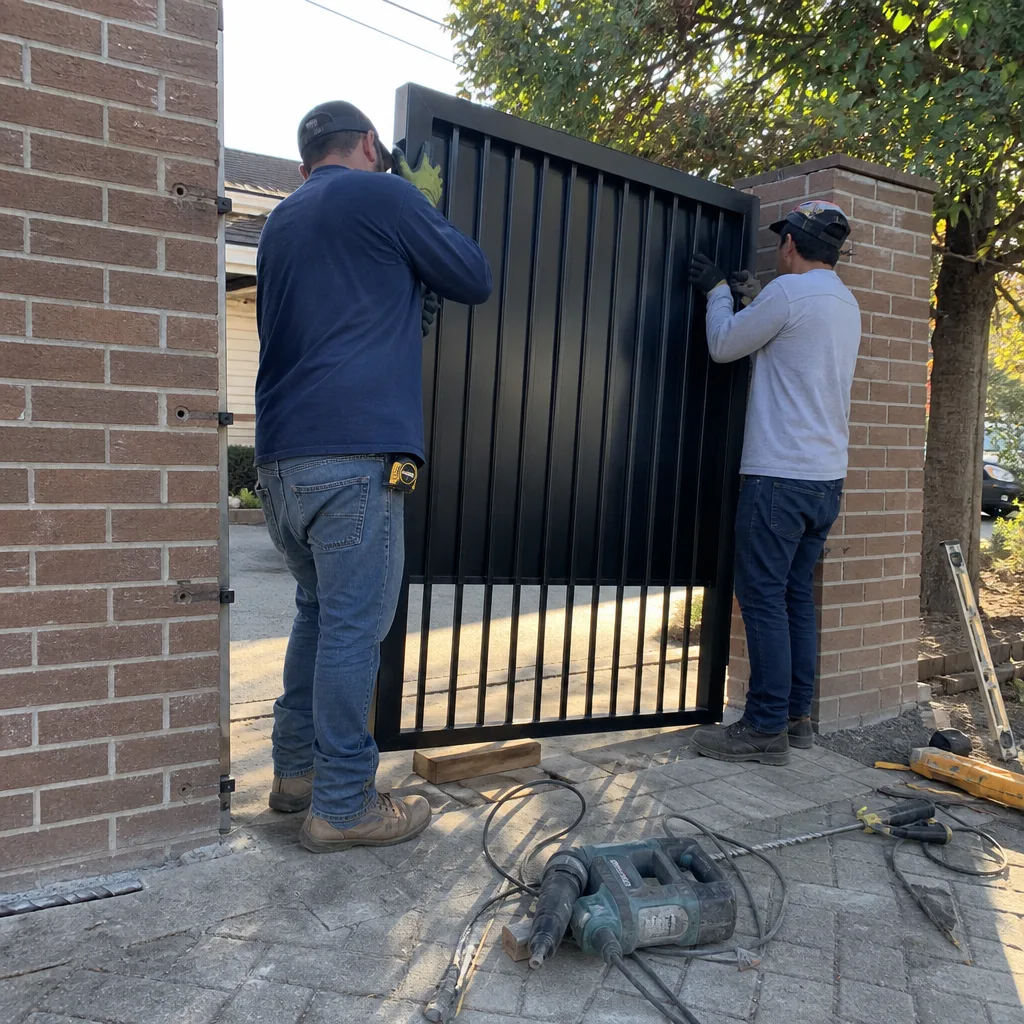
The best maintenance habit we’ve seen from Oakland homeowners is also the simplest: a single-page log that stays with the gate, not with the homeowner. When you sell the house, the log stays. When a technician visits in 2028, they read the log instead of asking you what happened in 2025.
The Log Format
One page, laminated, attached to the operator housing or inside the control box with a zip-tie. Here’s what it contains:
- Gate specifications: Swing or slide, single or dual, approximate weight, operator brand and model, date of installation.
- Baseline measurements: Post plumb (October), hinge gaps (October), limit-switch settings if known, photo-eye alignment reference.
- Seasonal entries: Date, inspector name, what was checked, what was found, what was done, next action needed.
- Service history: Date, company name, technician name, work performed, part numbers installed, written price paid.
Sample Entry
10/15/2024 - Homeowner check. Post plumb: 1/8″ toward street at hinge post, plumb at latch post. Hinge gaps: 3/16″ top, 1/4″ bottom. Drain clear. Battery passed 3-cycle test. Enclosure seal pliable. No action needed. Next check: April 2025.
That’s 45 words, 3 minutes to write, and it tells a technician in 2027 exactly what the gate looked like when it was healthy. Compare that to the typical service call where the homeowner says, “It’s been making that noise for a while,” and the technician spends 30 minutes reconstructing history.
At Vance Gate Repair Oakland, we fill out the service-history section of your log on every visit, under Haven Standard Clause 4 (Evidence on every job). You get a copy, the log gets updated, and the next technician - us or someone else - starts with facts instead of guesses.
Common Mistakes to Avoid
- Waiting for the gate to fail before acting. Oakland’s seasonal pattern is predictable. The homeowner who checks in October and April prevents the April emergency call. The homeowner who waits for the grinding noise pays for a motor replacement instead of a limit-switch adjustment.
- Measuring post plumb by eye. “It looks straight” is not a measurement. A post can be 1/2 inch out of plumb and look fine until the gate binds. Use a level, record the number, compare season to season.
- Ignoring the battery until the power goes out. California’s fire-code battery backup is not a suggestion. Test it annually, replace every 3-4 years regardless of test results, and never assume a gate that works on AC will work when the grid fails.
- Using the wrong lubricant on the chain or rack. WD-40 is a solvent, not a lubricant. It strips existing grease and attracts dust. Use a lithium-complex or calcium-sulfonate grease rated for outdoor gate use. In marine-exposed Oakland locations, we specify greases with corrosion inhibitors.
- Re-calibrating limit switches without checking post plumb first. If the post moved, re-calibrating the operator is a temporary fix. The gate will work for weeks or months, then fault again when the post moves further. Fix the geometry, then calibrate.
- Throwing away old service records. The written estimate from 2019 tells a technician what parts were installed, what the gate cost to fix, and whether the same problem keeps recurring. Keep records for the life of the gate plus 7 years.
- Assuming all operators work the same. A LiftMaster limit-switch procedure is different from a FAAC procedure, which is different from BFT. The manual matters. If you don’t have it, download it. If you can’t find it, the model number on the operator housing is enough for us to source it.
When to Call a Professional
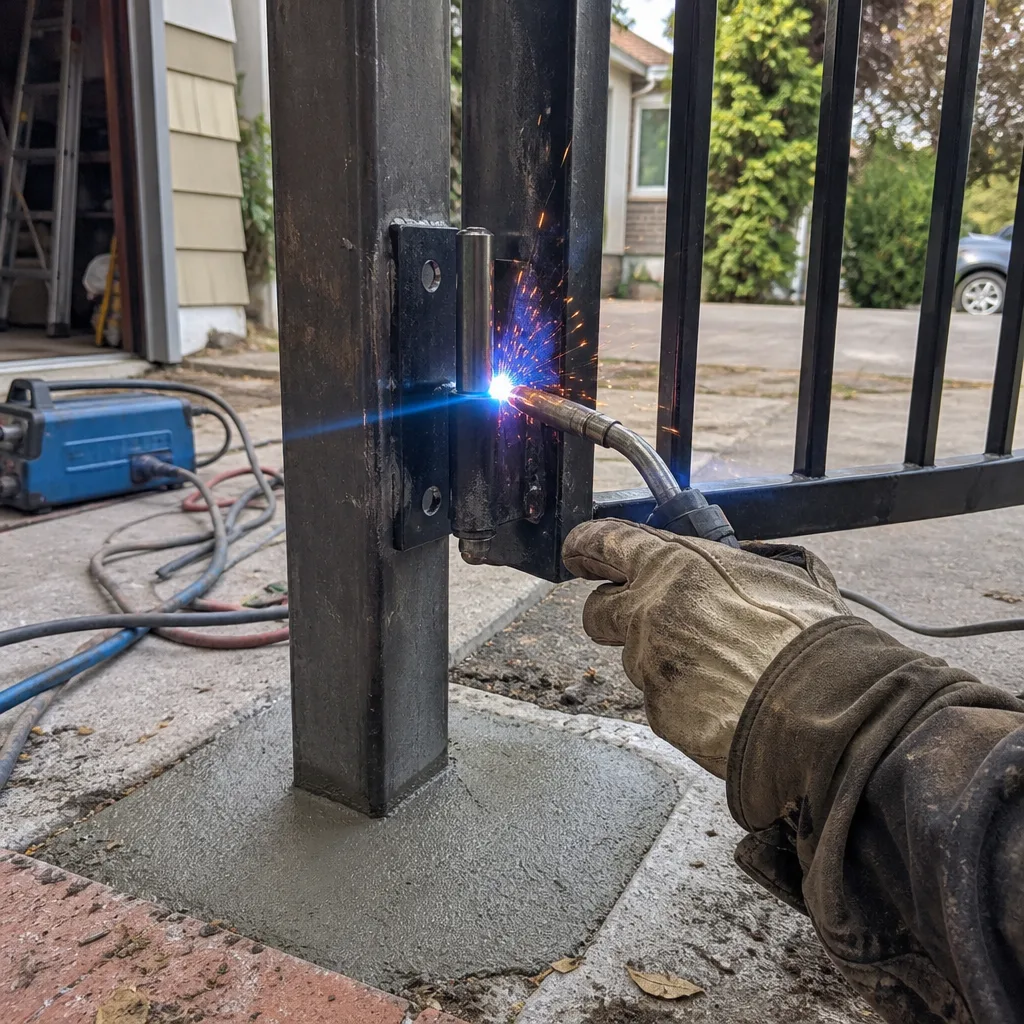
Some gate maintenance is within reach of a careful homeowner with a level and a wrench. Some is not. Call a professional when you find post movement greater than 1/2 inch from baseline, when the operator faults repeatedly after re-calibration, when you hear grinding or clicking from the gearbox, or when the gate reverses unpredictably and you cannot identify the cause. Electrical troubleshooting on 120V gate operators carries shock and fire risk. Welding on gate frames requires structural knowledge most homeowners don’t have. And any repair that involves releasing the tension on a spring-assisted swing gate can cause serious injury - the spring stores enough energy to throw a gate leaf with force.
Vance Gate Repair Oakland offers free estimates in Oakland. We’ll measure your posts, read your operator, and give you a written price before any work starts. Call (628) 270-2709. If you have a written estimate from another company, bring it - we review competitor quotes at no charge.
Frequently Asked Questions
A professional seasonal inspection and tune-up typically runs $150-$280, depending on gate type and whether adjustments or part replacements are needed. That covers post plumb measurement, operator calibration, safety-system testing, and documentation. Emergency repairs that could have been prevented by seasonal maintenance average $400-$900. We quote every job in writing before starting work - no call-for-pricing, no surprise invoice. Call (628) 270-2709 for an exact quote; estimates are free.
Yes, for the inspection and documentation portions. Measuring post plumb, checking seals, testing the battery backup, and keeping a log are all within reach of most homeowners. Browse our more guides & resources for additional maintenance tips. We do not recommend DIY adjustment of high-torsion spring systems, electrical troubleshooting inside operator enclosures, or post-resetting that requires excavation and concrete work. Those carry injury risk and can void your operator warranty if done incorrectly. For the hands-on work, a professional visit is the safer investment.
The rain saturates Oakland’s clay soil, which swells and shifts gate posts over months. The operator compensates until the geometry exceeds its adjustment range. By April, the soil is at maximum saturation, the posts have moved furthest from their dry-season position, and the operator faults. The failure appears sudden, but the cause accumulated over winter. October baseline measurements let you catch the movement before it reaches the failure point.
Every 3-4 years, regardless of test results. Lead-acid gate batteries degrade predictably in California’s temperature swing, and a battery that passes a 3-cycle test in October can fail at cycle two in a February storm. Mark the installation date on the battery case and schedule replacement proactively. If your operator uses a sealed AGM battery, the interval extends to 4-5 years, but the test schedule remains annual.
A photo eye (infrared beam) detects any object breaking the beam path across the gate opening. A safety edge (rubber contact strip) detects physical pressure on the gate itself. UL 325 safety standards require both on most automated gates: the photo eye protects the opening, the edge protects the gate’s leading edge. In Oakland, we’ve found photo eyes misaligned by post movement and safety edges cracked by heat - both need seasonal attention. Neither replaces the other.
We service nine major automation brands: LiftMaster, FAAC, BFT, Linear, Viking, Ghost Controls, DoorKing, Elite, and Mighty Mule. We do not steer customers toward replacement when repair is viable, and we do not claim exclusivity to any single brand. If your operator is one we service, we’ll repair it. If it’s obsolete or parts are unavailable, we’ll tell you that in writing with documentation, not with a sales pitch. Our Vance Gate Repair Oakland home page lists current service capabilities.
The Bottom Line
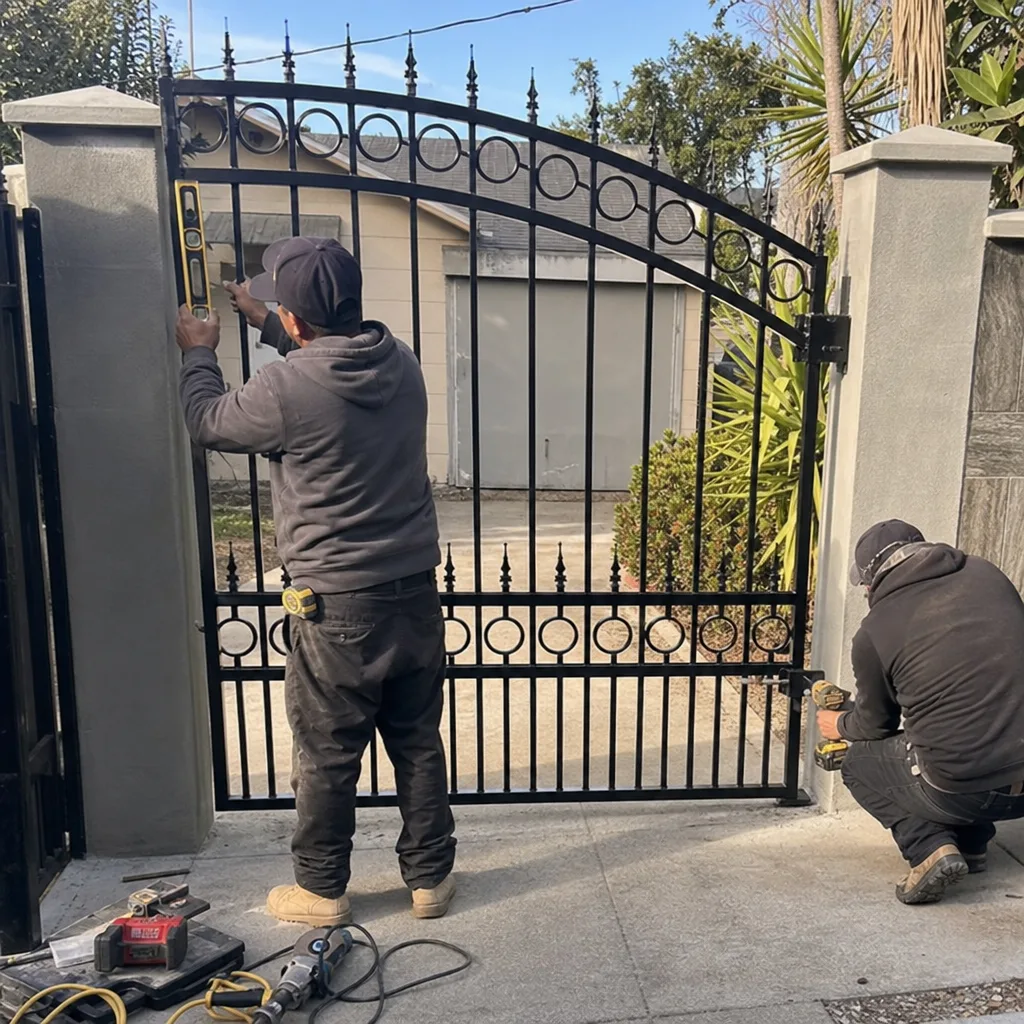
Oakland’s gate problems are seasonal, predictable, and preventable. The marine layer corrodes, the rains shift posts, the dry heat cracks rubber. A homeowner who checks in October, April, July, and September - and writes down what they find - avoids the emergency calls that spike when everyone else discovers the same problem at once. The ten minutes per season you spend with a level and a notebook pays back in years of reliable operation, documented history, and repair quotes that reflect maintenance instead of neglect. Start with the October checklist before the rains begin. If you want a professional baseline, or if your measurements show movement beyond what you’re comfortable handling, we’re here to measure, document, and quote in writing.
Call (628) 270-2709 for a free estimate. A live person answers, 24 hours a day.
Written by Adrian Vance, Owner at Vance Gate Repair Oakland, serving Oakland since 2014.