
Last updated September 22, 2026
Free on-site gate assessment - hinges, posts, and your LiftMaster or Nice gate operator checked before anything is quoted
The assessment is free and the quote is the invoice.

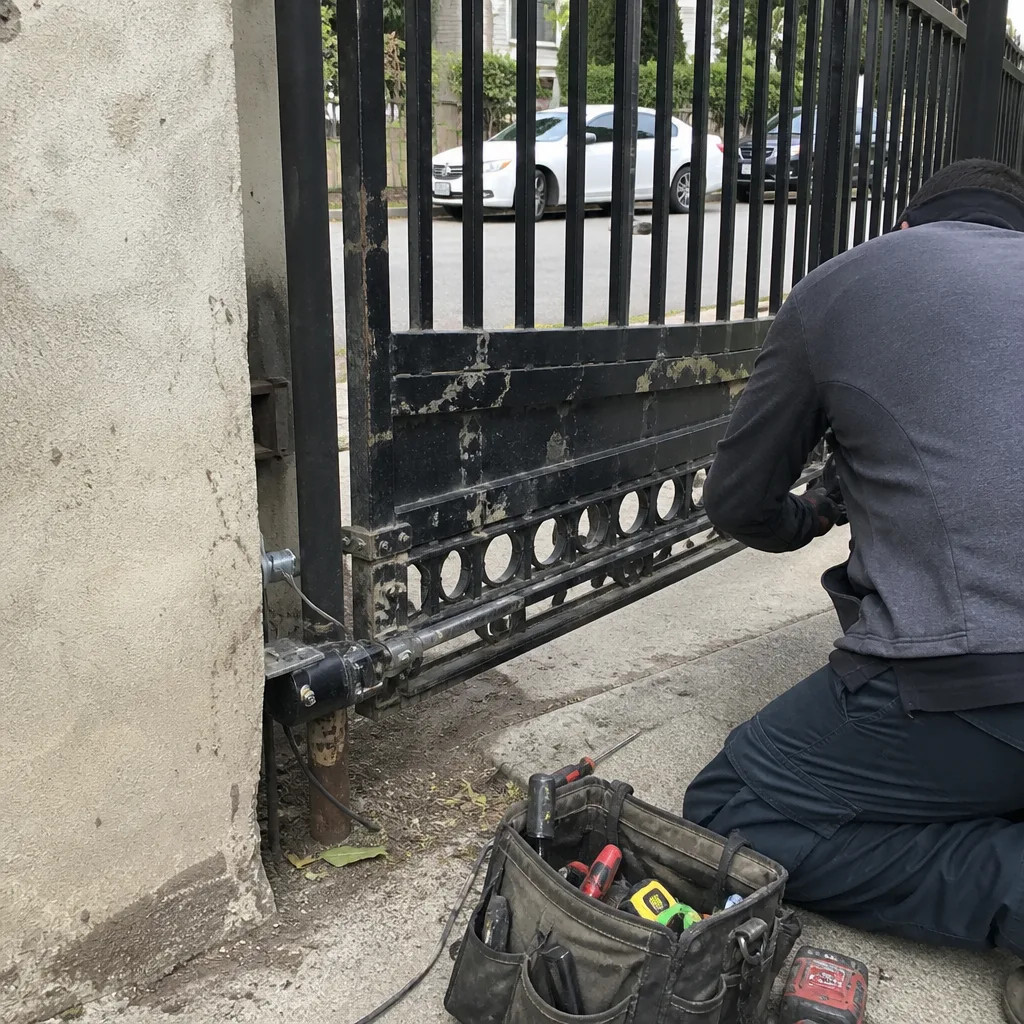 Before
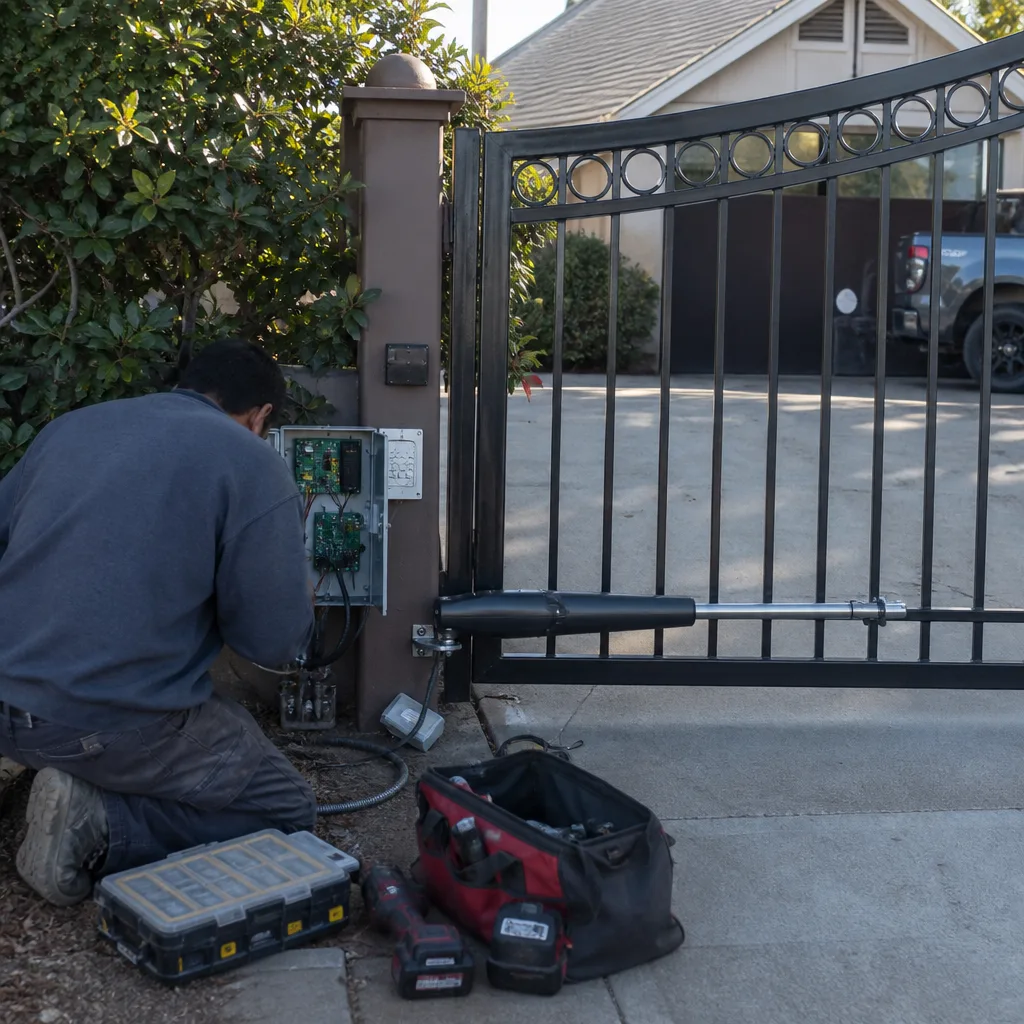 After
After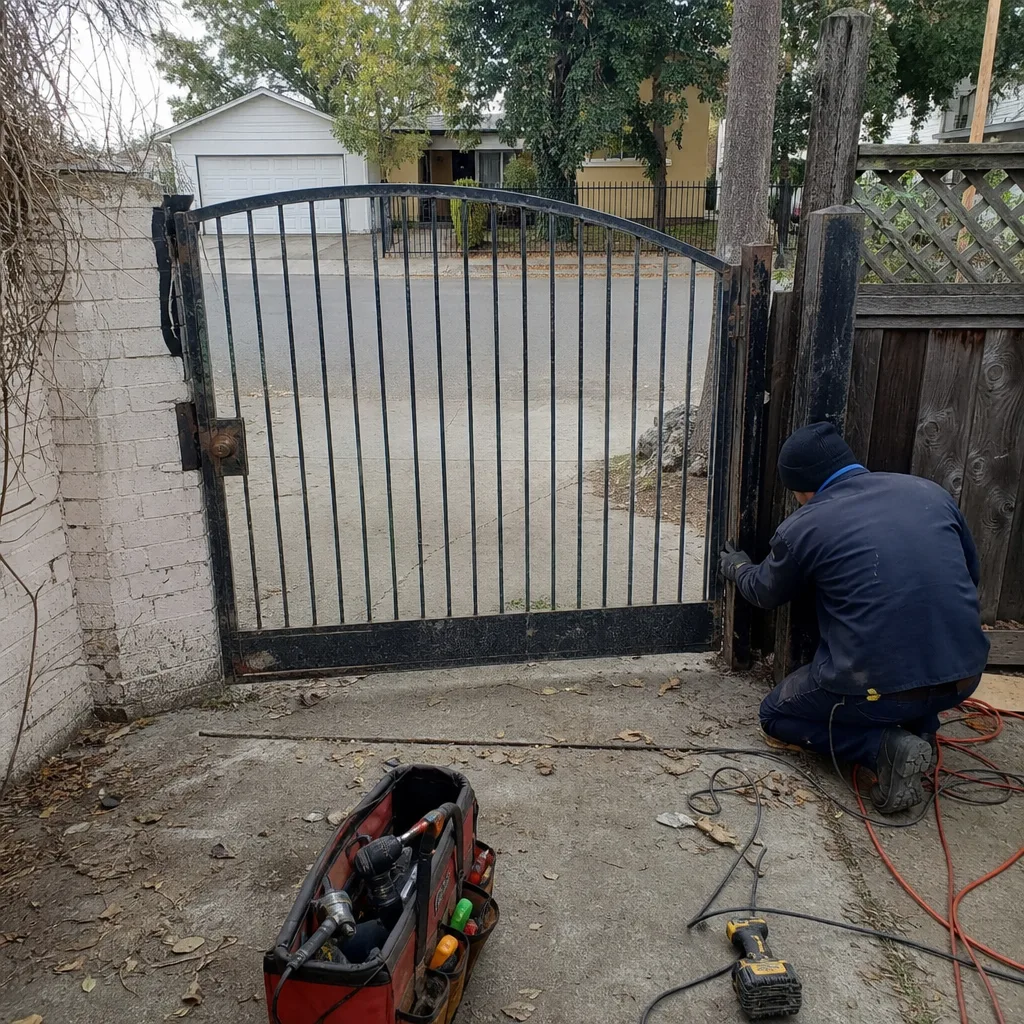 Before
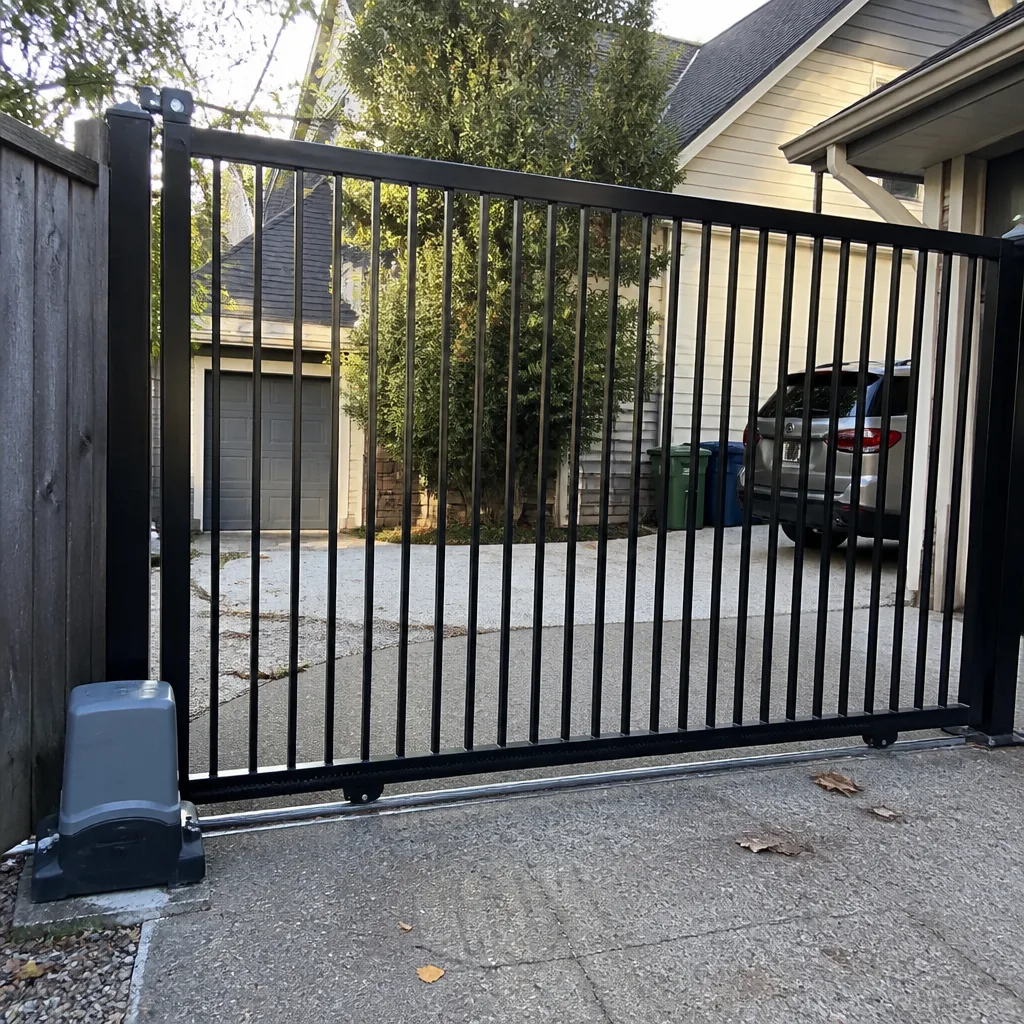 After
After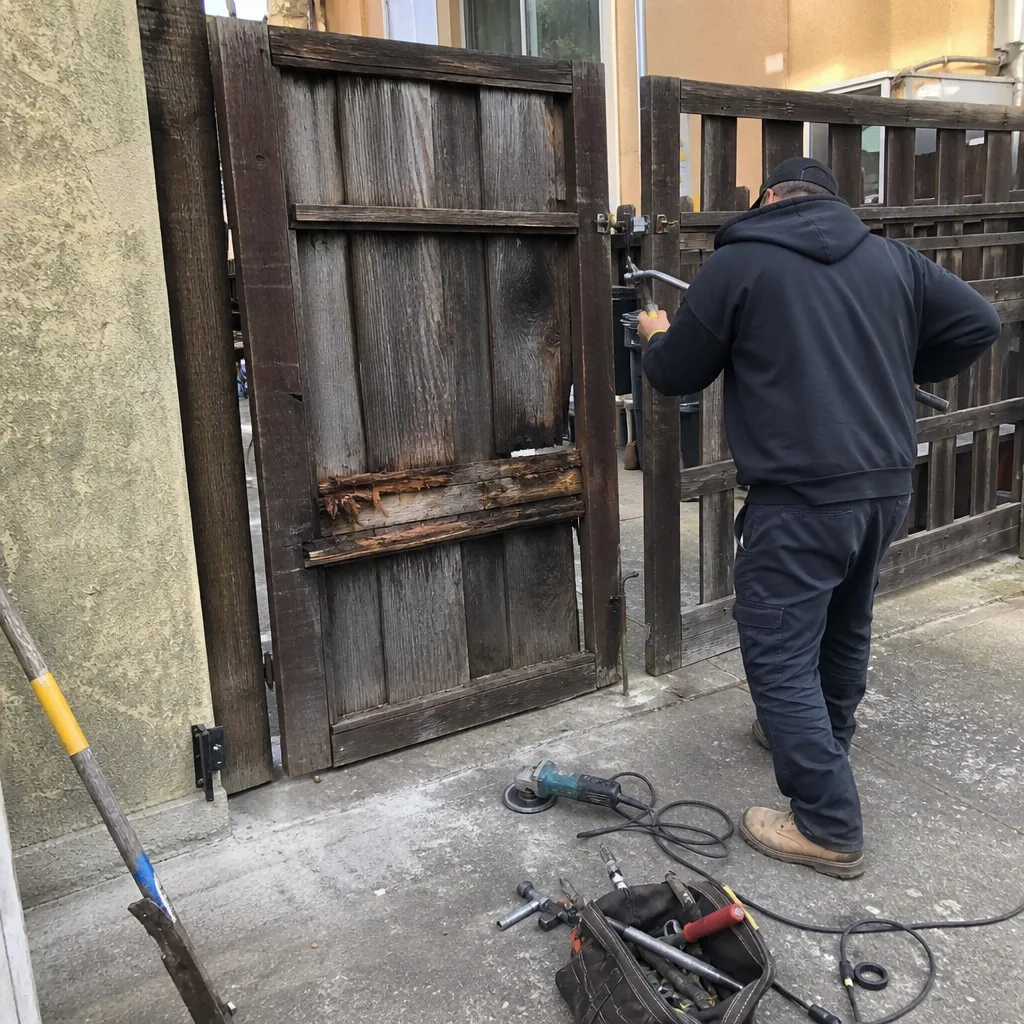 Before
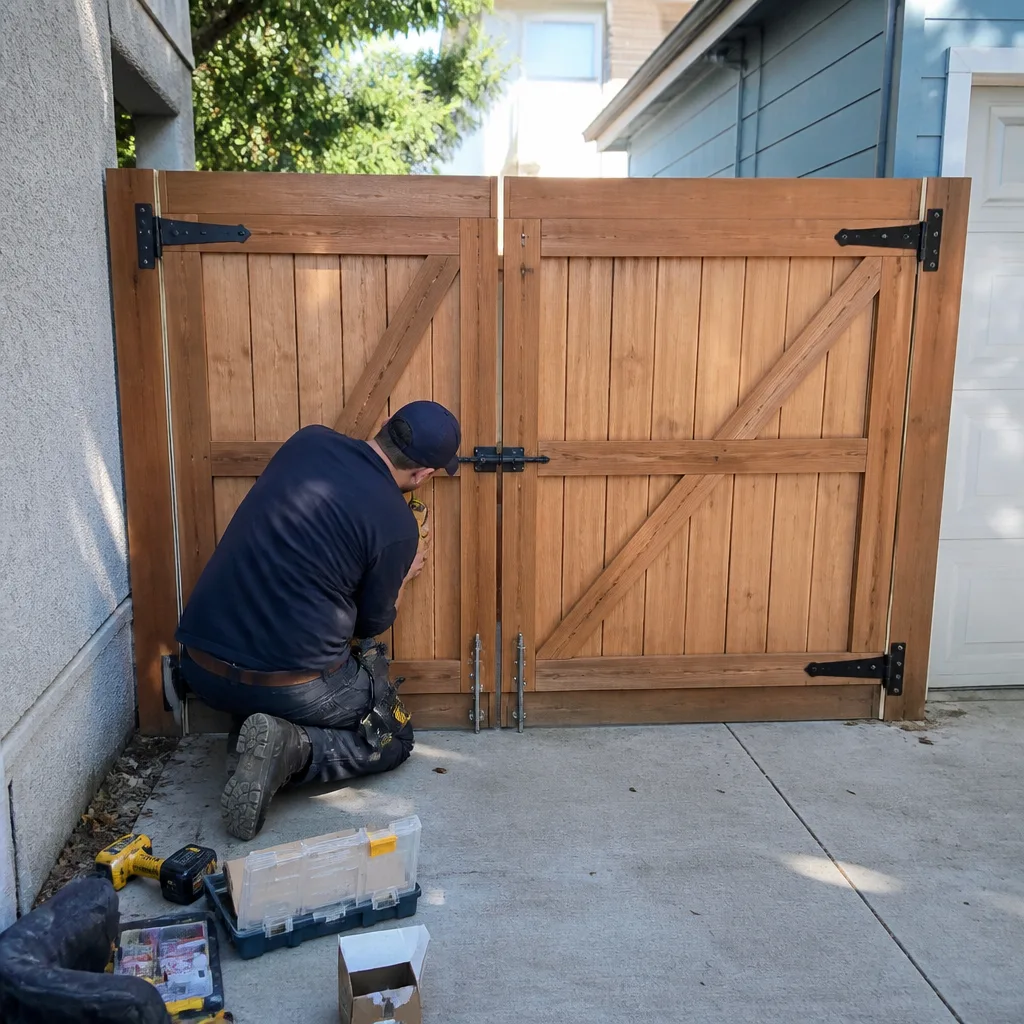 After
AfterGate Repair Warning Signs: A Oakland Homeowner’s Reference Guide
A gate that hesitates for two seconds before moving is not “just slow.” It’s an operator working against mechanical resistance it was never designed to overcome, and that resistance will destroy the motor before most homeowners decide to call someone. In Oakland, where hillside properties in Montclair and Piedmont Pines put extra load on swing-gate hinges, and where salt air from the Bay accelerates corrosion on coastal-facing hardware, we’ve seen $150 adjustment jobs become $1,400 operator replacements because the warning signs were misread or ignored. This guide, along with our Seasonal Gate Repair Care for Oakland: Year-Round Homeowner’s Guide, teaches you what a healthy gate sounds and moves like, so you catch problems early and pay for maintenance instead of reconstruction.
Quick Answer
Most failing gates in Oakland announce themselves through sound and movement patterns before showing visible damage. Listen for a resistance hum (motor straining), grinding from the hinge or wheel bearings, or relay clicks without movement. Watch for hesitation on startup, reversal mid-cycle, stopping short of the closed position, or slow drift open overnight. These signs typically indicate mechanical resistance, electrical fault, or structural wear that costs $150-$400 to address early with Gate Repair services, versus $800-$1,800 if the operator fails completely.
Table of Contents
- Audible Warning Signs: What Your Gate Is Trying to Tell You
- Movement Pattern Warnings: Reading the Motion
- Visible Indicators Homeowners Almost Always Misread
- Electrical Warning Signs You Can Spot Without Tools
- The Compounding-Failure Pattern: How Small Signs Become Big Bills
- What Early Repair Costs Versus Delayed Repair in Oakland
- Preventive Checks Every Oakland Homeowner Should Do
- Common Mistakes to Avoid
- When to Call a Professional
- Frequently Asked Questions
 Before
 After
AfterAudible Warning Signs: What Your Gate Is Trying to Tell You
Sound is the earliest and most reliable indicator of gate failure. A healthy gate operator produces a clean relay click followed by smooth motor operation. Anything else is diagnostic information.
The Normal Relay Click
When you press your remote or keypad, you should hear a single, sharp click from the operator cabinet. This is the control board sending power to the motor. In Oakland’s older homes, particularly in Rockridge and Temescal where original gate installations date to the 1980s and 1990s, this click may be slightly louder due to aging relay contacts. That’s normal. What follows the click matters more than the click itself.
The Resistance Hum
If the click is followed by a low, strained humming that lasts more than a second before the gate moves, or persists while the gate moves, the motor is drawing excess amperage against mechanical resistance. This is the sound we hear most often on hillside properties in the Oakland Hills and Piedmont Pines, where gate posts settle unevenly and hinge alignment shifts over time. The motor is not failing; it’s being forced to work in conditions it wasn’t specified for. Left unaddressed, the overload protection will trip repeatedly, and eventually the motor windings will overheat and fail.
The resistance hum typically indicates one of three conditions:
- Hinge binding: The gate leaf has shifted on its hinges, pinching the barrel or galling the pin. Common after wet winters in Oakland, when soil expansion and contraction move post foundations.
- Track or wheel obstruction: On sliding gates, debris in the track or flat-spotted wheels create drag. In the leaf-heavy months of late fall in Oakland’s canyon neighborhoods, we’ve found acorn shells and eucalyptus bark packed into track systems.
- Operator undersized for current load: The motor was correctly specified for the gate when installed, but added weight (a steel privacy panel, climbing vines, moisture-soaked wood) has increased the load beyond the operator’s rated capacity.
The Bearing-Failure Grind
A metallic grinding or rumbling, distinct from the smooth whir of a healthy motor, indicates bearing failure in the operator’s gearbox or in the gate’s hinge/wheel assemblies. On Viking operators, which we service regularly in Oakland’s commercial and residential properties, the gearbox bearings are sealed and not user-serviceable. Grinding from the gearbox means replacement or rebuild. On hinge bearings, the grinding means the grease has washed out or the bearing race has cracked. In either case, continuing to operate the gate will throw metal debris into the mechanism and multiply the damage.
The Click With No Response
A relay click followed by silence typically indicates an electrical fault: failed capacitor, tripped thermal overload, or control board not sending sustained power to the motor. On DoorKing systems common in Oakland’s multi-tenant properties, this pattern often traces to a failed start capacitor, a $45 part that takes 20 minutes to replace. Homeowners who don’t recognize the pattern often replace the entire operator.
What to document: Record a 10-second video of the sound on your phone. Note the time of day, temperature, and whether the gate had been idle for hours or was cycling frequently. This information lets a technician distinguish thermal issues from mechanical ones before arriving.
Movement Pattern Warnings: Reading the Motion
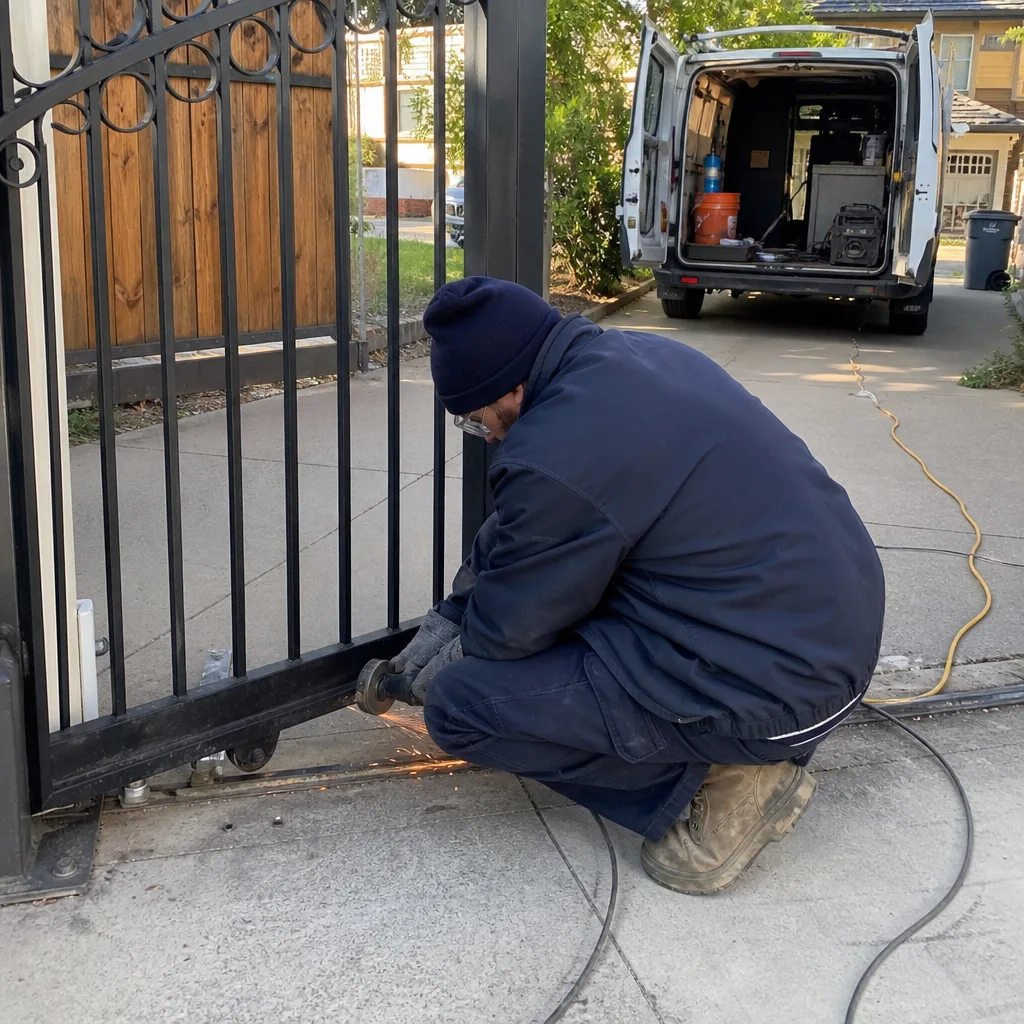
A gate’s movement pattern is as diagnostic as its sound. Healthy gates accelerate smoothly, travel at consistent speed, and decelerate before reaching the limit of travel. Any deviation is a specific failure mode.
Hesitation on Startup
The gate pauses for one to three seconds after the relay click before beginning to move. This is never normal. It indicates the motor is building torque against resistance before overcoming static friction. On Ghost Controls systems, which use DC motors with soft-start programming, a slight ramp-up is designed in. But a distinct pause, or a visible shudder before movement, means mechanical binding or a failing start capacitor. In Oakland’s flatlands near the Bay, where morning fog keeps hardware damp for hours, we’ve seen hesitation disappear by afternoon as components dry. That’s still a warning: moisture is penetrating the system and will eventually cause corrosion.
Reversing Mid-Cycle
The gate begins to open or close, then reverses direction without reaching the limit. This is the most commonly misinterpreted warning sign. Homeowners almost always assume the photo-eye (safety beam) is misaligned or obstructed. Sometimes that’s true. More often, the operator’s internal force-sensing circuit has detected excess resistance and interpreted it as an obstruction. The gate reverses to protect against crushing something that isn’t there.
Mid-cycle reversal indicates:
- Mechanical resistance increasing during travel: A hinge that binds at mid-swing, a sliding gate wheel that drops into a worn track section, or a post that has shifted and now pinches the gate at a specific point in its arc.
- Force setting improperly calibrated: The operator’s internal potentiometer or digital force setting is too sensitive, often because a previous technician adjusted it upward to compensate for developing mechanical resistance rather than fixing the underlying problem.
- Intermittent electrical fault: A loose connection in the motor circuit causes momentary current drop, which the control board interprets as a stall.
In Oakland’s seismic zone, where minor ground movement is constant, we see mid-cycle reversal most often on gates installed more than ten years ago on independent post foundations that have settled differentially. The gate still opens and closes, but the geometry has shifted enough that the operator must work harder at one point in the cycle.
Stopping Short of Closed
The gate reaches a consistent point short of full closure and stops. The operator thinks the job is done. This is a limit-switch issue, but the underlying cause varies. On mechanical limit switches (common on older Elite and Mighty Mule systems), the actuator arm may have slipped on its shaft or the switch itself may have cracked from vibration. On electronic limit systems (LiftMaster, FAAC, BFT), the control board has lost its position reference and needs recalibration.
Stopping short of closed is a security failure, not merely an inconvenience. A gate that leaves a 6-inch gap is not a gate. In Oakland’s higher-crime corridors, we’ve responded to calls where the homeowner didn’t realize the gap had grown from 2 inches to 8 inches over six months because they rarely inspected the closed position.
Drifting Open Overnight
The gate closes completely, then slowly opens over hours while unattended. This indicates hydraulic or mechanical failure of the hold-closed mechanism. On swing gates with hydraulic operators (FAAC, some Viking models), the internal bypass valve is leaking and cannot maintain pressure against wind or gravity. On sliding gates, the magnetic or mechanical brake in the operator has failed, or the gate is out of plumb and gravity is slowly overcoming friction.
Drift is particularly common in Oakland’s hillside neighborhoods, where gates are rarely perfectly level and wind patterns channel through canyons overnight. A gate that drifts open once will drift further over time as wear increases. We’ve documented gates in Montclair that went from 2 inches of overnight drift to fully open in three weeks.
Visible Indicators Homeowners Almost Always Misread
Visual inspection catches problems late, but it still catches them before catastrophic failure. The key is distinguishing cosmetic issues from structural ones.
Surface Rust Versus Structural Rust
Orange staining on hinge pins or bolt heads is surface oxidation. It looks alarming but rarely affects function if the underlying metal is sound. Wire-brush the area, apply cold-galvanizing compound, and monitor. Structural rust is different: flaking metal that reduces cross-section, pitting that creates stress risers, or rust bleeding from inside a welded joint. On gates in Oakland’s coastal exposure zones, near the Emeryville border and along the Bay Trail, we’ve seen 4-inch hinge pins reduced to 2-inch effective diameter by internal corrosion that showed only as slight swelling and orange weeping at the barrel seam.
Check hinge barrels by attempting to rock the gate leaf perpendicular to its swing direction. Any movement indicates the pin or barrel is worn, regardless of visible rust. A tight hinge with surface rust is cosmetic. A loose hinge with no visible rust is structural failure in progress.
Hairline Post-Base Cracks Versus Cosmetic Concrete Settling
Concrete at the base of a gate post will crack as it cures and as soil settles. Hairline cracks that are vertical or follow the post perimeter are typically cosmetic. Cracks that run diagonally across the footing, or that show displacement (one side higher than the other), indicate the post is moving and will eventually bind or fail.
In Oakland’s clay-heavy soils, particularly in the flats and along former creek beds now built over, seasonal moisture changes cause significant soil movement. A post that was plumb in October may lean 2 degrees by April. That lean loads the operator asymmetrically and will eventually cause the resistance hum or mid-cycle reversal.
Cable and Chain Wear Patterns
On chain-driven sliding gates, chain sag of more than 2 inches mid-span indicates stretch or wear at the pins. Individual links that don’t seat cleanly into the sprocket teeth will accelerate sprocket wear. On cable-operated systems, fraying at the termination fitting is normal; fraying mid-cable is not, and indicates the cable is rubbing against a sharp edge or has been kinked and is breaking from the inside out.
Operator Cabinet Condition
Wasps, rodents, and moisture are the three enemies of gate operators in Oakland. A cabinet with corroded mounting feet, stained interior, or insect nests on the heat-sink fins is operating in conditions that will cause board failure. The operator may function today, but the environment is wrong. We’ve replaced DoorKing control boards in Oakland’s canyon properties where mud-dauber wasps had packed the ventilation slots with clay, causing thermal shutdown on hot afternoons.
Electrical Warning Signs You Can Spot Without Tools
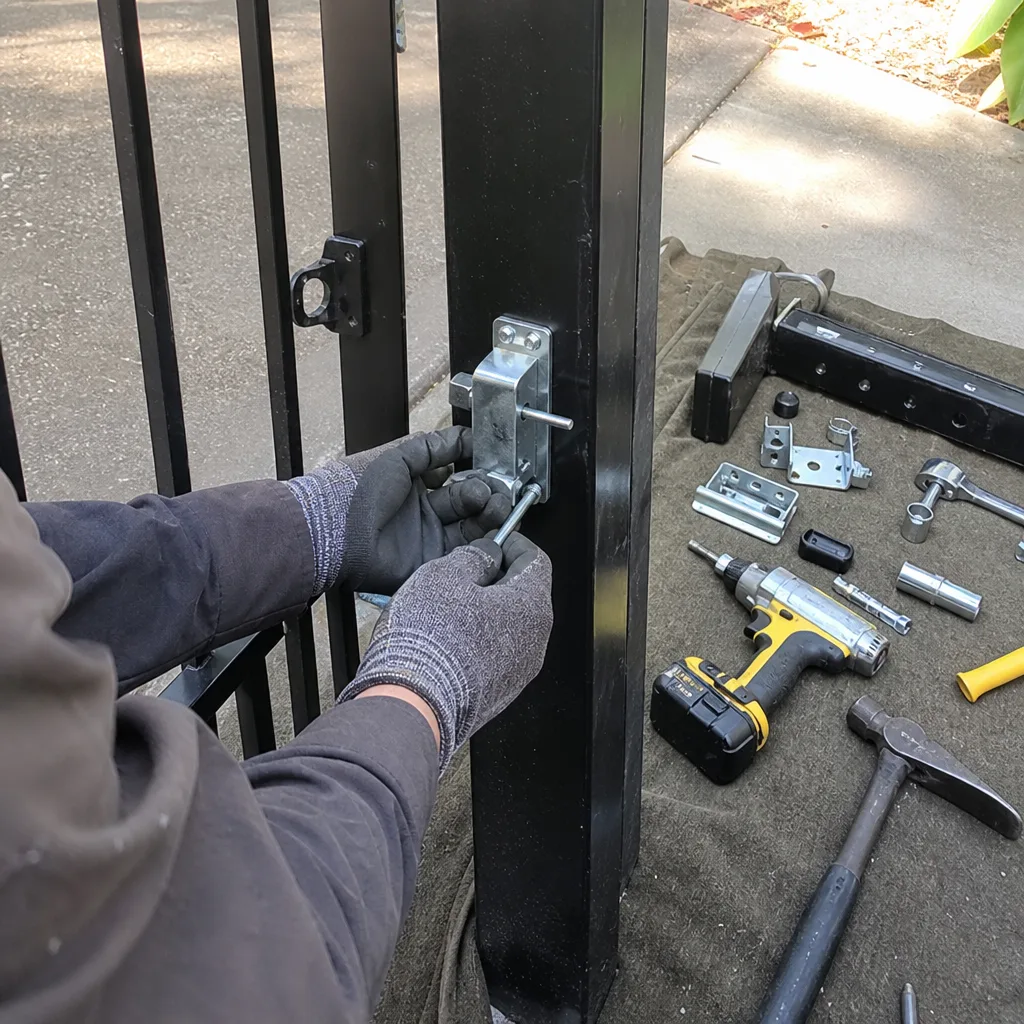
Modern gate operators communicate status through LED indicators. You don’t need a multimeter to read them; you need to know what the patterns mean.
LiftMaster Error Indicators
LiftMaster commercial and residential operators use a simple LED system. A steady green means normal standby. Flashing patterns indicate specific faults:
- One flash, pause, repeat: The operator has detected an obstruction or excess force during travel. Check for mechanical binding before assuming the safety devices are at fault.
- Two flashes: A safety device (photo-eye or edge sensor) is either disconnected or reporting an open circuit. In Oakland’s fog-prone microclimates, condensation on photo-eye lenses causes this pattern frequently between November and March.
- Four flashes: The control board has detected a motor overload or thermal trip. Allow 15 minutes to cool, then attempt one cycle. If the pattern repeats, the motor is working against resistance or has internal failure.
- Five flashes: Limit switch error or position loss. The gate doesn’t know where it is. Requires limit recalibration or switch replacement.
FAAC System Messages
FAAC operators, common in Oakland’s higher-end residential installations, use a two-digit display or color-coded LED. A steady red with no numeric display typically indicates the emergency release is engaged or the manual disconnect has been pulled. Flashing amber during operation indicates the encoder (position sensor) is not reading consistently, often due to debris on the magnetic ring or encoder gap that has shifted.
The FAAC “Err 1” message, which we see several times monthly in Oakland, means the control board has recorded five consecutive overload events and has entered a protective lockout. The gate will not operate until power is cycled and the underlying resistance is cleared. Homeowners who simply reset power without addressing the cause will see the lockout return, often within a single cycle.
DoorKing Diagnostic Patterns
DoorKing operators, widely used in Oakland’s multi-family and commercial properties, use a status LED that changes color and flash rate. Slow green flash means standby. Rapid green flash means the gate is in motion. Red flash patterns indicate faults:
- One red flash: Loop detector fault (vehicle detection coil). Common in Oakland where road base shifts and breaks loop wire.
- Two red flashes: Photo-eye or safety edge circuit open. Check for fog, misalignment, or damaged cable.
- Three red flashes: Motor overload or excessive current draw. The operator is working too hard.
- Continuous red: Control board has detected a fault that prevents safe operation. Requires technician diagnosis.
Power Supply Issues
Operators that work intermittently, or that fail only during specific times of day, may have a power supply problem rather than an operator problem. In Oakland’s older neighborhoods, particularly in areas with overhead utility service and mature trees, voltage sags during peak afternoon demand are common. An operator that works fine at 9 AM but stalls at 5 PM may be seeing 105 volts instead of 120. The operator isn’t broken; the power is inadequate. A qualified electrician or gate technician can verify with a logging voltmeter.
The Compounding-Failure Pattern: How Small Signs Become Big Bills
We’ve documented thousands of gate failures in Oakland since 2014. The pattern is remarkably consistent: three small warning signs appear in sequence, each ignored because the gate “still works,” followed by a single large failure that makes all three undeniable and expensive.
The Typical Sequence
Stage 1: The gate develops a slight hesitation on startup, perhaps two seconds. The homeowner notices but doesn’t act. The cause is usually minor hinge binding or a start capacitor beginning to weaken. Repair cost at this stage: $150-$250 for adjustment or capacitor replacement.
Stage 2: The hesitation persists, and a faint resistance hum appears during operation. The homeowner mentions it to a neighbor or searches online but doesn’t call. The mechanical resistance has increased, or the motor is compensating for weakening electrical components. Repair cost: $250-$450, typically including hinge service, limit recalibration, and electrical testing.
Stage 3: The gate begins reversing mid-cycle, particularly on cold mornings or after rain. The homeowner begins manually assisting the gate or using the emergency release. The operator’s force-sensing circuit is now detecting resistance that exceeds its safety threshold. The motor is overheating regularly. Repair cost: $400-$700, often requiring gearbox service, hinge replacement, and control-board reprogramming.
Stage 4: The operator fails completely. The relay clicks, but nothing moves, or the motor hums and smokes. The cumulative damage has destroyed the motor windings, cracked the gearbox, or burned the control board. The gate may also have structural damage from months of asymmetric loading. Repair cost: $800-$1,800 for operator replacement, plus any structural repair.
Why This Pattern Repeats
Each stage seems like a minor variation on the previous one. The gate still opens and closes, with some accommodation. Homeowners in Oakland’s busy professional households, particularly in the 32-50 demographic juggling work and family, deprioritize a “working” gate until it stops working entirely. For help choosing qualified help, see our How to Hire a Gate Repair Contractor in Oakland: A Step-by-Step Guide. The threshold for calling a technician rises with each accommodation: first it’s “I’ll just push it,” then “I’ll use the manual release,” then “I’ll park on the street until I have time to deal with this.”
The financial cost of delay is clear. But there’s also a security cost. A gate that reverses mid-cycle or stops short of closed is not securing the property. In Oakland’s higher-burglary neighborhoods, a partially functioning gate signals opportunity.
What Early Repair Costs Versus Delayed Repair in Oakland
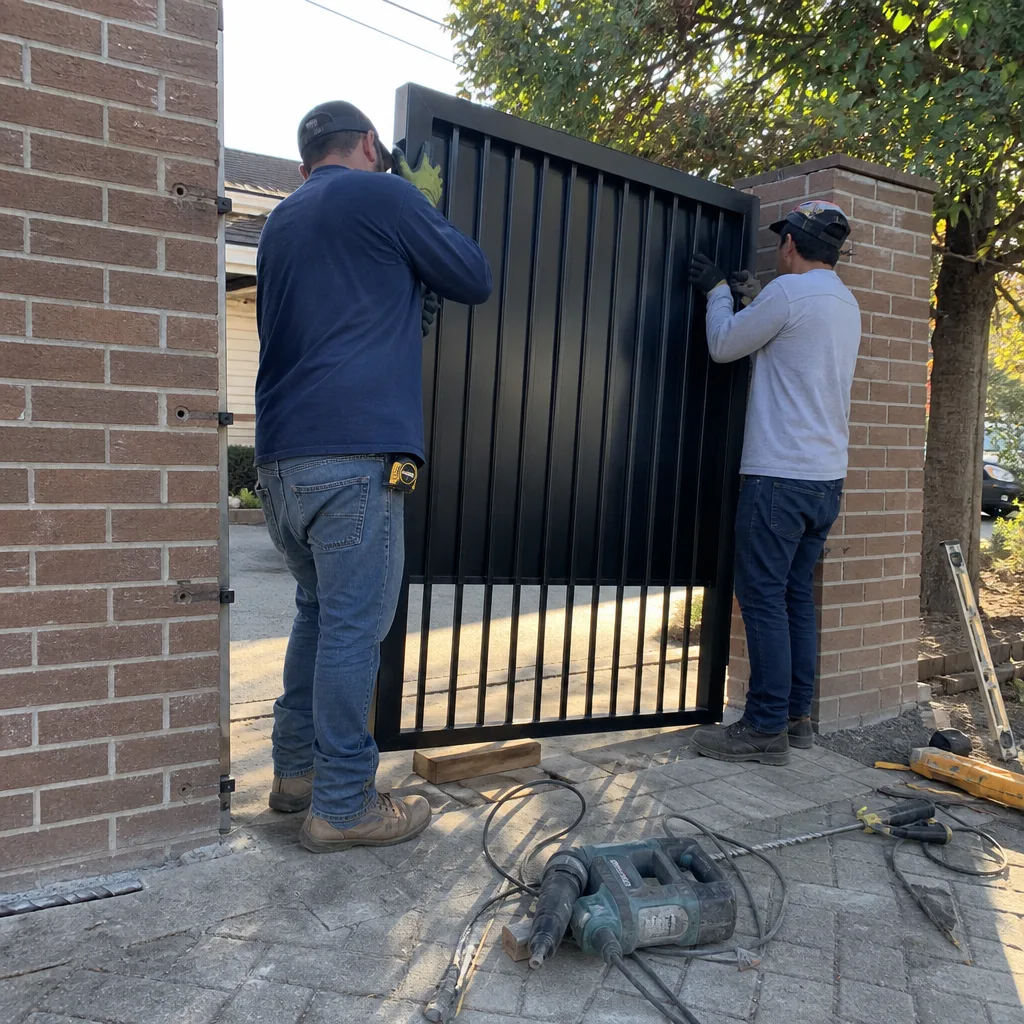
Pricing transparency is central to how we operate. These ranges reflect what we’ve charged on actual jobs in Oakland over the past 24 months, adjusted for current material costs. Every price is written and agreed before work starts, under The Haven Standard.
| Condition | Early Intervention | Delayed Repair |
|---|---|---|
| Hinge binding, adjustment only | $150-$220 | $350-$600 (hinge replacement + operator stress damage) |
| Start capacitor failure | $180-$250 | $650-$950 (motor overload damage + capacitor) |
| Limit switch drift | $160-$240 | $400-$700 (structural impact damage from incomplete closure) |
| Photo-eye misalignment | $120-$180 | $300-$500 (repeated force cycles damage operator) |
| Track debris/wheel flat spot | $140-$200 | $550-$900 (track repair + wheel replacement + operator strain) |
| Post settlement, minor | $400-$700 (post reset/replacement) | $1,200-$2,500 (operator failure + gate damage + post work) |
| Complete operator replacement | N/A (prevented) | $800-$1,800 (operator + installation + programming) |
These ranges are specific to the Oakland market, where labor rates, permit requirements, and travel distances differ from surrounding areas. Gate repair in Oakland carries additional considerations: Oakland’s seismic retrofit requirements for certain post foundations, the city’s tree-protection ordinances that can affect access for equipment, and the microclimate variations that accelerate corrosion in some neighborhoods versus others.
Under our 365-Day Done Right Promise, any repair we perform is covered for one full year. If the hinge adjustment doesn’t hold, or the capacitor fails prematurely, we make it right at no additional charge. No argument, no fee, no expiration within that window.
Preventive Checks Every Oakland Homeowner Should Do
These checks take 10 minutes monthly and will catch most developing problems before they reach Stage 2 or 3 of the compounding pattern.
- Listen to the startup: Stand at the operator cabinet and activate the gate. The relay click to movement should be nearly instantaneous. A pause of more than one second means something is wrong.
- Watch the full cycle: Observe one complete open and close from the side, where you can see the gate profile against the background. Look for wobble, sag, or any point where the gate seems to stick or shudder.
- Check the closed position: With the gate fully closed, attempt to move it by hand. A properly functioning operator with a magnetic or mechanical brake should resist movement. If the gate moves easily, the hold-closed mechanism is failing.
- Inspect the post base: Look for new cracks, changes in grade around the footing, or water pooling. In Oakland’s winter rainy season, drainage around post foundations is critical.
- Clear the track or path: Remove leaves, gravel, and debris. On sliding gates, run a broom through the track and check that wheels roll freely by hand with the operator disengaged.
- Test safety devices: Block the photo-eye with a box during closing. The gate should reverse immediately. Test the edge sensor (if present) by pressing the contact strip. Test the loop detector by driving a vehicle over the exit loop.
- Document what you find: Photograph any changes from the previous month. Date the photos. This creates a record that any technician can use to distinguish rapid change from long-term wear.
For homeowners considering new gate installation in Oakland, these same inspection habits apply to evaluating proposals. A contractor who doesn’t discuss drainage, post depth, and operator specification for your specific gate weight and wind exposure is not planning for longevity.
Common Mistakes to Avoid
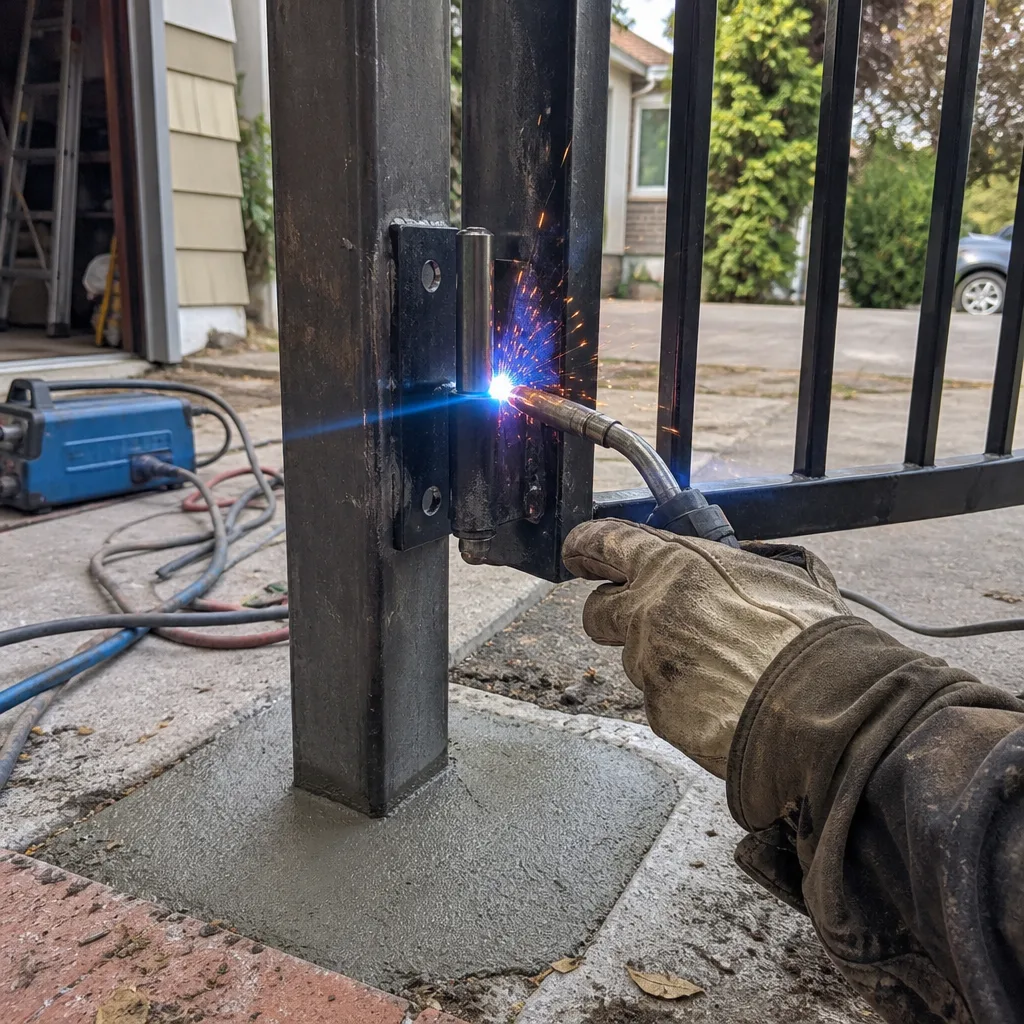
- Adjusting the force setting upward to compensate for resistance: This disables the safety system that protects against crushing. We’ve found operators in Oakland set to maximum force because a previous “technician” used the adjustment as a bandage instead of fixing the binding hinge. It’s dangerous and violates UL 325 standards.
- Ignoring seasonal changes: A gate that works fine in dry September but hesitates in wet January has a moisture or soil-movement problem. Waiting for “consistent” failure means waiting for total failure.
- Assuming the operator is the problem: We replace operators that were misdiagnosed by others at least monthly. A $1,200 operator replacement doesn’t fix a $200 hinge problem, and the new operator will fail the same way.
- Using generic lubricants on gate hardware: WD-40 is a solvent, not a lubricant. It displaces the grease you need and attracts dirt. In Oakland’s dusty summer conditions, this creates abrasive paste in hinge barrels.
- Neglecting the manual release: Every gate operator has an emergency release for power outages. If you don’t know where it is or how it works, you’ll damage the gate or operator trying to force it during the next PG&E shutdown.
- Delaying repair because “it’s still working”: The compounding-failure pattern is real and expensive. The gate that “still works” is actively destroying itself.
- Hiring based on lowest price without written scope: A verbal estimate and handshake leaves you with no recourse when the price doubles or the problem returns. Under The Haven Standard, the written price before work starts is non-negotiable.
When to Call a Professional
Call a technician when you observe any Stage 1 or 2 warning sign: hesitation, new sounds, or movement changes. Don’t wait for complete failure. The diagnostic cost is typically included in the repair, and early intervention prevents the exponential cost growth of compounding damage. Explore more guides & resources to keep your gate running smoothly.
Call immediately if the gate reverses unpredictably, moves without command, or if the operator shows continuous red or error patterns you cannot clear. These are safety hazards, not merely maintenance issues.
Call before storm season if your gate is in a wind-exposed or flood-prone area of Oakland. Preventive inspection and adjustment before the rainy season costs less than emergency repair during it.
Vance Gate Repair Oakland offers free estimates in Oakland. We’ll inspect the gate, identify the failure mode, and provide a written price before any work starts. Call (628) 270-2709. If you have a written estimate from another company, we’ll review it at no cost under our free second-opinion policy.
Frequently Asked Questions
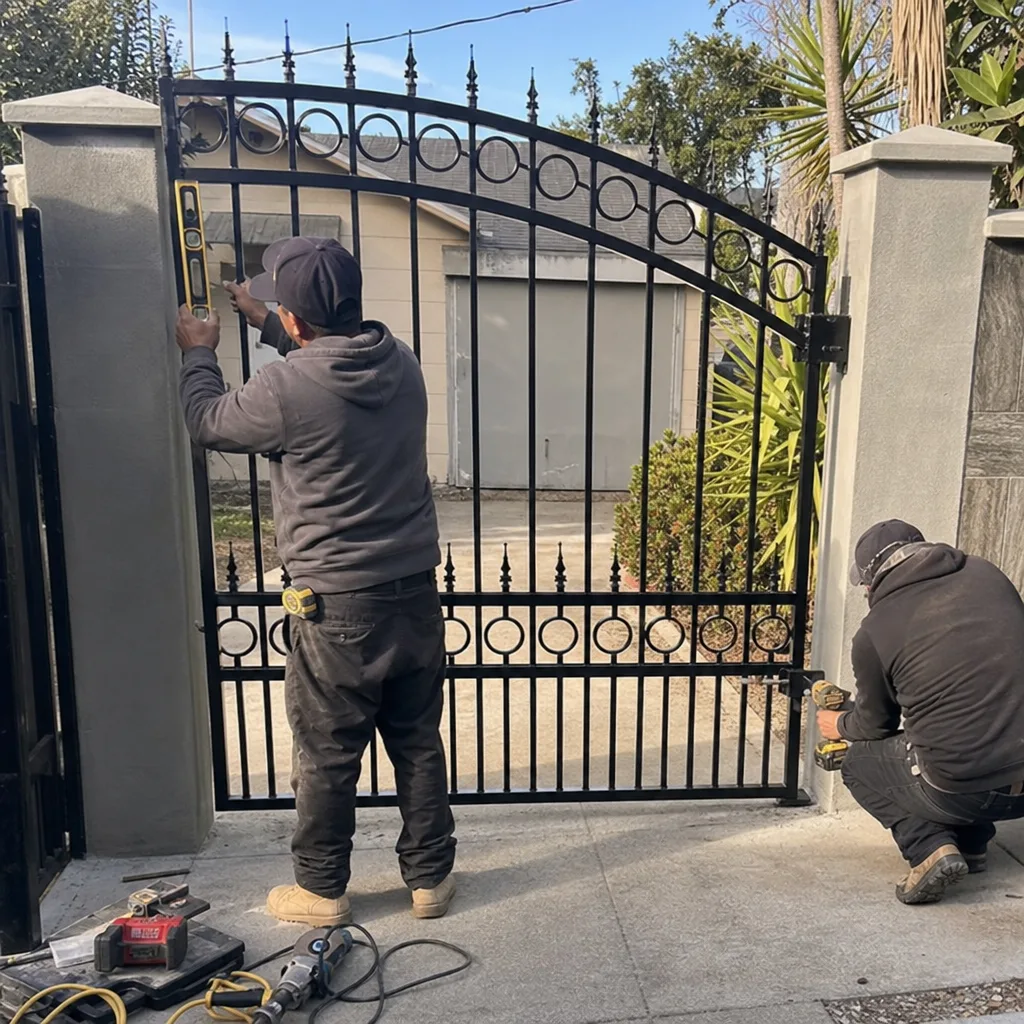
Most gate repairs in Oakland range from $150 to $700, depending on whether the problem is electrical, mechanical, or structural. Simple adjustments and component replacements (capacitors, limit switches, photo-eyes) typically fall in the $150-$300 range. Operator repairs or replacements range from $400 to $1,800. We provide a written price before any work starts, so you know the exact cost before we pick up a tool. Call (628) 270-2709 for a free estimate.
You can perform basic maintenance: clearing debris, testing safety devices, and visual inspection. We do not recommend DIY repair of operators, springs, or high-tension components. Gate operators contain capacitors that retain lethal charge after power-down, and the force settings affect safety-critical anti-entrapment functions. Incorrect adjustment can cause crushing injury or liability exposure. For electrical or mechanical repairs, use a technician who can document the work and certify compliance.
Oakland’s winter moisture and temperature variation affect gate systems in several ways. Soil expansion and contraction move post foundations, changing hinge alignment. Condensation on photo-eye lenses causes intermittent safety faults. Cold thickens grease in gearboxes and hinges, increasing resistance. And voltage sag during peak heating demand can starve operators of adequate power. These are all diagnosable and addressable before they cause permanent damage.
A properly specified and maintained operator should last 10-15 years in Oakland’s climate. We’ve serviced LiftMaster and FAAC operators in Oakland Hills homes that are 18 years old and still functional because they were correctly sized for the gate, installed with adequate drainage, and maintained regularly. Operators that fail in 5-7 years are typically undersized, overloaded by added gate weight, or starved by unresolved mechanical resistance.
We service nine major automation brands: LiftMaster, FAAC, BFT, Linear, Viking, Ghost Controls, DoorKing, Elite, and Mighty Mule. We do not steer customers toward replacement with a “preferred” brand. Our approach is to repair what you have when repair is viable, document the condition, and recommend replacement only when the operator is beyond economical repair or no longer supportable. For gate motor and opener service in Oakland, we carry common parts for all nine brands and can source proprietary components within 24-48 hours.
Under The Haven Standard Clause 4 (Evidence on every job), you receive a photographed record of what was found, what was adjusted, and what was installed. This includes wiring diagrams for any electrical work, limit-switch position readings, and part numbers for components replaced. You keep a copy; we file a copy in your job record. If a future technician needs to troubleshoot, they start with facts instead of guesswork. You don’t pay twice to rediscover the same problem.
A live person answers our phone 24 hours a day, seven days a week. For gates that are stuck open, stuck closed, or moving unsafely, we dispatch as quickly as traffic and location allow. For non-emergency repairs, we schedule at your convenience and still provide the same written price and documented record. Call (628) 270-2709 at any hour.
The Bottom Line
A gate’s warning signs are almost always audible and measurable before they become visible and expensive. The two-second hesitation, the resistance hum, the mid-cycle reversal, the overnight drift - these are not quirks. They are specific diagnostic information that a trained ear and eye can interpret. Oakland homeowners who learn these patterns catch problems at the adjustment stage, pay $150-$400, and preserve their operator for another decade. Those who wait pay $800-$1,800 and replace what could have been saved.
We document every gate we touch, price every job in writing before we start, and stand behind our work for 365 days. That’s not marketing language; it’s the documentation habit we brought from commercial access-control work to every residential driveway in Oakland. If your gate is showing warning signs, call us before the pattern completes.
Written by Adrian Vance, Owner at Vance Gate Repair Oakland, serving Oakland since 2014.