
Last updated September 22, 2026
Free on-site gate assessment - hinges, posts, and your LiftMaster or Nice gate operator checked before anything is quoted
The assessment is free and the quote is the invoice.
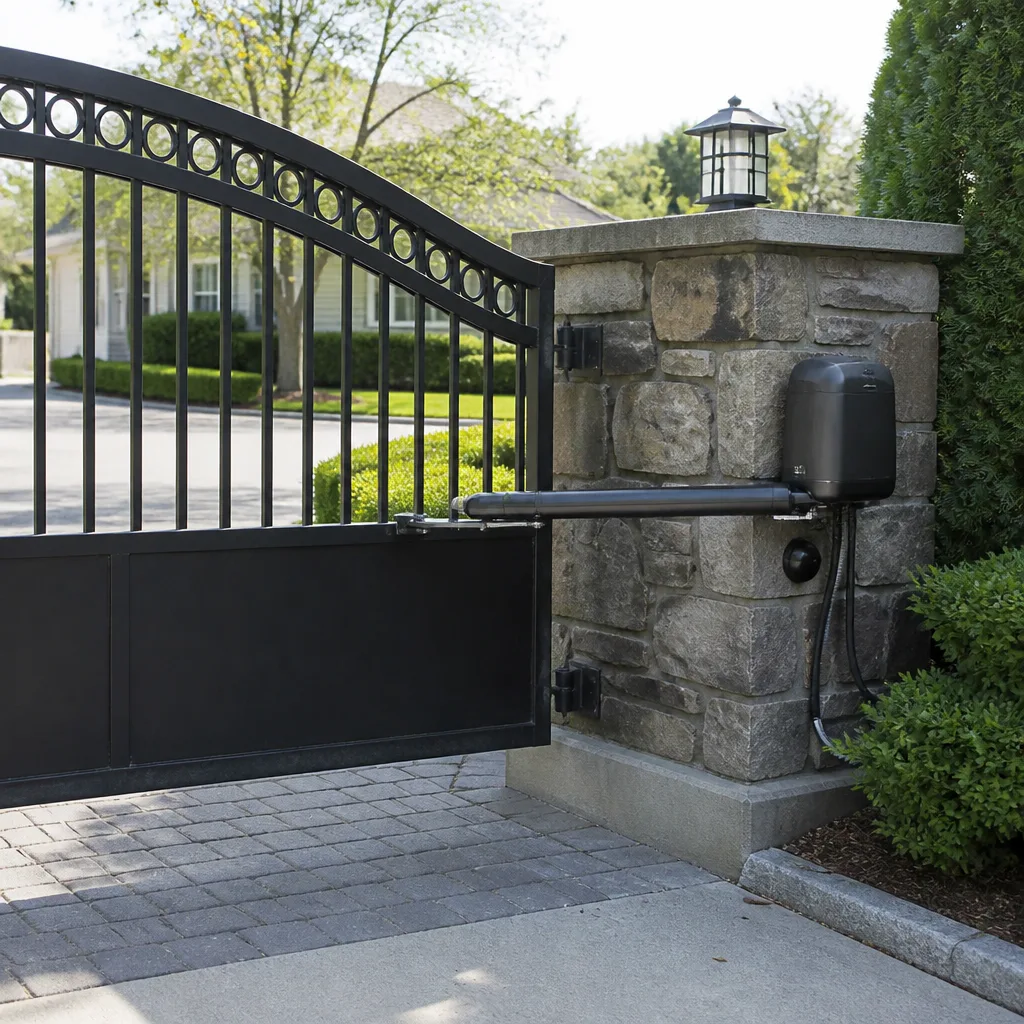
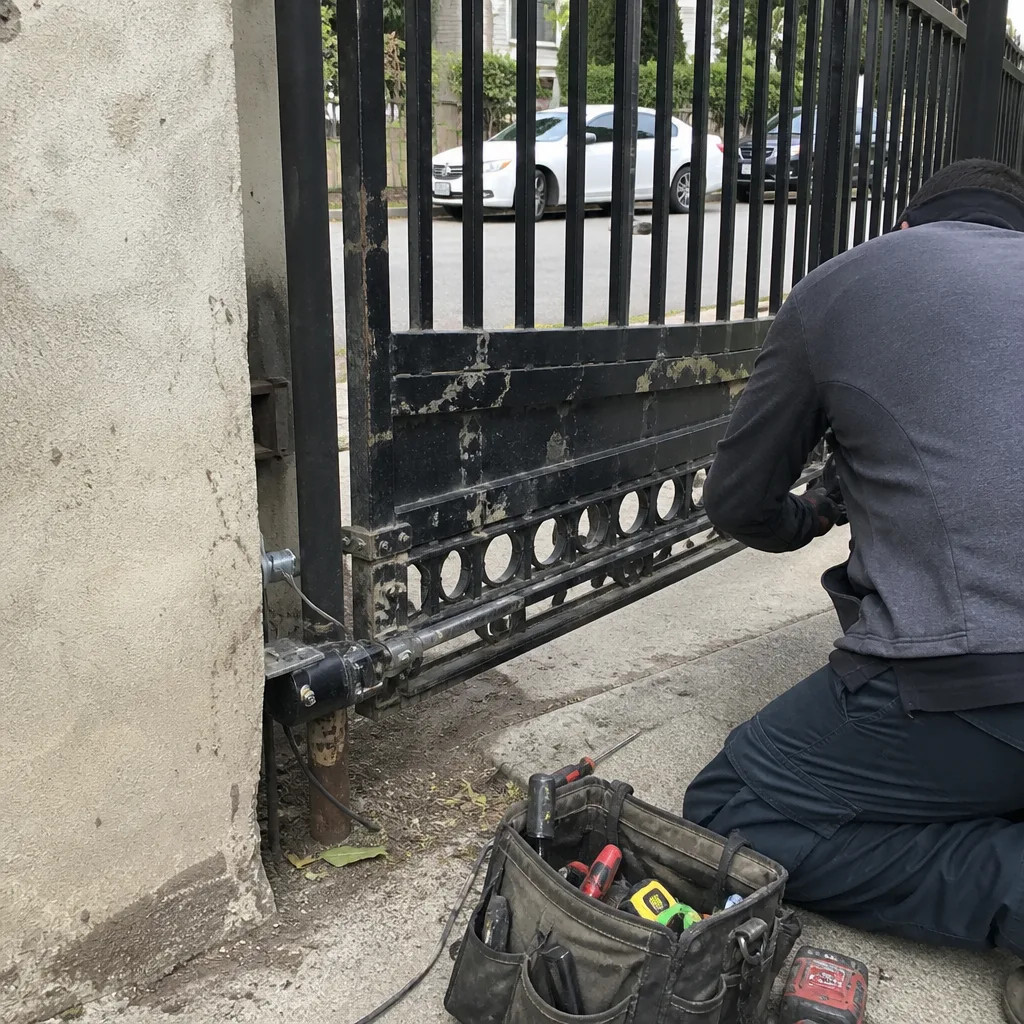 Before
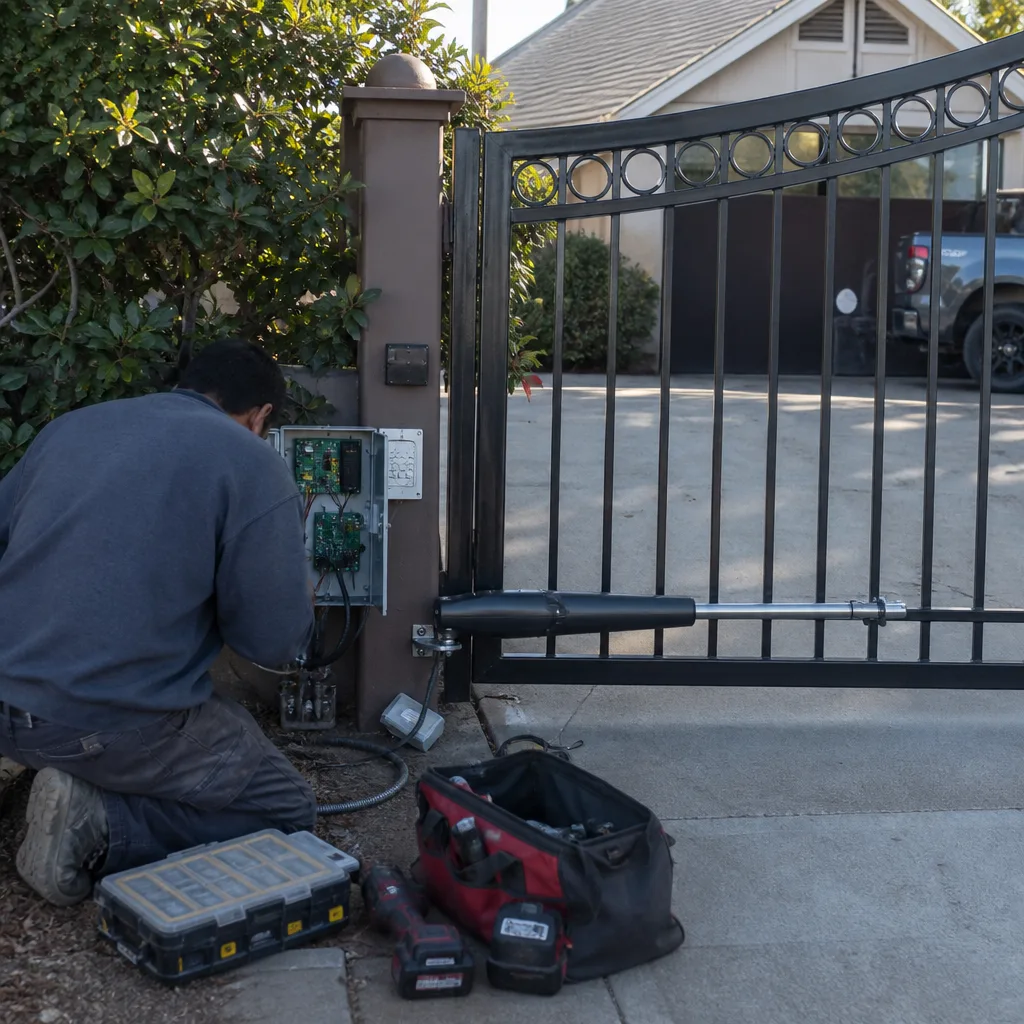 After
After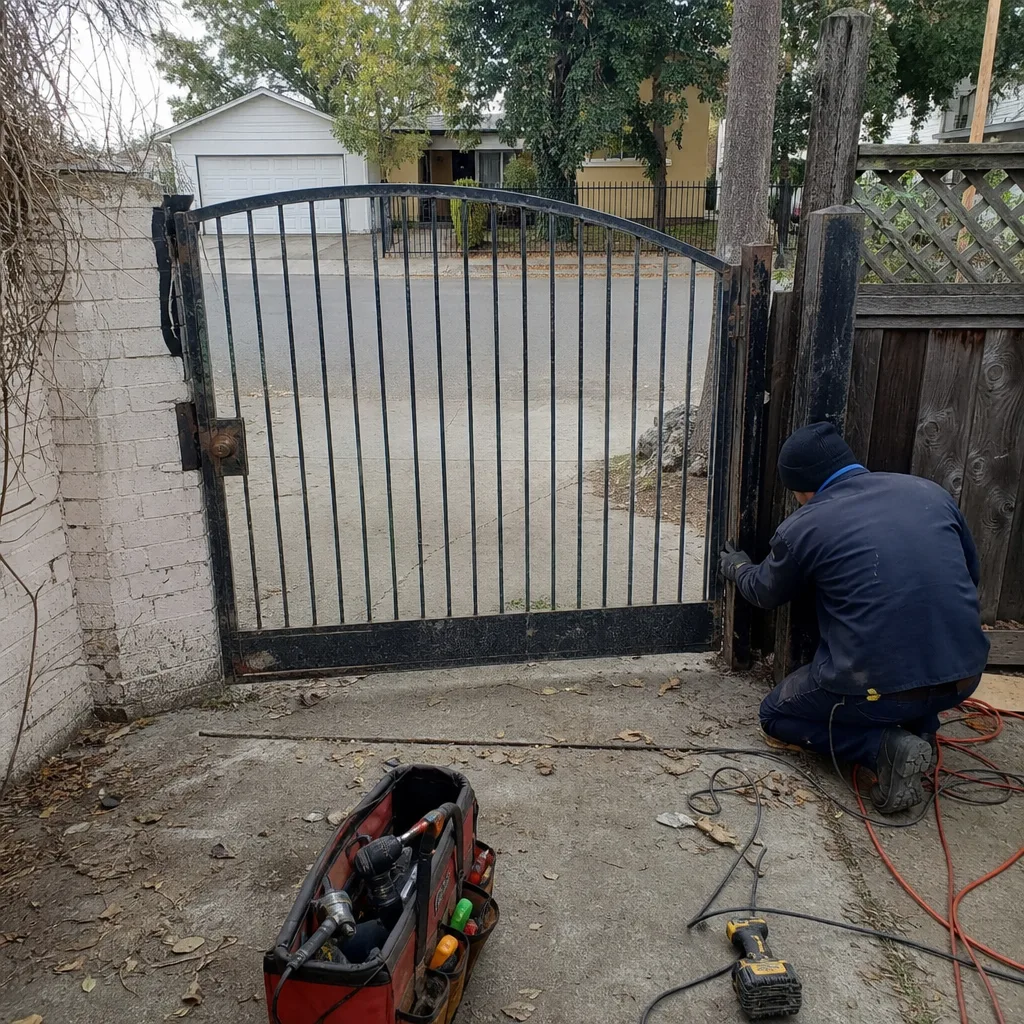 Before
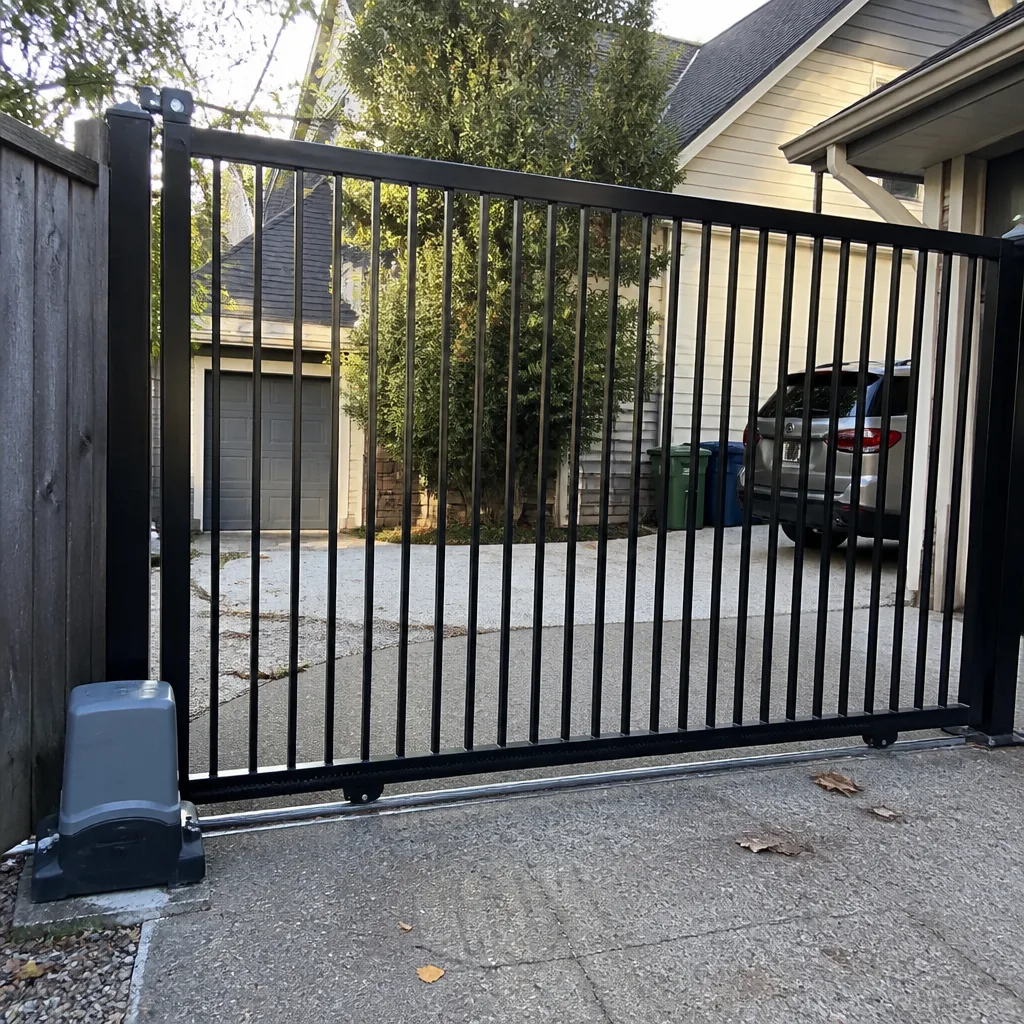 After
After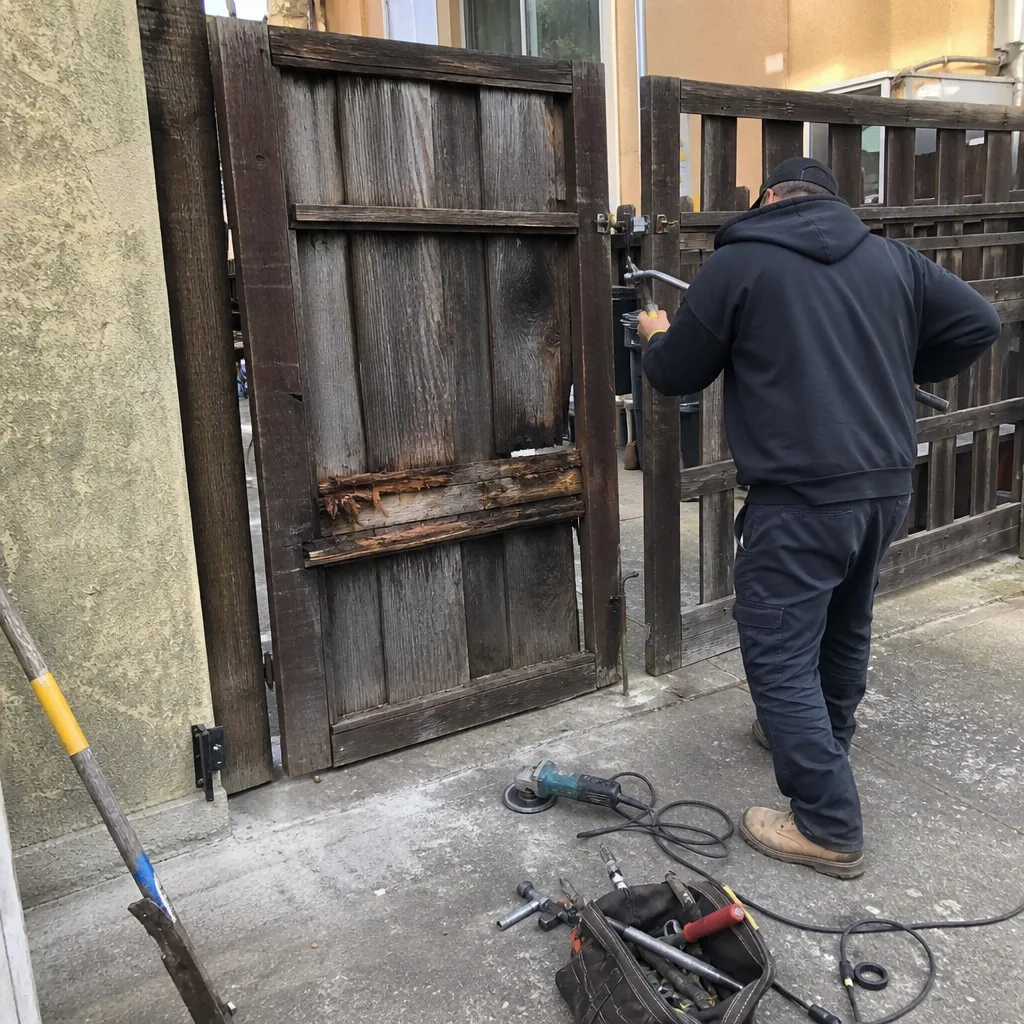 Before
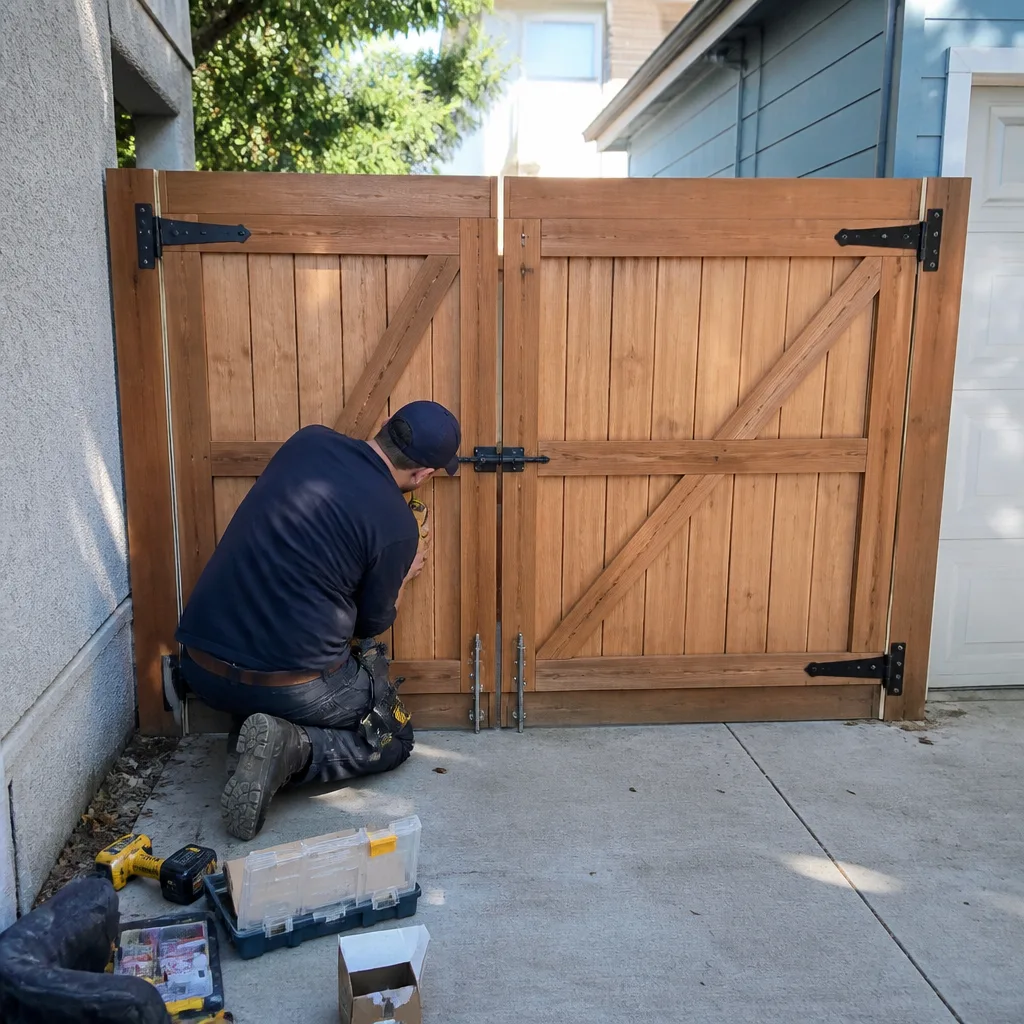 After
AfterHow to Hire a Gate Repair Contractor in Oakland: A Step-by-Step Guide
In Oakland, a gate repair contractor is not legally required to give you a written estimate for jobs under $500 - which is precisely where most diagnostic and repair visits land, and precisely where vague verbal agreements cause the most homeowner disputes. We’ve seen it repeatedly: a homeowner in Rockridge gets a “$250-ish” quote over the phone, then faces a $487 invoice because the “simple adjustment” required a new limit switch the contractor happened to carry. Our Complete Guide to Gate Repair in Oakland and this article will teach you how to vet a contractor before they open their toolbox, what a legitimate written scope actually contains, and the specific red flags that separate a technician who documents their work from one who disappears with your deposit.
Quick Answer
To hire a gate repair contractor in Oakland, verify their California contractor license covers automated gate work (C-61/D-28 or C-10, not just a general B license), demand a written scope with line-item pricing before any work begins, and confirm they carry both general liability and workers’ compensation insurance. The contractor who refuses any of these three steps is telling you exactly how the invoice will feel when the job is done.
Table of Contents
- California License Verification: What Actually Covers Gate Work
- The Five Questions to Ask Before Any Toolbox Opens
- What a Legitimate Written Scope Contains
- How to Compare Two Written Estimates Side by Side
- Red Flags Unique to the Oakland Gate Market
- What Gate Repair Costs in Oakland
- Common Mistakes to Avoid
- When to Call a Professional
- Frequently Asked Questions
 Before
 After
AfterCalifornia License Verification: What Actually Covers Gate Work
California’s Contractor State License Board (CSLB) issues dozens of classifications, but only a handful legally authorize automated gate repair. This matters because Oakland’s hilly terrain, coastal humidity, and older residential stock create gate problems that cross multiple trades - electrical, mechanical, welding, and low-voltage control - and a handyman with a general B license can legally accept your money while being unqualified to troubleshoot a gate motor & opener in Oakland.
Here are the classifications that actually matter for gate work:
- C-61/D-28 (Doors, Gates, and Activating Devices): The most specific classification for gate repair. Authorizes installation, repair, and automation of residential and commercial gates, including swing, slide, and overhead systems.
- C-10 (Electrical): Required when the repair involves electrical panel work, running new 110V or 220V power to the gate location, or replacing the motor’s internal wiring harness. Many gate motor failures in Oakland’s older homes trace back to outdated electrical service that a C-10 contractor must address.
- C-51 (Structural Steel): Relevant for welded gate frame repairs, hinge replacement on heavy iron gates, or structural reinforcement - common in the wrought-iron driveway gates found throughout Oakland’s hillside neighborhoods.
- B (General Building Contractor): Legally permitted to perform gate work only as part of a larger construction project. A standalone gate repair by a B-licensed contractor is outside their scope, and their insurance may not cover gate-specific liability.
To verify a license, use the CSLB’s online lookup at cslb.ca.gov. Check three things: (1) the classification matches the work described, (2) the license status is “Active,” and (3) the contractor carries workers’ compensation insurance if they employ anyone. In Oakland, we’ve encountered contractors operating with suspended licenses or expired bonds - the CSLB lookup exposes both in under 60 seconds.
A specific warning for Oakland homeowners: the city’s permit requirements for gate automation changed in 2019, requiring UL 325-compliant safety devices on all new installations and significant repairs. A contractor unfamiliar with Oakland’s building division or working without the proper classification may complete the repair only for you to fail inspection when selling the property. Ask directly: “Have you pulled an Oakland gate permit in the last two years?” The answer should be immediate and specific, not hedged.
The Five Questions to Ask Before Any Toolbox Opens
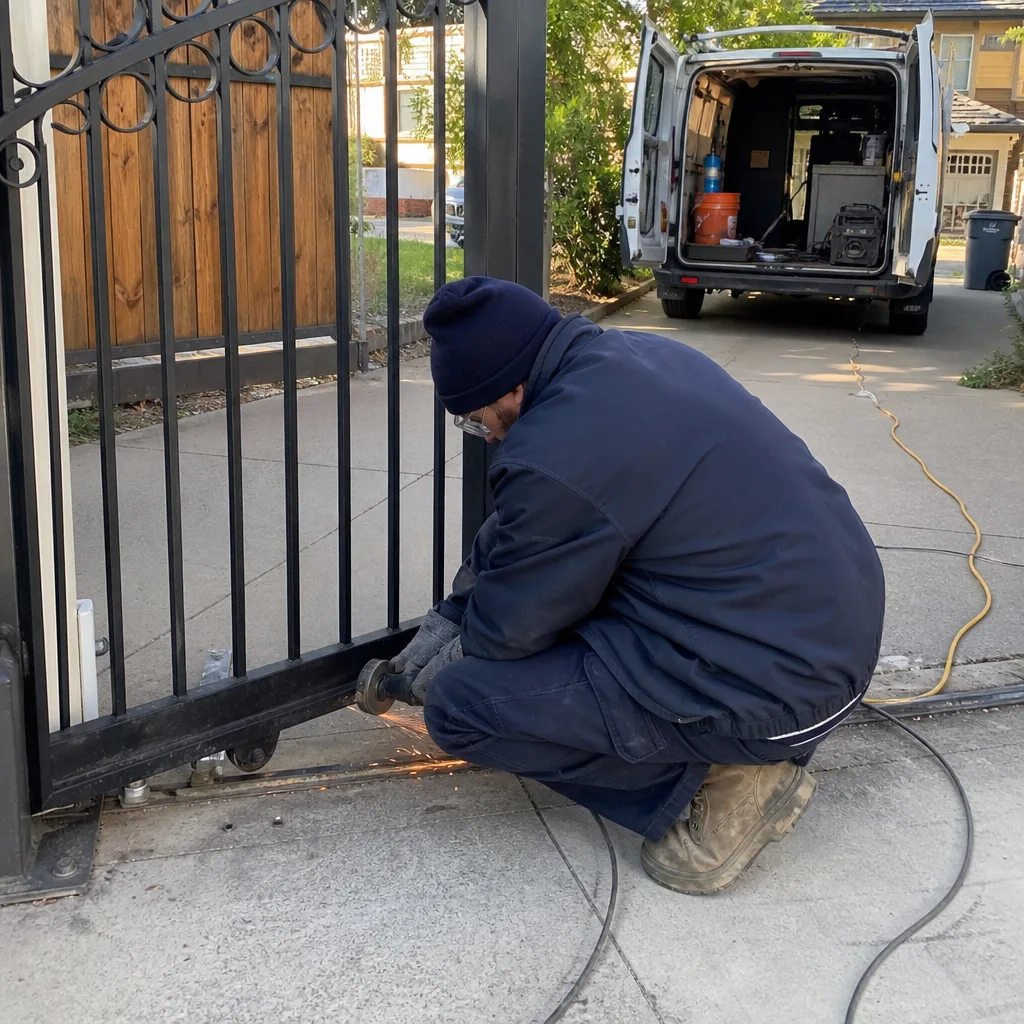
These five questions function as a screening test. The contractor who cannot answer clearly, or who deflects toward “we’ll figure that out when we get there,” has already told you how they operate.
- “Will you provide a written scope with line-item pricing before starting work?” The only acceptable answer is yes, with specificity. Under Vance Gate Repair Oakland home standards, this is Clause 1 of The Haven Standard: written price before any work begins. A contractor who says “I need to open it up first” or “it depends what I find” is describing a blank-check arrangement. The legitimate response: “I’ll diagnose the problem, write the scope and price, and you’ll approve it before I proceed.”
- “What documentation do I receive when the job is finished?” The answer should include photographic evidence of the work performed, part numbers installed, and settings adjusted. In our experience, a contractor who documents nothing leaves you vulnerable when the same problem recurs - the next technician starts from zero, and you pay twice to rediscover the same fault. Under Clause 4 (Evidence on every job), every Vance visit includes a photo log of what was found, what was adjusted, and what was replaced, filed with the job record and left with the homeowner.
- “Do you carry general liability and workers’ compensation insurance, and will you name me as additionally insured?” General liability covers property damage; workers’ compensation covers injury to the technician. In Oakland, where steep driveways and heavy iron gates are common, both are essential. Request a certificate of insurance (COI) before the visit. The contractor should obtain this from their broker within 24 hours - any delay suggests lapsed coverage.
- “Which automation brands do you service, and do you steer customers toward replacement when repair is possible?” A qualified contractor services multiple brands without exclusivity. At Vance, we work on nine major automation brands - Linear, Viking, Ghost Controls, and DoorKing among them - and our default position is repair unless the motor is genuinely beyond economical service. A contractor who sells only one brand or who declares “these never last, you need a new one” without diagnostic evidence is a salesperson, not a technician.
- “What happens if the repair doesn’t solve the problem?” The answer should be a written warranty with a clear remedy. Our 365-Day Done Right Promise gives one full year for us to make any repair right at no additional charge - no argument, no fee, no expiration within that window. A contractor who offers “30 days on parts” or “call me if it acts up” is offering a gesture, not a guarantee. Get the remedy in writing.
What a Legitimate Written Scope Contains
A written estimate and a written scope are different documents. An estimate guesses at cost. A scope defines boundaries - what is included, what is excluded, and what triggers additional charges. In Oakland’s competitive gate repair market, the contractors who separate themselves are the ones who treat the scope as a contract, not a courtesy.
A legitimate written scope contains these elements:
- Problem description in plain language: “The swing gate motor (LiftMaster LA500) fails to complete open cycle; diagnostic indicates failed internal limit switch and degraded arm bracket bushings.” Not “gate broken - needs service.”
- Line-item pricing with part numbers: Each component priced separately - part, labor, and any subcontracted work (electrical, welding). This enables comparison between estimates and prevents “bundled” pricing that obscures markup.
- Scope boundaries: Explicit statement of what is not included. Example: “Scope includes motor repair only; gate frame welding, if needed, requires separate C-51 contractor and separate written scope.” This protects both parties from scope creep.
- Parts sourcing and warranty terms: New OEM, refurbished, or aftermarket? What warranty applies to each - manufacturer’s, contractor’s, or both? For a Ghost Controls motor replacement in Oakland’s salt-air exposure near the bay, OEM parts with full manufacturer warranty matter more than a generic alternative with 90 days.
- Contingency protocol: “If additional problems are found during repair, technician will stop work, photograph the finding, and present a revised scope before proceeding.” No surprises, no open-ended authorizations.
- Payment terms: Deposit amount (if any), balance due upon completion, and accepted payment methods. In California, gate repair contractors cannot legally demand more than 10% down or $1,000, whichever is less, before work begins.
The scope should be signed by both parties before any tool touches the gate. At Vance, this is non-negotiable - under Haven Standard Clause 1, the written price is delivered and approved before work starts. A contractor who begins “just to see what’s wrong” and presents the invoice afterward has reversed the entire consumer protection structure.
How to Compare Two Written Estimates Side by Side
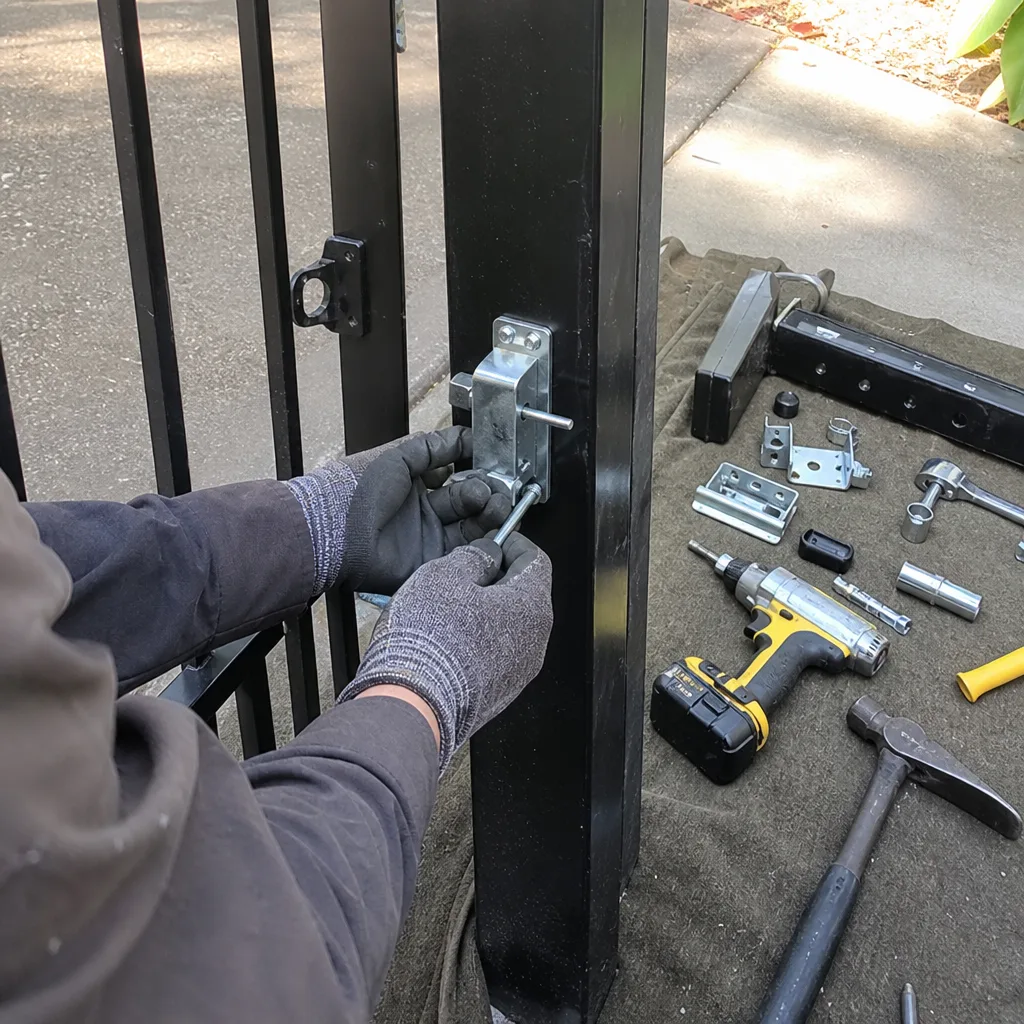
Oakland homeowners often receive estimates with different part numbers, different labor descriptions, and different total prices for what seems like the same repair. Here’s a practical reconciliation method that separates genuine price differences from apples-to-oranges confusion.
Step 1: Normalize the part numbers. Ask each contractor for the manufacturer’s part number, not their internal SKU. A “LiftMaster replacement motor” could mean the OEM K77-37736 or a third-party equivalent. Search the part number to confirm specifications match. We’ve seen estimates where one contractor quoted a 1/2 HP motor and another a 3/4 HP - different capacities, different prices, different suitability for a heavy Oakland hillside gate.
Step 2: Separate labor from materials. One estimate might show $340 labor + $280 parts; another shows $520 “installed.” Demand the breakdown. Labor rates in Oakland typically run $95-$145 per hour for licensed gate contractors; if one estimate implies $60/hour or $200/hour, investigate why.
Step 3: Compare warranty terms, not just duration. A one-year warranty that covers “parts and labor, including return visits” is different from a one-year warranty that covers “parts only, customer pays trip charge for service calls.” Read the fine print.
Step 4: Verify what’s assumed versus verified. An estimate based on “typical repair for this symptom” assumes the diagnosis without confirmation. An estimate based on “diagnostic completed, confirmed failed circuit board” carries more certainty. The former deserves a wider contingency range; the latter should be tighter.
Step 5: Check for hidden prerequisites. One estimate for motor replacement might assume existing electrical is adequate; another might include upgrading the outlet to GFCI or running new conduit. In Oakland’s pre-1980s housing stock, electrical upgrades are common and should be visible in the scope, not buried in a change order.
When estimates diverge significantly, our policy is straightforward: bring us any written estimate from another company and we’ll review it at no cost. Often the discrepancy traces to a single misunderstood component - a photo-eye (the infrared beam that stops the gate if something crosses the path) listed as “sensor” versus “safety device,” for instance - and the reconciliation takes ten minutes with both scopes in hand.
Red Flags Unique to the Oakland Gate Market
Oakland’s gate repair market has characteristics that create specific risks for homeowners. These red flags don’t appear in generic hiring guides or our Seasonal Gate Repair Care for Oakland guide because they’re specific to our market conditions.
- Subcontracting without disclosure. Some Oakland-area companies advertise gate repair but dispatch unlicensed subcontractors with no company affiliation. The person who answers the phone works in a call center; the person at your gate carries no company ID and no workers’ compensation. Ask: “Is the technician your W-2 employee?” and “Will the same company name appear on the invoice, COI, and business license?”
- Phone quotes without site visits. A gate motor that “just hums” could indicate a $140 capacitor replacement or a $1,800 motor replacement - impossible to distinguish without testing voltage, amperage draw, and mechanical load. Any contractor who quotes definitively over the phone for a symptomatic description is either guessing or planning to escalate on arrival. Either way, you have no written anchor.
- Invoice-after-completion billing. The contractor who “just fixes it” and presents the bill afterward controls every variable - time, parts markup, and whether the problem is actually solved. This is the exact scenario California’s under-$500 estimate exemption enables, and it’s the most common source of disputes we hear about from Oakland homeowners.
- Brand steering toward replacement. A contractor who services only one automation brand, or who declares your Viking or DoorKing motor “obsolete” without checking part availability, may be optimizing their inventory rather than your repair. Nine major brands are commonly installed in Oakland; a qualified technician should work on whatever motor is already on the property.
- No permit discussion for significant work. Oakland requires permits for new gate automation installations and for repairs that alter safety systems (replacing photo-eyes, installing edge sensors, modifying control boards). A contractor who never mentions permits either doesn’t know the requirement or plans to skip it - leaving you with uninsurable, unpermitted work that complicates home sales.
- Vague technician identity. “Someone will be there between 8 and 12” with no name, no photo, no license number. Our practice: background-checked, uniformed technicians dispatched to every job, with name and photo provided before arrival. The contractor who won’t identify who’s coming to your property has something to hide about who they’re sending.
What Gate Repair Costs in Oakland
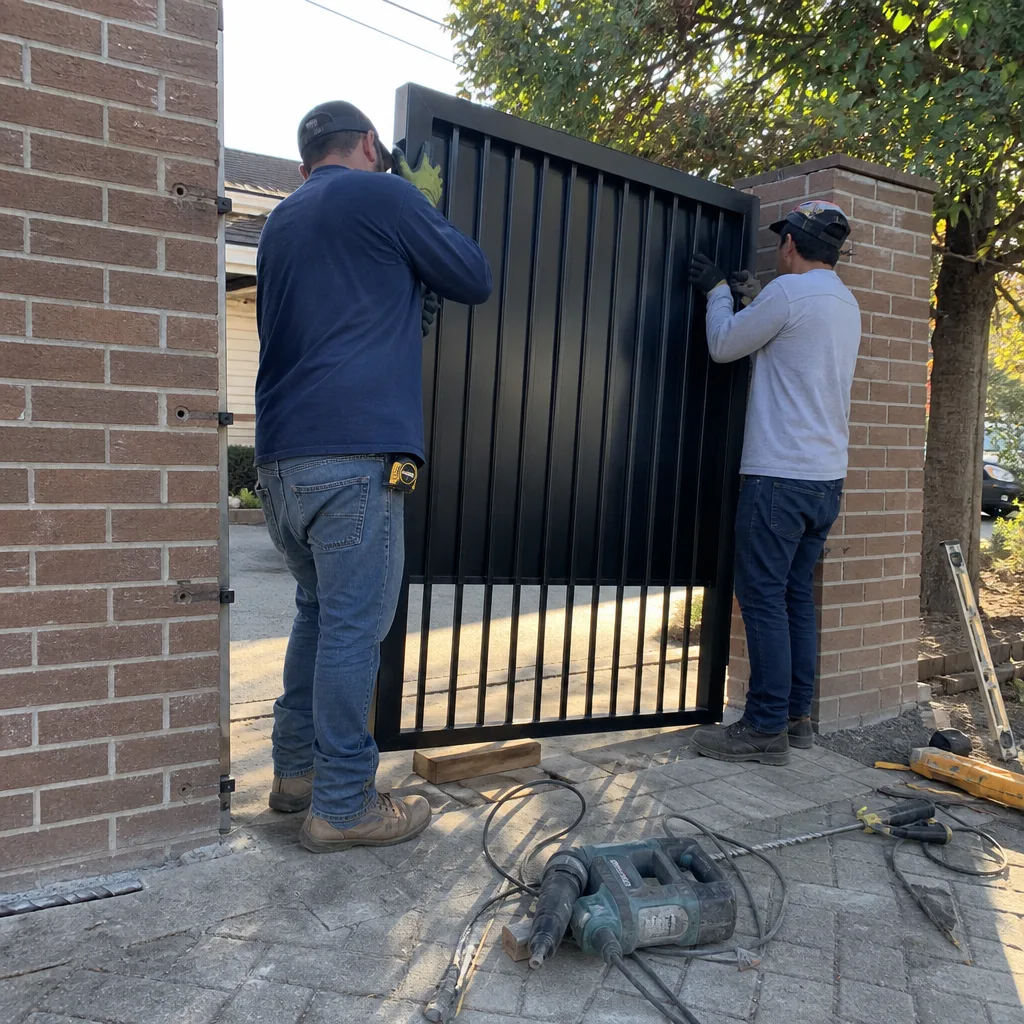
Gate repair pricing in Oakland reflects local labor rates, parts availability for coastal-climate corrosion, and the complexity of hillside installations with uneven grade and extended gate arms. These ranges represent what we’ve observed across our 22,000+ gates repaired and installed since 2014 - every one with a written price before the job started.
| Service Category | Typical Range in Oakland | What Affects Price |
|---|---|---|
| Diagnostic / service call | $95 - $165 | After-hours emergency, steep driveway access, remote Oakland hills location |
| Photo-eye realignment or replacement | $140 - $280 | OEM versus aftermarket, conduit condition, buried wire faults |
| Limit switch adjustment or replacement | $180 - $340 | Accessibility of control board, brand-specific part availability |
| Swing gate arm replacement (single) | $420 - $780 | Motor brand (Linear, Viking, Ghost Controls price tiers vary), bracket condition |
| Slide gate motor replacement | $1,200 - $2,400 | Horsepower required, chain versus rack-and-pinion, electrical run distance |
| Control board replacement | $380 - $720 | Brand-specific board, programming complexity, remote reprogramming included |
| Gate frame welding / hinge repair | $280 - $650 | Access for welding equipment, wrought iron versus aluminum, paint match |
| Full access control system (keypad, intercom, remote) | $850 - $2,800 | Hardwired versus wireless, smartphone integration, number of entry points |
These ranges are quoted and agreed before any work starts - not estimated, not ballparked, but written and signed. If a contractor’s pricing falls dramatically below these ranges, investigate: unlicensed operation, uninsured labor, used parts sold as new, or the classic bait-and-switch of a low service call that balloons once the gate is disassembled.
For gate installation in Oakland, pricing is project-specific and requires on-site measurement. We provide free estimates with written scope - no “call for a quote” deflection, no pressure to commit during the visit.
Common Mistakes to Avoid
- Hiring based on lowest price alone. The $95 service call that becomes a $680 invoice with no written authorization is more expensive than the $165 call with transparent line-item pricing. In Oakland’s Grand Lake neighborhood, we’ve repaired gates where the “cheap” fix failed within 90 days because the contractor used a universal photo-eye incompatible with the motor’s safety circuit.
- Accepting verbal warranties. “I’ll take care of you” is not a warranty. A written 365-Day Done Right Promise with specific remedy language is. If the contractor won’t put it on paper, they don’t intend to honor it.
- Ignoring permit requirements. Unpermitted gate automation work in Oakland can trigger code enforcement, invalidate homeowner’s insurance claims if someone is injured, and create title issues during sale. The permit cost is minor compared to these consequences.
- Not asking who performs the work. The charming salesperson who visits is often not the technician who returns. Confirm the actual worker’s licensing, insurance coverage, and employment status before signing.
- Skipping the insurance verification. A contractor without workers’ compensation leaves you liable if their technician is injured on your property. In California, this exposure can exceed $100,000 in medical and disability claims.
- Approving open-ended “time and materials” arrangements. Without a fixed scope, the incentive structure rewards slow work and parts markup. Insist on fixed-price, line-item approval before work begins.
- Neglecting to document the gate’s pre-repair condition. Photograph the gate, the motor nameplate, and any existing damage before the technician arrives. Disputes about “it worked fine before you touched it” are easier to resolve with timestamped evidence.
When to Call a Professional
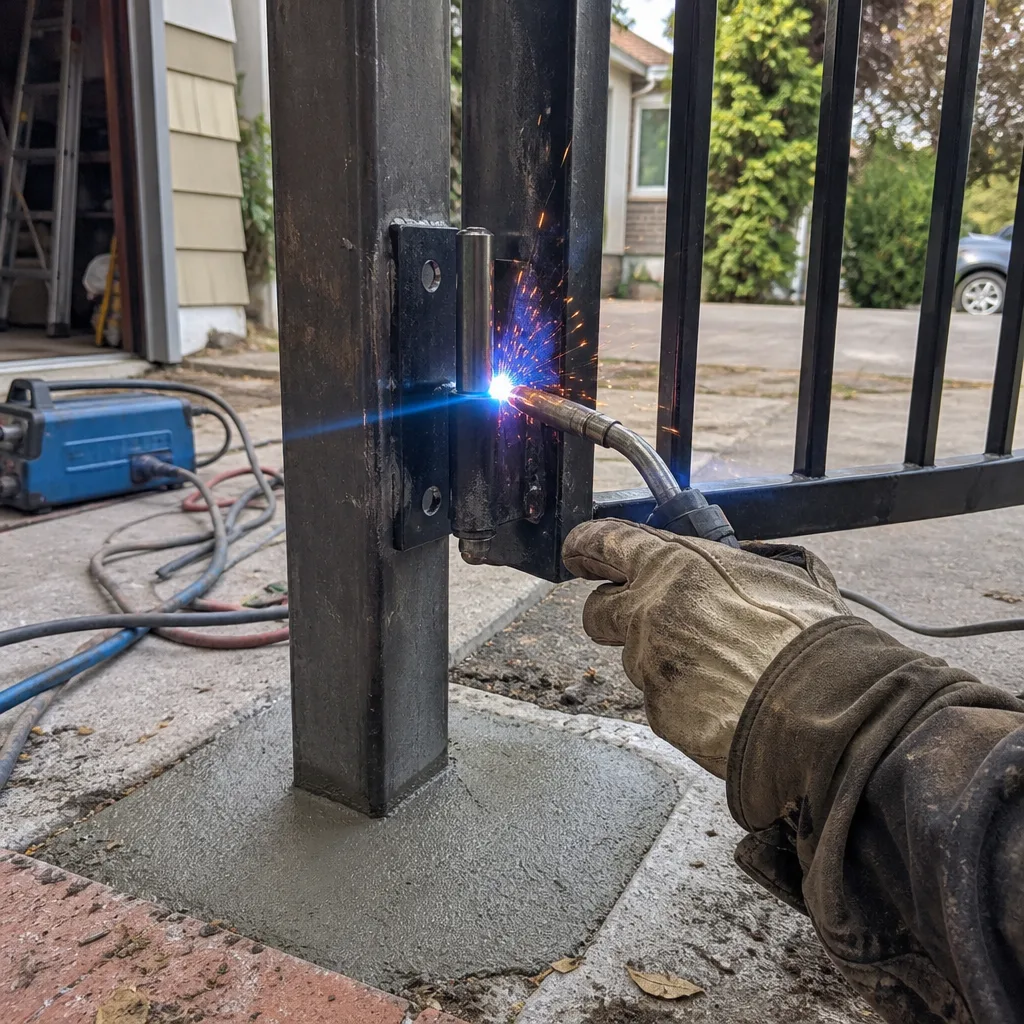
Some gate symptoms demand immediate professional attention due to safety risk or security exposure. Call a qualified contractor if: the gate has reversed direction unexpectedly while closing (indicating safety system failure); the motor hums but the gate doesn’t move (potential mechanical bind or electrical fault); the gate moves erratically or pauses mid-cycle (control board or limit switch issue); or the gate is stuck open, leaving the property unsecured. For any of these symptoms in Oakland, gate repair in Oakland from Vance Gate Repair Oakland offers free estimates - call (628) 270-2709. A live person answers 24 hours a day, seven days a week, and we’ll dispatch a technician with written scope in hand, not a guess and a handshake.
Frequently Asked Questions
Yes, for any work over $500. For automated gate systems specifically, the contractor should hold a C-61/D-28 (Doors, Gates, and Activating Devices) or C-10 (Electrical) classification. A general B license does not legally cover standalone gate automation work. Verify any license at cslb.ca.gov before hiring.
Most gate motor repairs in Oakland range from $180 to $720, depending on whether the issue is a simple limit switch replacement or a control board failure. Motor replacement runs $1,200 to $2,400. The exact price depends on brand, horsepower, and whether the existing electrical and mounting hardware is reusable. Call (628) 270-2709 for a free, written estimate with line-item pricing - no obligation, no surprise invoice.
We don’t recommend DIY repair for automated gates. The torsion forces in swing gate arms, the 110V or 220V electrical supply, and the crushing weight of sliding gate systems create genuine injury risk. A photo-eye misalignment or limit switch miscalculation can cause the gate to close on a vehicle or person. For safety systems specifically, California law requires UL 325 compliance that a homeowner is unlikely to verify independently. A trained professional diagnoses the root cause, not just the symptom, and documents that the safety systems function correctly before leaving.
Ask directly: “Will your W-2 employee perform this work, or will you subcontract?” Request the technician’s name and photo before arrival, and verify it matches the person who shows up. Check that the invoice, business license, and certificate of insurance all show the same company name. Subcontracting isn’t inherently wrong, but undisclosed subcontracting often means unvetted labor with no company accountability.
Stop them immediately. In California, you have the right to refuse work that exceeds a written estimate for jobs under $500, and for jobs over $500 a written contract is legally required. If a technician begins disassembling your gate before presenting a signed scope, you are in a “time and materials” arrangement by default - the most expensive and disputeprone billing structure. A legitimate contractor will pause, diagnose, write the scope, and wait for your signature.
Different part numbers usually indicate different part sources - OEM versus aftermarket, or different model years of the same motor. Use the reconciliation method in this guide: demand the manufacturer’s part number, search to confirm specifications, and verify warranty terms. Sometimes the difference is trivial; sometimes it’s the difference between a part that lasts five years and one that lasts eighteen months. For brands like Viking or DoorKing installed in Oakland’s salt-air microclimates, OEM parts with full manufacturer warranty typically outperform generic alternatives.
The Bottom Line
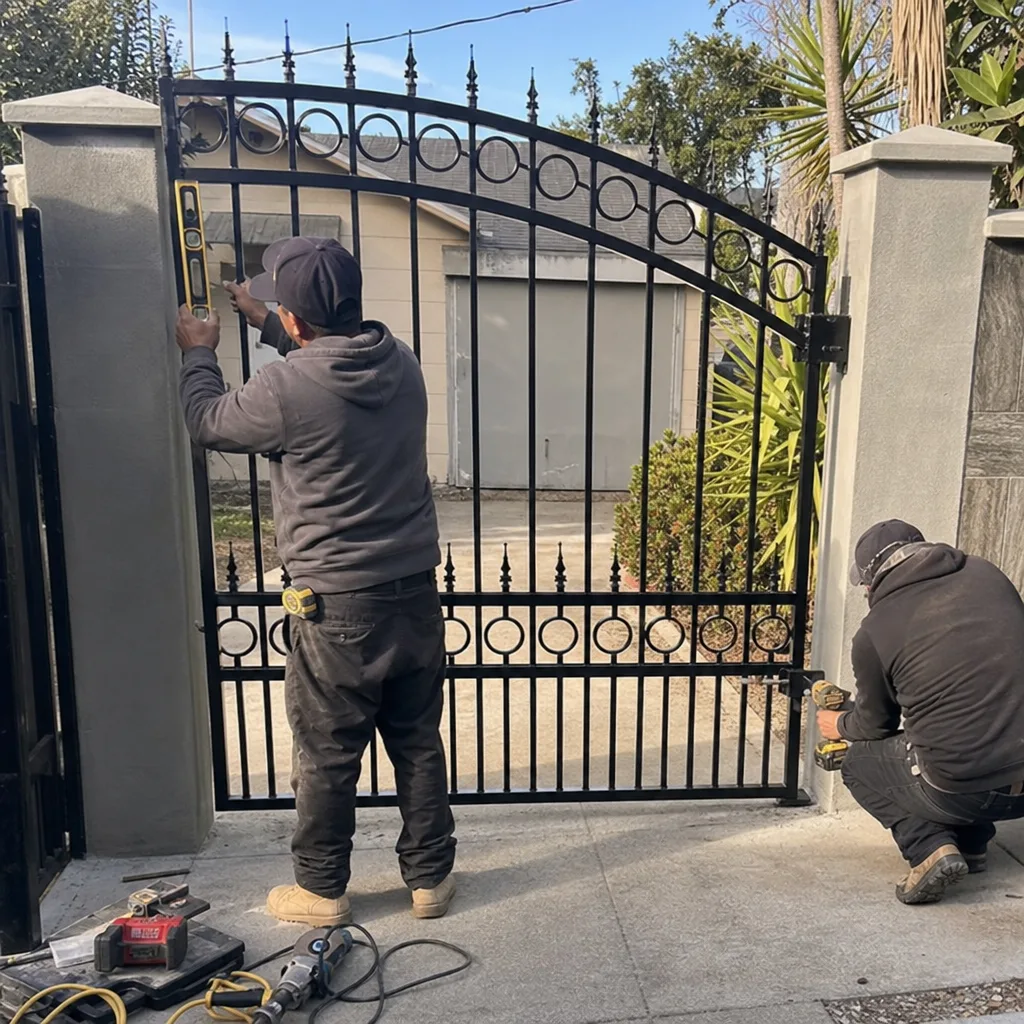
Hiring a gate repair contractor in Oakland comes down to one principle: the estimate meeting is a test of how you’ll be treated after you pay. The contractor who arrives with a blank tablet and a reassuring smile, who can’t produce a written scope with line-item pricing, who deflects questions about licensing and insurance - that contractor has already shown you their invoice style. The one who documents what they find, names the price before touching a tool, and leaves you with photographic evidence of completed work - that contractor is operating under a standard you can verify and enforce. In our experience across 22,000 gates since 2014, the homeowners who apply these five questions and demand these scope elements avoid virtually all post-repair disputes. The ones who don’t become cautionary tales we hear about six months later, when we’re called to fix the original contractor’s mistakes. For more guides & resources, visit our blog.mplete work.
Written by Adrian Vance, Owner at Vance Gate Repair Oakland, serving Oakland since 2014.