
Last updated September 22, 2026
Free on-site gate assessment - hinges, posts, and your LiftMaster or Nice gate operator checked before anything is quoted
The assessment is free and the quote is the invoice.
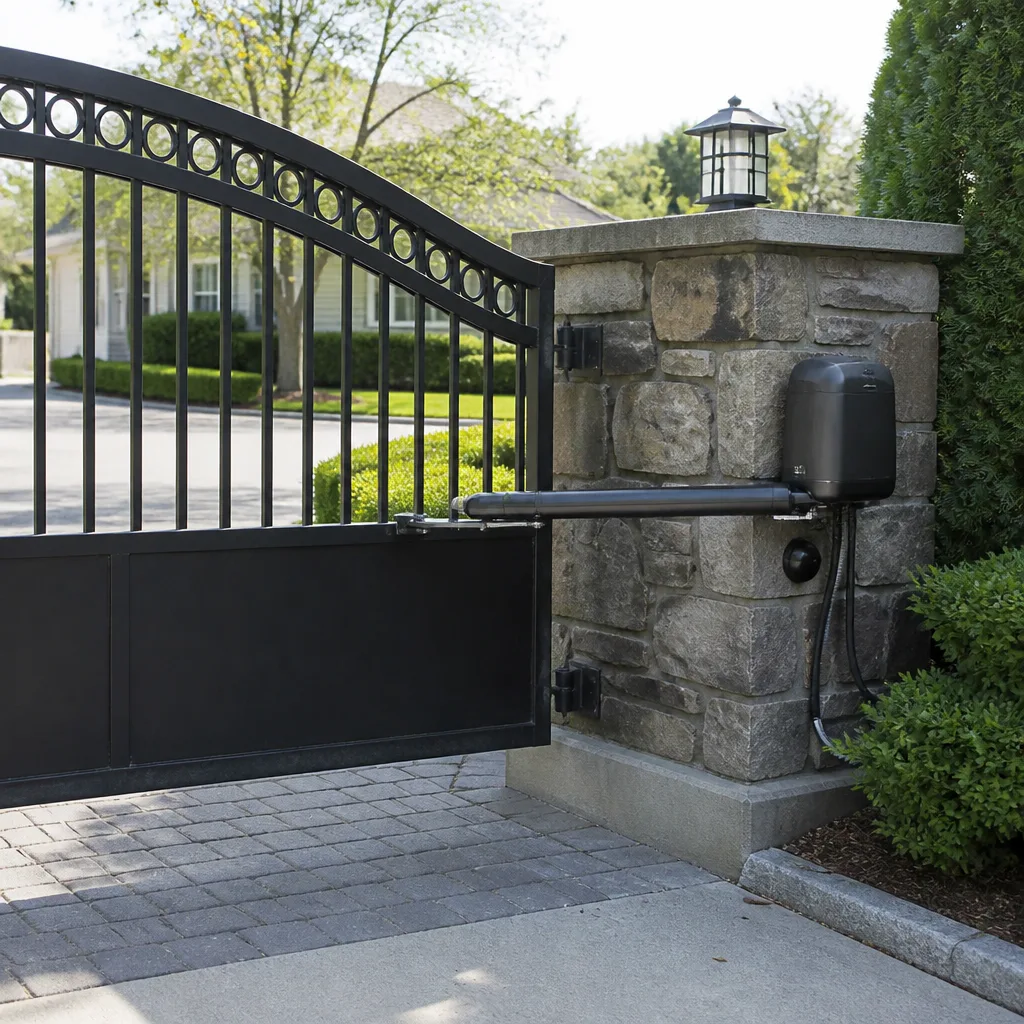
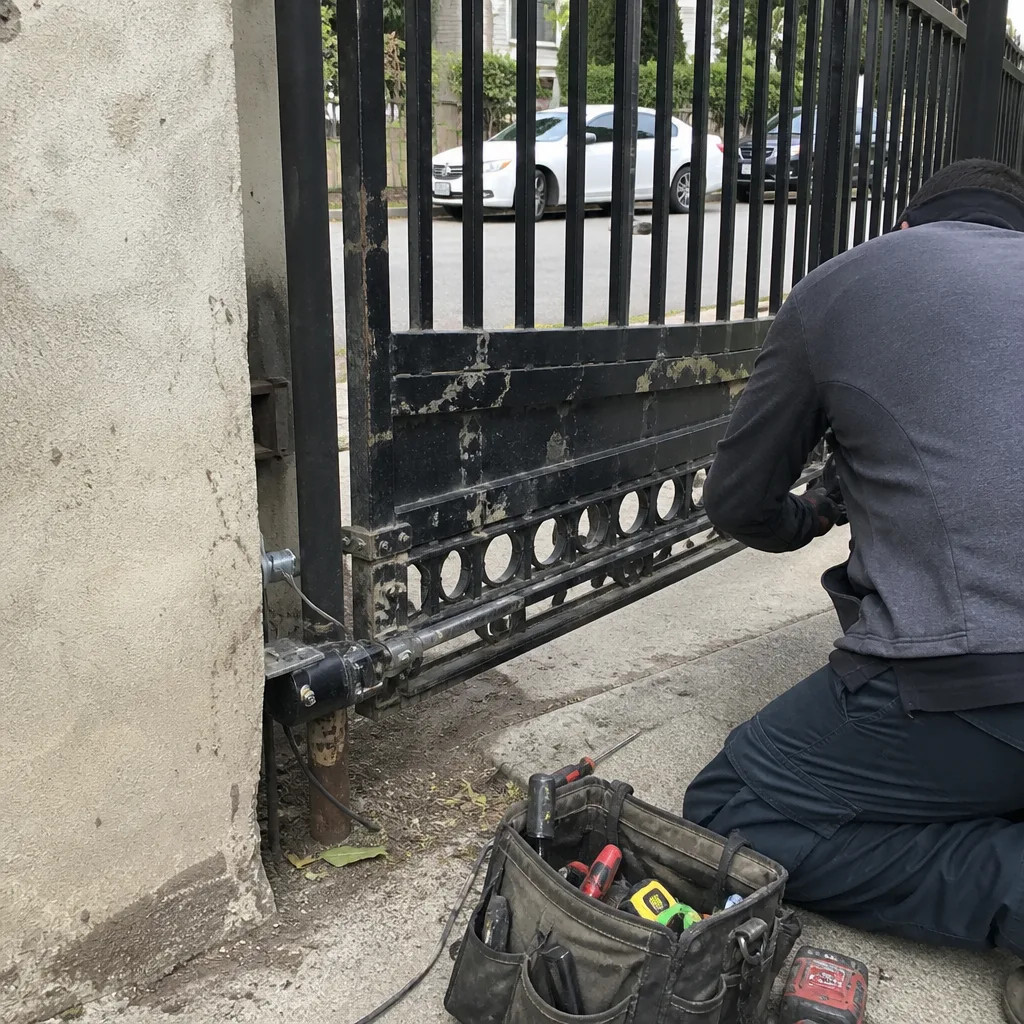 Before
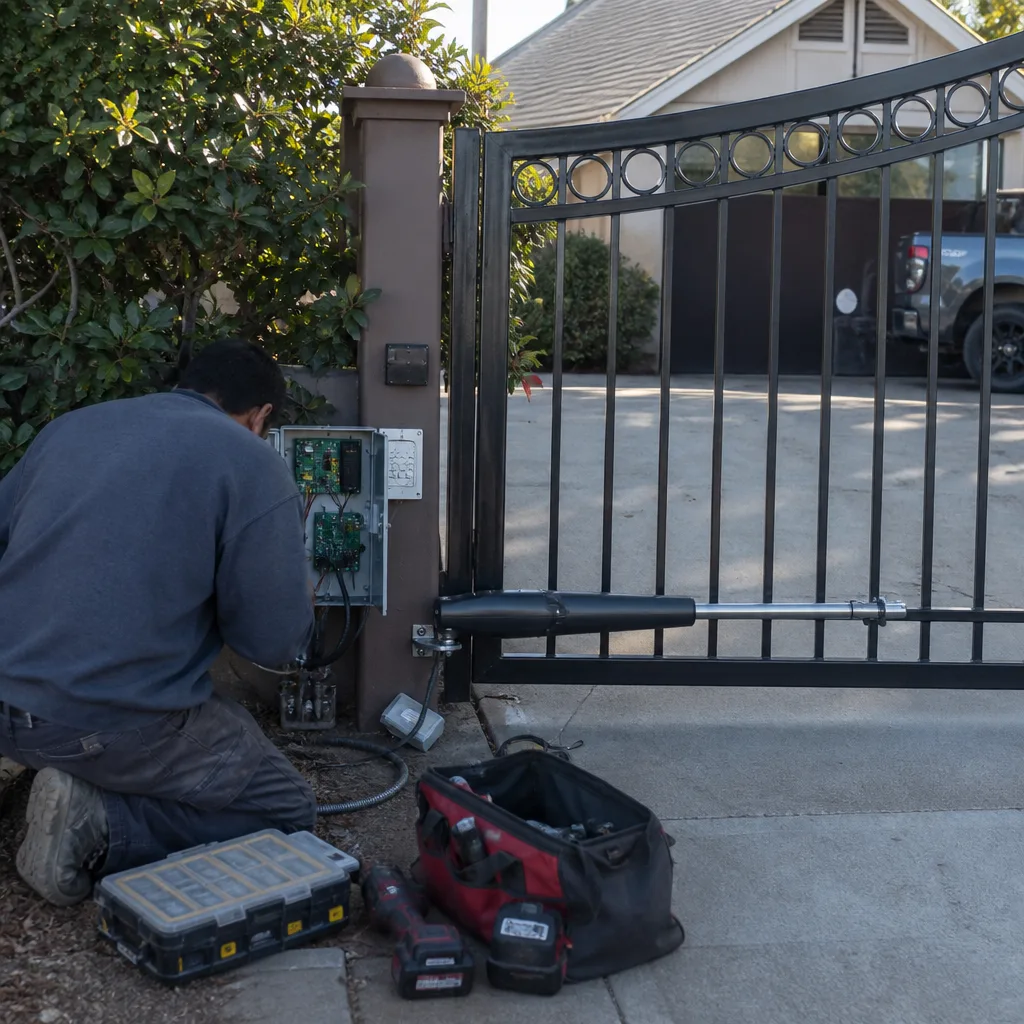 After
After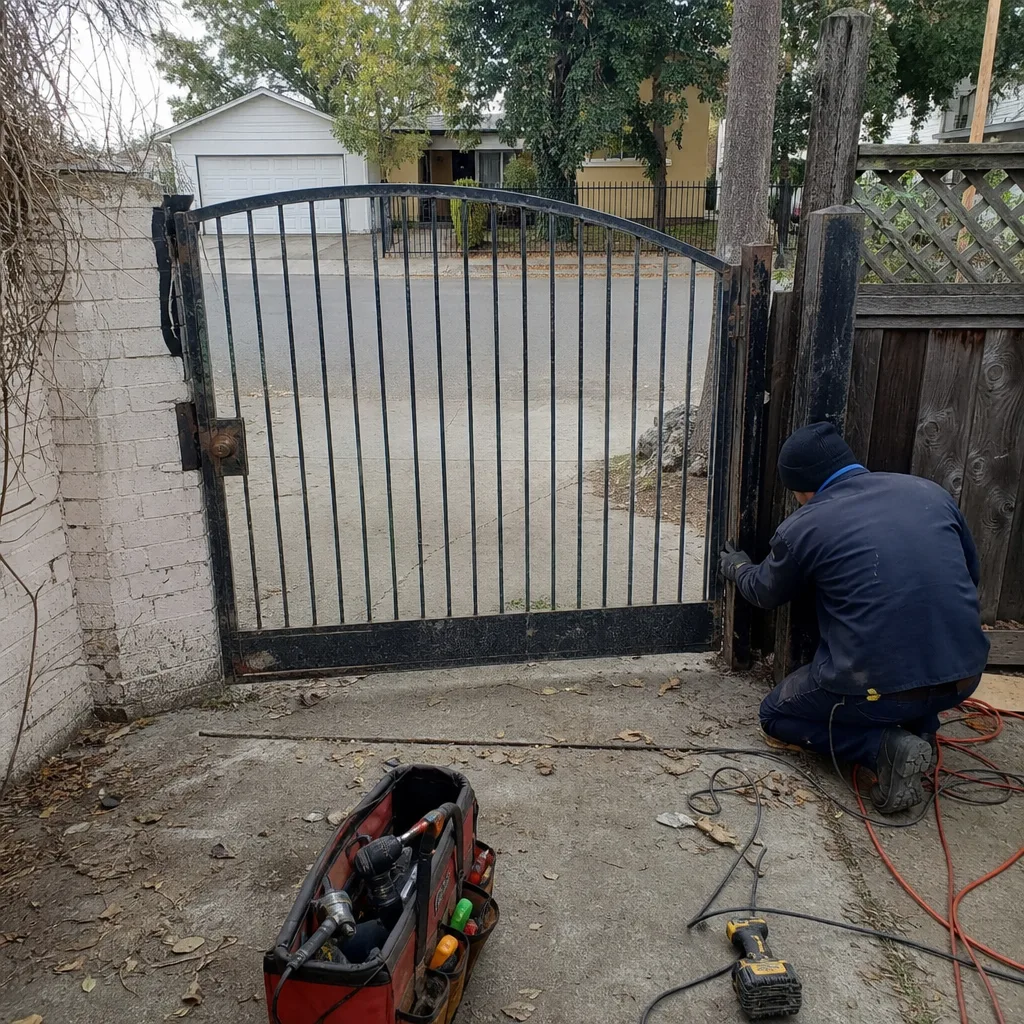 Before
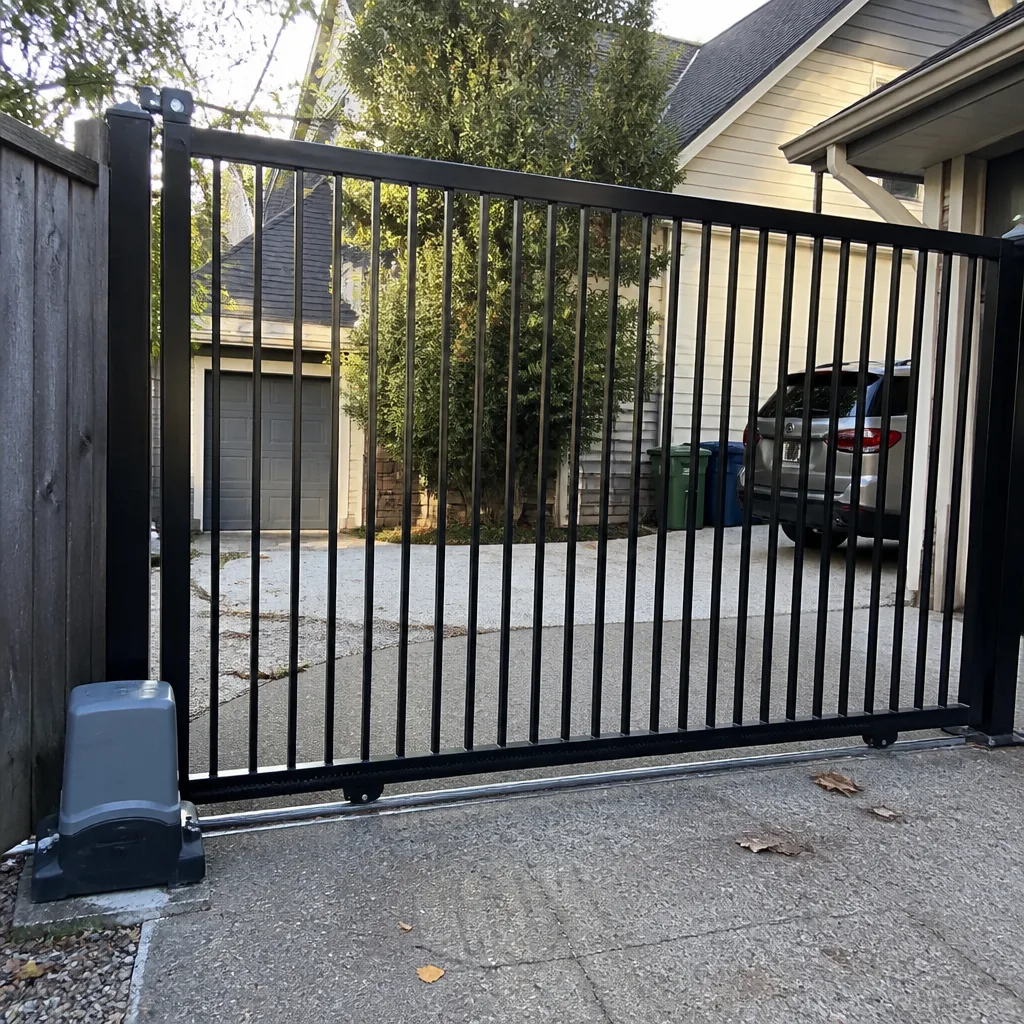 After
After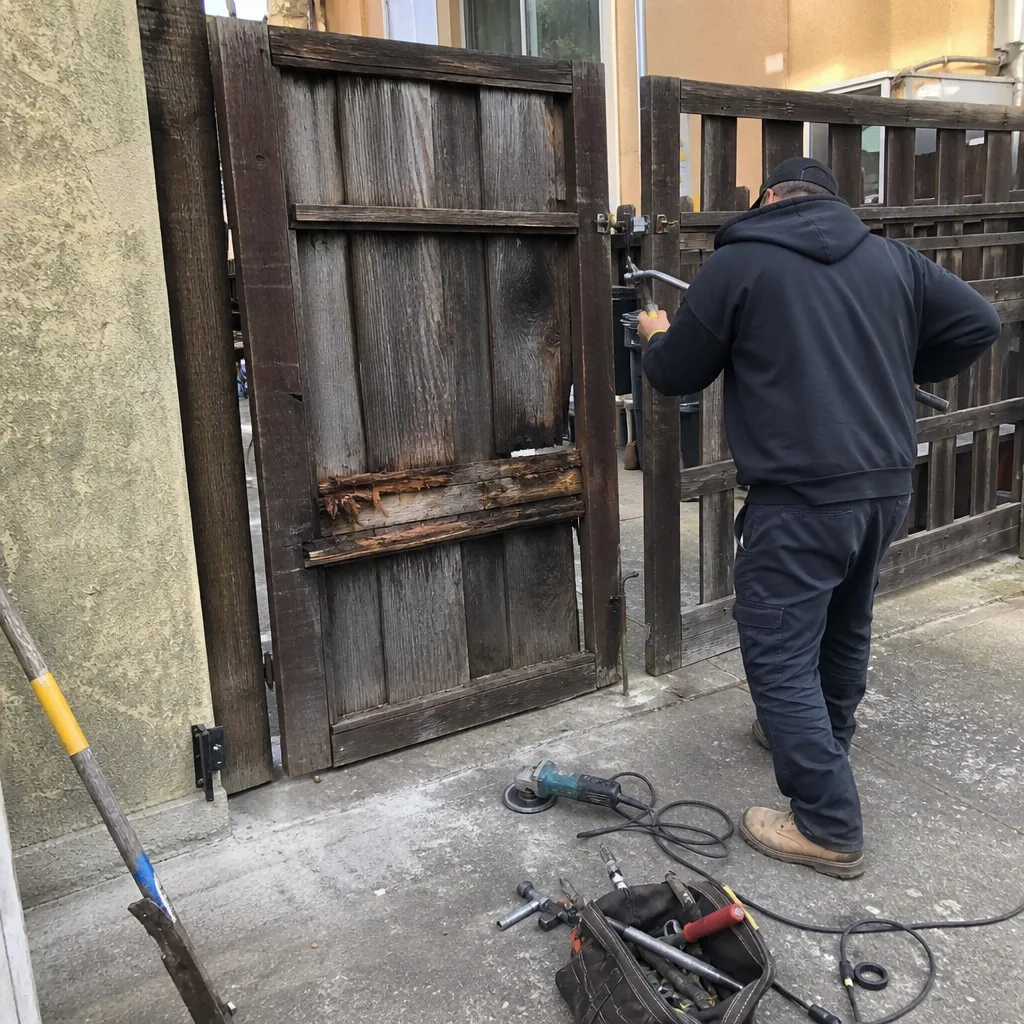 Before
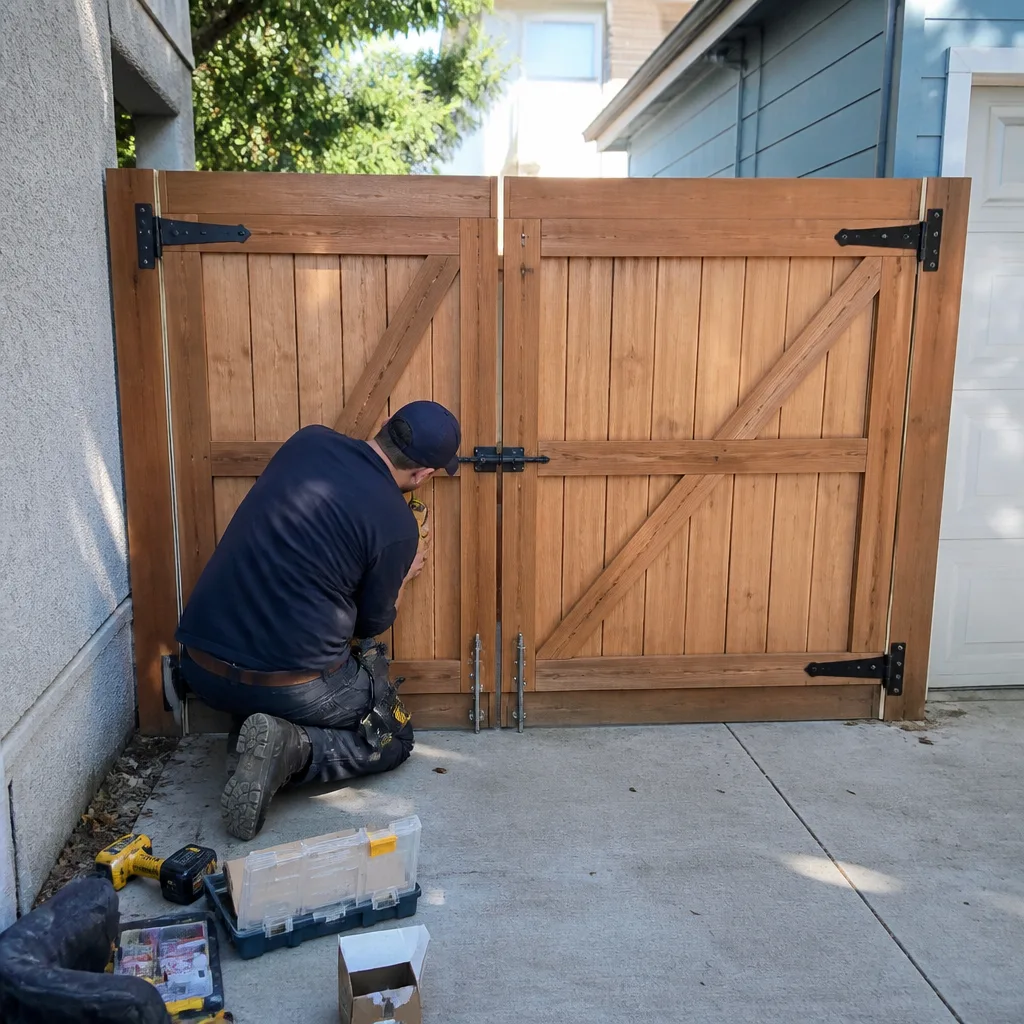 After
AfterGate Repair Permits, Codes & Inspections in CA: What You Need to Know
Most Oakland homeowners assume gate repair is like fixing a fence: you hire someone, they fix it, you pay them. But if a contractor replaces your operator, adds a new access-control board, or relocates your entry column without pulling a permit, the installation is technically unpermitted - and when you sell your home, that’s your problem to resolve, not theirs. In our experience across Oakland’s hillside neighborhoods and flatland districts, roughly half the automated gates we’ve been called to service were installed without proper permits or inspection. This guide explains exactly which gate work triggers City of Oakland permit requirements, what UL 325 compliance means for your safety, how HOA overlays add a second approval layer, and what happens when unpermitted work surfaces during a real estate transaction. For more guides & resources, explore our blog.
Quick Answer
Most gate repairs in California do not require a permit if they are like-for-like replacements of existing components. However, any work that modifies the gate’s structure, electrical supply, or safety systems - including new operator installation, access-control upgrades, column relocation, or changes to the opening width - typically requires a building permit from the City of Oakland and may need electrical and planning review. All automated gate operators sold and installed in California must comply with UL 325 safety standards, and the installation must pass inspection for entrapment protection and safety-edge function before it is legally complete.
Table of Contents
- When Is a Permit Required for Gate Work in Oakland?
- What Counts as Like-for-Like Repair vs. Modification?
- UL 325 Compliance: What California Law Requires
- HOA Overlay: When Neighborhood Rules Add a Second Layer
- What an Oakland Gate Inspection Actually Checks
- How Unpermitted Gate Work Surfaces During Home Sales
- Permit Costs, Timelines, and How to Prepare
- Common Mistakes to Avoid
- When to Call a Professional
- Frequently Asked Questions
 Before
 After
AfterWhen Is a Permit Required for Gate Work in Oakland?
The City of Oakland Building Services Division governs gate permits under the California Building Code and Oakland Municipal Code. The threshold question is not whether the gate is automated or manual, but whether the work changes the gate’s structure, location, or safety systems.
A building permit is required for:
- New gate installation, whether automated or manual
- Replacement of an automated gate operator with a different model or brand
- Installation of new access-control equipment (keypads, telephone entry systems, card readers)
- Relocation of gate posts, columns, or the gate opening itself
- Changes to the gate’s dimensions, materials, or weight that affect structural loading
- Any modification to the electrical supply serving the gate, including new conduit runs or panel upgrades
- Installation of safety edges, loop detectors, or other entrapment-protection devices where none existed before
A permit is generally not required for:
- Like-for-like replacement of a broken hinge, wheel, or track on an existing gate
- Adjustment of limit switches or travel settings on an existing operator
- Repair or replacement of a photo-eye (the infrared beam that stops the gate if something crosses the path) with an identical unit
- Lubrication, cleaning, or routine maintenance that does not alter components
- Replacement of a remote control or keypad fob
Oakland’s permit trigger can surprise homeowners in older neighborhoods like Rockridge or Temescal, where a gate may have been installed decades ago without automation. See our Gate Repair Warning Signs: A Oakland Homeowner’s Reference Guide for related red flags. Adding a motor to a formerly manual gate is treated as new installation, not repair, and requires full permitting.
We’ve documented this repeatedly under Clause 4 of our Haven Standard. In 2019, we serviced a property in the Oakland Hills where a homeowner had paid a contractor to add a gate motor & opener in Oakland to an existing manual swing gate. No permit was pulled. When the owner listed the home in 2022, the buyer’s inspector flagged the unpermitted electrical work. The seller faced a choice: remove the operator and restore the manual gate, or apply for a retroactive permit with full inspection. The retroactive route cost roughly four times the original installation price because it required opening walls to expose conduit, pulling new wire to meet current code, and replacing the operator with a UL 325-compliant model that hadn’t been required when the work was first done.
What Counts as Like-for-Like Repair vs. Modification?
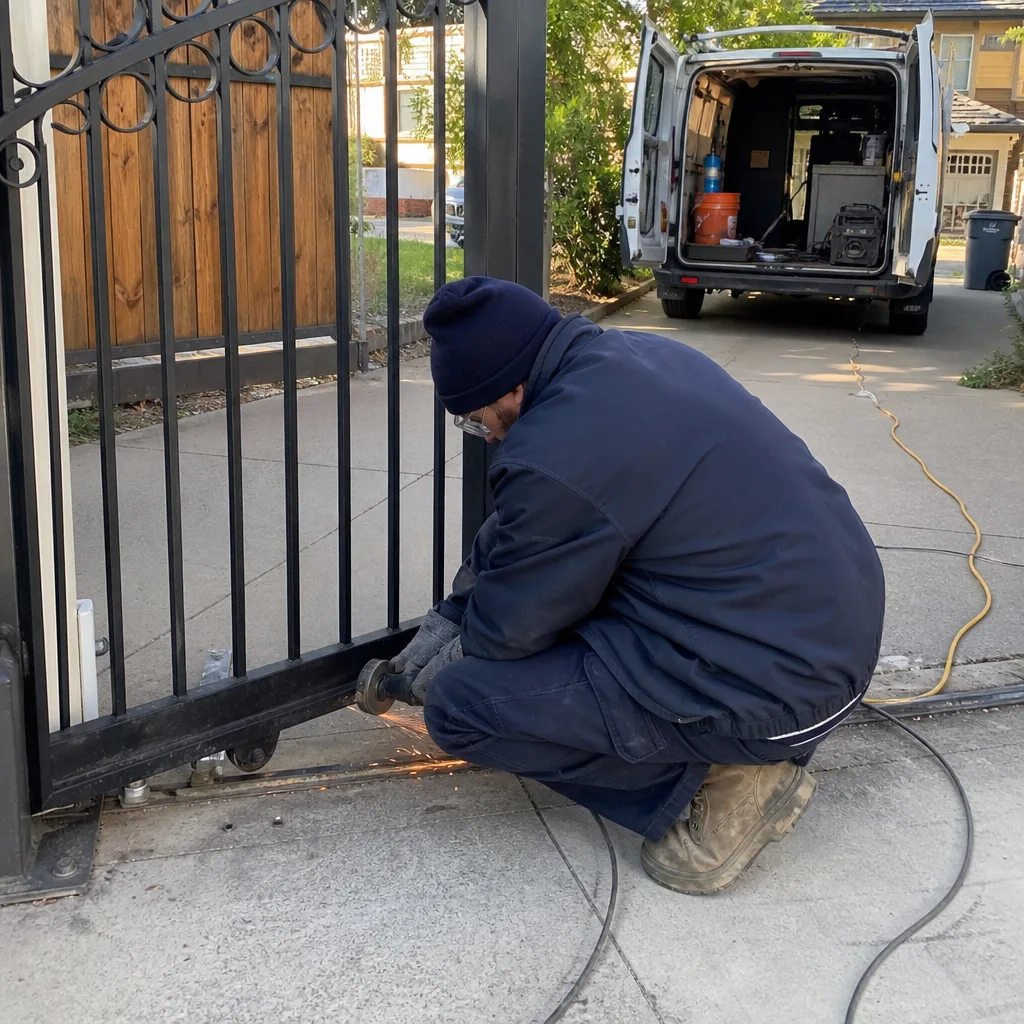
This distinction is where most permit violations originate. Contractors and homeowners alike misread “repair” as a blanket exemption. It is not.
Like-for-like repair means replacing a failed component with an identical or substantially equivalent unit, installed in the same location, using the same mounting and wiring, without changing the gate’s function or safety profile. The replacement part must be listed for the same application and must not alter the gate’s certified configuration.
Examples we’ve encountered in Oakland:
- Replacing a failed FAAC 415 operator with another FAAC 415: like-for-like repair, no permit
- Replacing that same FAAC 415 with a BFT Phobos because the FAAC was discontinued: modification, permit required
- Replacing a broken safety edge with the same model and length: like-for-like repair
- Adding a safety edge where none existed before, even if the gate previously functioned without one: modification, permit required
- Replacing a 12-volt control board with an identical 12-volt board: like-for-like repair
- Upgrading to a 24-volt board for “better performance”: modification, permit required
The key test is whether the work changes anything that would appear on the original installation’s approved plans or UL 325 certification documents. If the answer is yes, it’s a modification.
Oakland’s coastal climate adds a practical layer to this analysis. In neighborhoods near the bay, like Jack London Square or West Oakland, salt air accelerates corrosion of control boards and operator housings. We’ve seen technicians replace a rusted operator with a “comparable” unit that lacks the original’s NEMA rating for moisture exposure. That substitution may function initially, but it voids the installation’s compliance and often fails within two years. Under our Haven Standard, we document the original part number, photograph the failed unit, and specify the exact replacement - or flag when a permit is required for any deviation.
UL 325 Compliance: What California Law Requires
UL 325 is the Underwriters Laboratories standard for door, drapery, gate, louvre, and window operators and systems. In California, it is not optional. The California Building Code adopts UL 325 by reference, and the California Department of Consumer Affairs has issued specific guidance that all automated gate operators sold or installed in the state must bear a valid UL 325 listing mark.
What UL 325 actually requires for residential and light commercial gates:
- Entrapment protection: The gate must have at least one primary entrapment protection device. This is typically a contact sensor (safety edge) on the leading edge, or a non-contact sensor (photo-eye) that stops or reverses the gate when interrupted.
- Secondary entrapment protection: If the gate is automated and not continuously monitored by a person, a secondary device is required. Common configurations include a photo-eye as primary and a safety edge as secondary, or vice versa.
- Force limitation: The operator must sense resistance and stop or reverse within specified force limits. For swing gates, this is tested with a calibrated gauge at multiple points in the travel arc.
- Control and signaling: The operator must have visible and audible warnings, including a warning sign and, for most installations, an audible alarm that sounds before the gate moves.
- Listing mark verification: The operator must bear a UL 325 listing mark that is visible and legible. Counterfeit or expired listings are a known problem in the gate industry.
How to verify your operator meets UL 325:
- Locate the listing mark on the operator housing or nameplate. It should read “UL 325” with a specific edition year and the UL file number.
- Cross-check the file number on the UL Online Certifications Directory at ul.com. The listing should be active and match the manufacturer and model exactly.
- Confirm the installation matches the UL-listed configuration. If the operator was installed with different safety devices than those specified in the UL file, the listing may not cover that installation.
We’ve found non-compliant operators in Oakland more often than homeowners expect. In one case in Montclair, a property had a Viking operator with a UL 325 mark that appeared genuine. When we checked the file number, it corresponded to a different model entirely. The operator had been relabeled by an overseas supplier. We documented the discrepancy, advised the homeowner, and replaced it with a properly listed Linear operator under a permitted modification.
Under our Haven Standard, we photograph the listing mark on every operator we service and include that image in the job record. If you’re unsure about your gate’s compliance, we offer a free review - bring your operator model number or a photo of the nameplate, and we’ll verify the listing at no charge.
HOA Overlay: When Neighborhood Rules Add a Second Layer
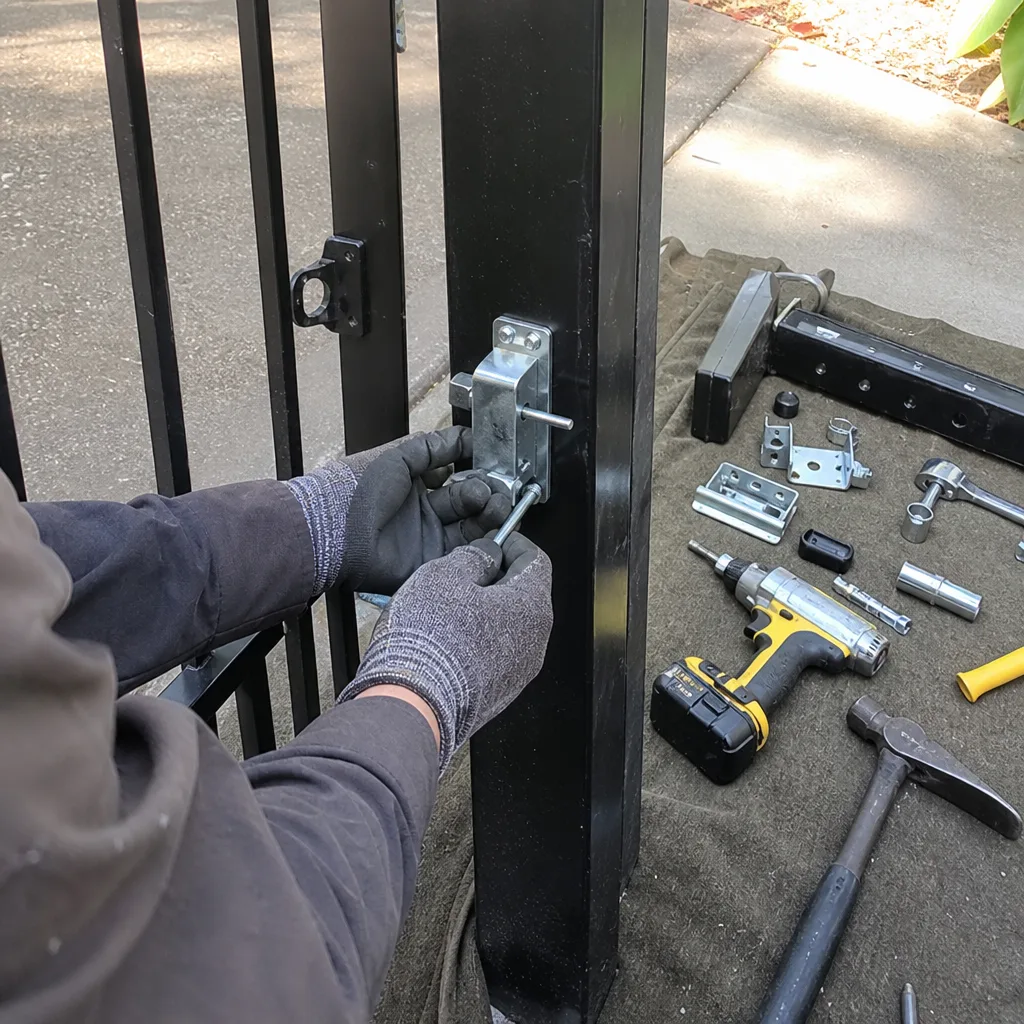
City permits are not the only approval required in many Oakland neighborhoods. Homeowners associations in the Oakland Hills, Piedmont-adjacent areas, and certain planned communities operate under Covenants, Conditions, and Restrictions (CC&Rs) that impose design and material requirements independent of municipal code.
What this means in practice:
- An Oakland building permit approves safety and structural compliance. It does not approve aesthetics, materials, or neighborhood compatibility.
- An HOA architectural review committee may reject a gate design that fully complies with city code if it violates height limits, material palettes, or style guidelines in the CC&Rs.
- Some Oakland Hills HOAs require specific wood species, prohibit certain metal finishes, or mandate that automated gates be screened from street view by landscaping.
- HOA approval timelines vary from 14 days to 90 days and typically require submission of detailed drawings, material samples, and sometimes contractor licenses and insurance certificates.
- HOA fines for unapproved work can accumulate daily and may include requirements to remove and replace non-compliant installations at the homeowner’s expense.
We’ve seen homeowners complete a fully permitted gate installation in Oakland only to receive an HOA violation notice because the gate color or hardware finish wasn’t pre-approved. The permit was valid. The installation was code-compliant. The HOA still had authority to demand changes.
The practical sequence for HOA-governed properties:
- Obtain HOA architectural approval before applying for city permits, or confirm that the HOA accepts city-approved plans as sufficient
- Submit city permit application with HOA approval letter attached
- Complete installation
- Pass city inspection
- Submit city inspection certificate to HOA if required by CC&Rs
Some HOAs in the Oakland Hills also require post-installation inspection by their own committee or a designated engineer. This is separate from city inspection and may focus on aesthetic outcomes rather than safety function. We coordinate with HOA requirements when our clients request it, though we do not represent homeowners in HOA proceedings.
What an Oakland Gate Inspection Actually Checks
Once permit work is complete, the City of Oakland Building Services Division schedules an inspection. For gate work, this is typically a combination inspection covering structural, electrical, and safety elements. Understanding what the inspector will test helps you prepare and increases first-pass success rates.
Structural inspection elements:
- Gate post depth and concrete footing size match approved plans
- Gate frame is square and operates without binding in manual mode
- Clearances and swing arcs do not encroach on public right-of-way or utility easements
- Gate weight and wind load rating are appropriate for the hardware installed
Electrical inspection elements:
- Conduit type, depth, and routing match approved plans
- Grounding and bonding are correct, including any supplementary grounding electrodes
- GFCI protection is present where required for outdoor receptacles
- Control wiring is properly separated from power wiring
- Panel labeling and circuit identification are correct
Safety inspection elements (UL 325 verification):
- Primary entrapment protection is installed and functional - the inspector will physically test the safety edge or interrupt the photo-eye beam during operation
- Secondary entrapment protection is installed and functional
- Force limitation is tested with a calibrated gauge or verified through manufacturer documentation for operators with built-in force sensing
- Warning signage is visible from both sides of the gate
- Audible warning operates for the required duration before gate movement
- Manual release mechanism is accessible and functional
- Loop detector, if present, is calibrated and does not allow gate closure on a vehicle
Common first-fail items we’ve observed in Oakland:
- Safety edge installed but not wired to the operator’s monitored input - the edge compresses but the gate does not stop
- Photo-eye aligned for summer sun angle but blinded by low winter sun in Oakland’s latitude - we test seasonal angles during our pre-inspection check
- Loop detector sensitivity set too high, causing phantom detections that prevent gate closure, or too low, allowing closure on a small vehicle
- Warning sign mounted inside the property where it is not visible to pedestrians on the public side
Our pre-inspection protocol, developed from commercial access-control documentation habits, includes a 22-point checklist that mirrors the city’s inspection criteria. We run this checklist before requesting inspection, photograph each test result, and provide the photo log to the homeowner. Under Clause 4 of our Haven Standard, this documentation is included on every permitted job at no additional charge.
How Unpermitted Gate Work Surfaces During Home Sales
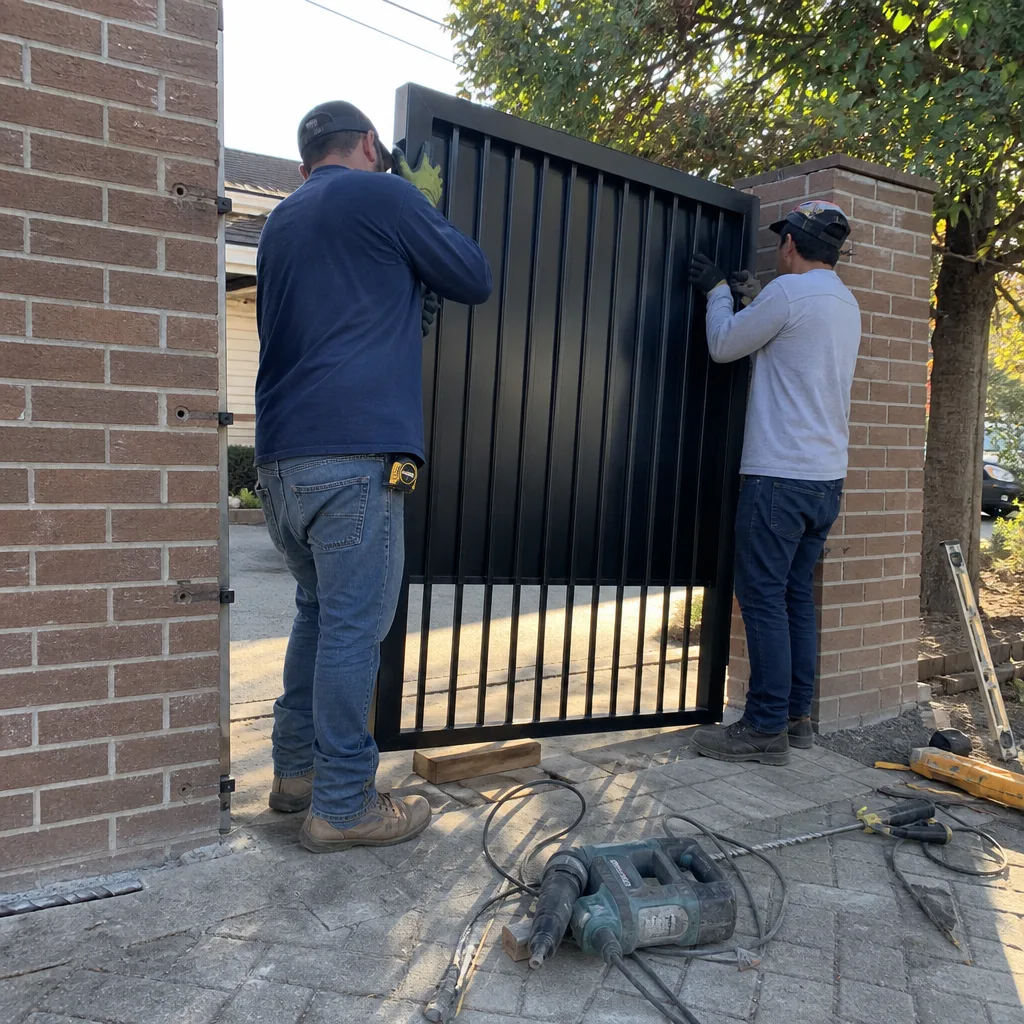
This is where the cost of skipping permits becomes concrete. In Oakland’s active real estate market, buyers and their lenders are increasingly cautious about unpermitted work. Disclosure requirements under California Civil Code Section 1102.6 obligate sellers to disclose material facts affecting property value, and unpermitted structural or electrical work qualifies.
How unpermitted gate work typically surfaces:
- Buyer’s inspection: A home inspector notes that the gate is automated but no permit is visible in city records. This triggers a recommendation for further investigation.
- Title or permit search: The buyer’s agent or attorney requests a permit history from Oakland Building Services. The search returns no record for the gate installation or modification.
- Appraisal flag: The lender’s appraiser notes unpermitted work and conditions loan funding on remediation or a holdback of repair funds.
- Insurance review: The buyer’s homeowner insurance underwriter asks about automated gates and their compliance; unpermitted work may trigger exclusion of gate-related liability or denial of coverage.
Remediation options and typical costs in the Oakland market:
| Option | Description | Typical Cost Range |
|---|---|---|
| Retroactive permit with inspection | Apply for permit after work is complete; expose work for inspector verification; correct any code deficiencies | $2,500-$6,500 plus repair of exposed finishes |
| Remove and restore | Remove automated equipment; restore gate to prior permitted condition or manual operation | $1,200-$3,500 depending on gate size and electrical restoration |
| Full replacement with permit | Treat existing gate as demolition; install new permitted gate and operator | $4,500-$12,000 depending on materials and automation |
| Original permit fee (for comparison) | What would have been paid if permitted originally | $350-$850 depending on valuation |
The original permit fee is almost always the least expensive path. The retroactive route costs more because it requires destructive inspection access, potential code upgrades to equipment that was legal when installed but no longer meets current standards, and professional fees to prepare as-built drawings and permit applications.
We’ve been called to remediate unpermitted work in Oakland’s Redwood Heights, Maxwell Park, and Glenview neighborhoods. In each case, the original contractor was no longer reachable, and the homeowner bore the full cost and delay. Our documentation practice, carried over from commercial sites, means our permit work is traceable: we keep permit numbers, inspection dates, and correction notices in the permanent job file, so any future owner can verify compliance with a single phone call.
Permit Costs, Timelines, and How to Prepare
Understanding the practical mechanics of permitting helps homeowners plan and budget accurately. Oakland’s process is not the slowest in the Bay Area, but it is not instantaneous, and incomplete applications cause predictable delays.
Typical permit costs for gate work in Oakland:
- Building permit (structural): based on project valuation, typically $350-$650 for residential gate replacement or new installation
- Electrical permit: $150-$350 if separate from building permit; often combined
- Planning review: $200-$500 if required for frontage or historic district considerations
- Inspection fees: usually included in permit cost; re-inspection fees apply if first inspection fails, typically $150-$250 per re-inspection
Typical timelines:
- Plan check (initial review): 10-15 business days for simple projects; 4-6 weeks for complex or hillside sites
- Permit issuance after plan check approval: 3-5 business days
- Inspection scheduling: 3-7 business days after request, depending on inspector availability
- Re-inspection if needed: additional 3-7 business days
What to prepare for permit application:
- Site plan showing property lines, existing structures, and gate location with dimensions
- Elevation drawing of the gate showing height, width, materials, and finish
- Details of operator mounting, safety device locations, and control wiring routing
- Electrical plan showing power source, conduit run, and load calculations
- Manufacturer cut sheets for operator and all safety devices, showing UL 325 listing
- Contractor license and insurance certificates if work is not owner-performed
For properties in Oakland’s hillside zones or areas with sensitive environmental designations, additional documentation may include geotechnical reports, drainage plans, or tree protection measures. We’ve coordinated with engineers on these requirements for properties in the Oakland Hills and Montclair fire zones.
Under our Haven Standard, we prepare permit documentation as part of our installation scope when we manage the permit process. The homeowner receives copies of all submitted plans, the approved permit, and inspection certificates - the same documentation package we provide on commercial access-control projects. This is Clause 1 (written price) and Clause 4 (evidence) applied to the permitting phase: nothing verbal, nothing assumed, everything documented.
Common Mistakes to Avoid
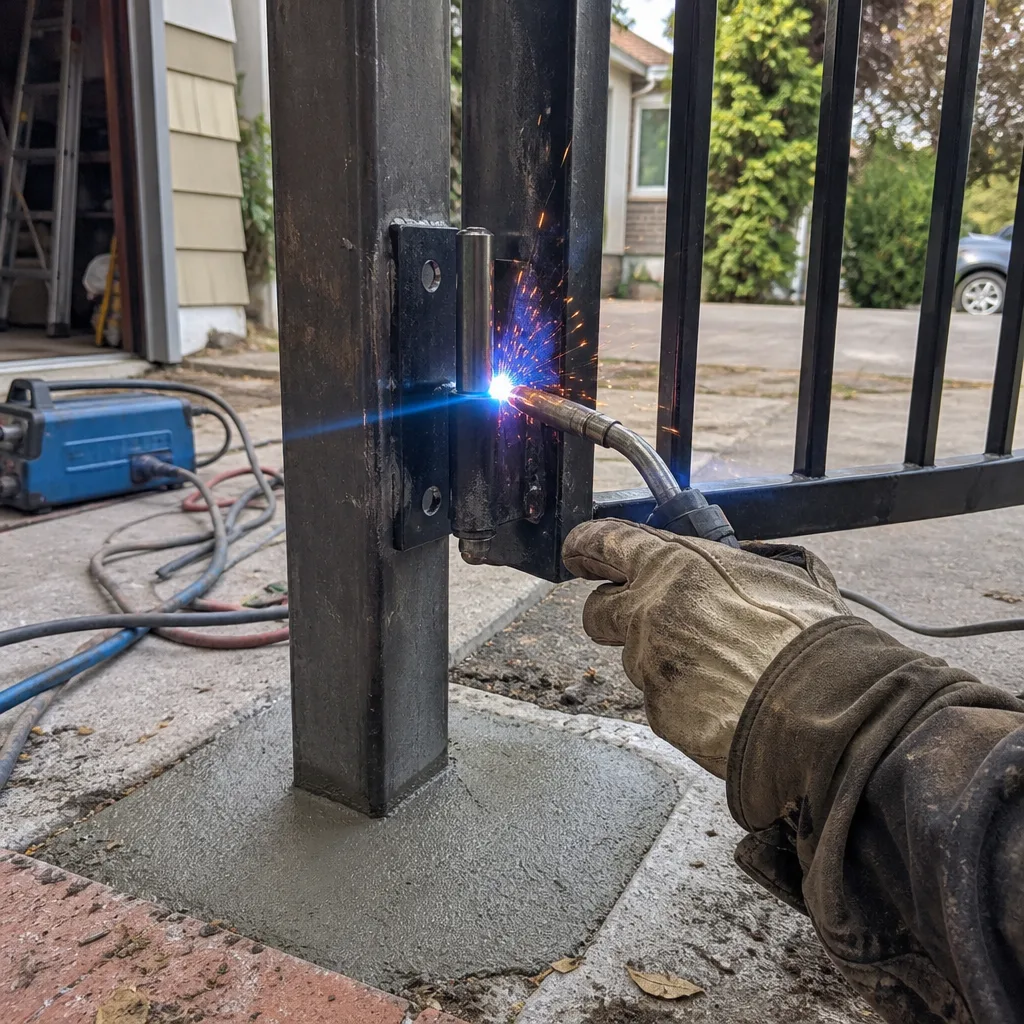
- Assuming repair exempts all work from permits. In Oakland, replacing a failed operator with a different model is a modification, not a repair, and requires full permitting. We’ve seen homeowners and contractors alike make this error.
- Accepting a contractor’s verbal assurance that permits “aren’t needed for this.” The liability for unpermitted work rests with the property owner. Request the permit number in writing before work begins, and verify it with Oakland Building Services.
- Installing safety devices but wiring them to non-monitored inputs. The gate may appear safe, but an inspector will test function and fail the installation if the safety edge compresses without stopping the gate.
- Ignoring HOA requirements until after city permit approval. In Piedmont-adjacent areas and Oakland Hills communities, HOA disapproval after city permit issuance creates an expensive conflict. Sequence approvals correctly.
- Purchasing operators online without verifying UL 325 listing. Counterfeit and mislabeled products are common on marketplace platforms. The listing mark must be verifiable on ul.com.
- Failing to document the original condition before modification. If a future dispute arises about whether work was like-for-like or modified, photographs and part numbers are the only reliable evidence. We document this on every service call.
When to Call a Professional
Call a qualified gate technician when the work involves electrical components, safety systems, or any modification to an existing installation. Read our How to Hire a Gate Repair Contractor in Oakland: A Step-by-Step Guide before you choose. The force stored in a swing-gate operator’s arm or a slide-gate chain drive can cause serious injury if released improperly, and 24-volt control circuits can still deliver dangerous shocks in wet conditions. We do not recommend homeowner adjustment of limit switches, force settings, or safety-device wiring.
Vance Gate Repair Oakland offers free estimates in Oakland - call (628) 270-2709. We assess whether your planned work requires a permit, provide a written scope and price before any work starts under Haven Standard Clause 1, and can manage the full permit application and inspection process when needed. Every visit includes a documented photo record under Clause 4, and all completed work is covered by our 365-Day Done Right Promise.
Frequently Asked Questions
Yes, if you are replacing the motor with a different model or brand, or if the replacement requires new wiring, mounting, or safety devices. A true like-for-like replacement of the identical model, installed in the same location with the same wiring, may qualify as repair without permit, but this is rare in practice because manufacturers update models frequently. Call (628) 270-2709 and we can assess your specific situation - estimates are free.
UL 325 is the safety standard that all automated gate operators sold and installed in California must meet. It requires entrapment protection, force limitation, and visible warning signage to prevent injury or death. An operator without a valid UL 325 listing is not legal for installation in California, and your homeowner insurance may deny claims related to a non-compliant gate. You can verify a listing at ul.com using the file number on the operator’s nameplate.
Building permit fees for residential gate work typically range from $350 to $850 depending on project valuation and whether electrical and planning review are required. Re-inspection fees add $150-$250 if the first inspection fails. These costs are minor compared to retroactive permitting or remediation during a home sale. For an exact assessment of your project, call us at (628) 270-2709.
HOA approval depends on your specific CC&Rs, not city code. Most Oakland Hills and Piedmont-adjacent HOAs have architectural review committees that evaluate materials, height, color, and visibility from the street. Approval timelines range from two weeks to three months. We recommend obtaining HOA approval before applying for city permits. We do not represent homeowners in HOA proceedings, but we can provide technical specifications and drawings for your submission.
You must disclose unpermitted work on your Transfer Disclosure Statement under California Civil Code Section 1102.6. The buyer may demand remediation, negotiate a price reduction, or walk away entirely. Lenders and insurers may also flag unpermitted electrical work. Remediation typically costs $2,500-$6,500 for retroactive permitting, or $1,200-$3,500 to remove the automation and restore manual operation. The original permit would have cost $350-$850.
Request a permit history from Oakland Building Services online or in person. Provide your property address and ask for records related to fences, gates, electrical, or structural work. If no permit appears for your automated gate, assume the work was unpermitted. We offer a free compliance review - we can inspect your installation, check operator listings, and advise on permitting status with no obligation.
The Bottom Line
Permits, codes, and inspections for gate work in California exist to protect property owners from liability, ensure safety systems function under real-world conditions, and create a documented chain of compliance that survives property transfers. The cost of permitting is modest. The cost of discovering unpermitted work during a home sale is not. In Oakland’s market, where hillside fire safety, HOA governance, and active real estate turnover intersect, the documentation habit matters as much as the technical work. We built our practice on that principle - written price before work starts, photographic evidence when we leave, and every permit number filed where the next owner can find it.
Written by Adrian Vance, Owner at Vance Gate Repair Oakland home, serving Oakland since 2014.